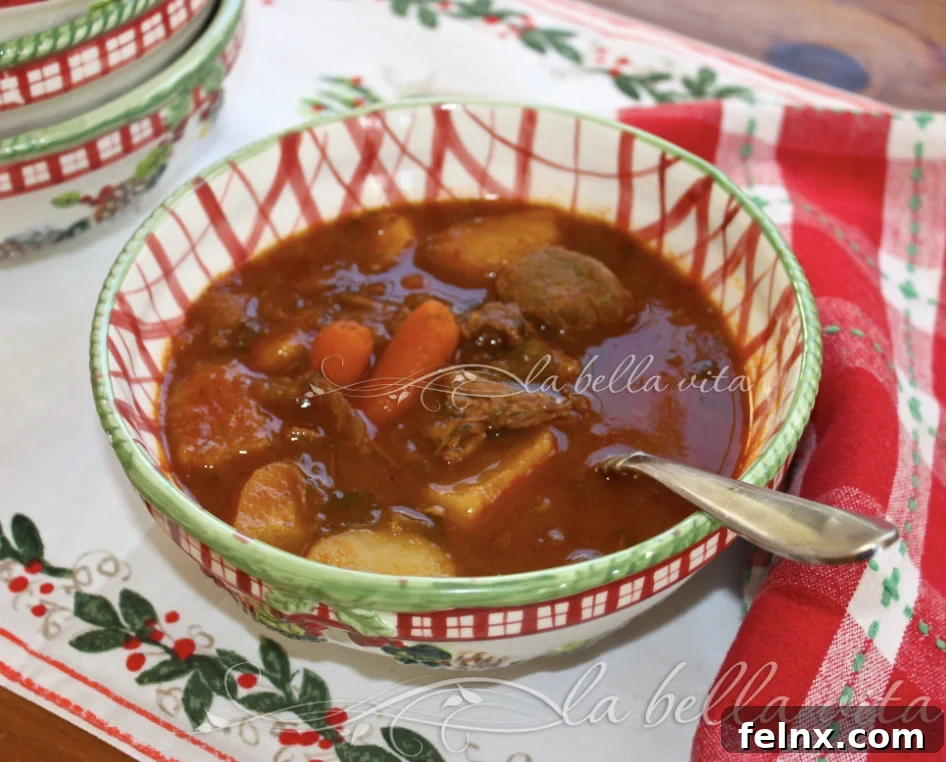
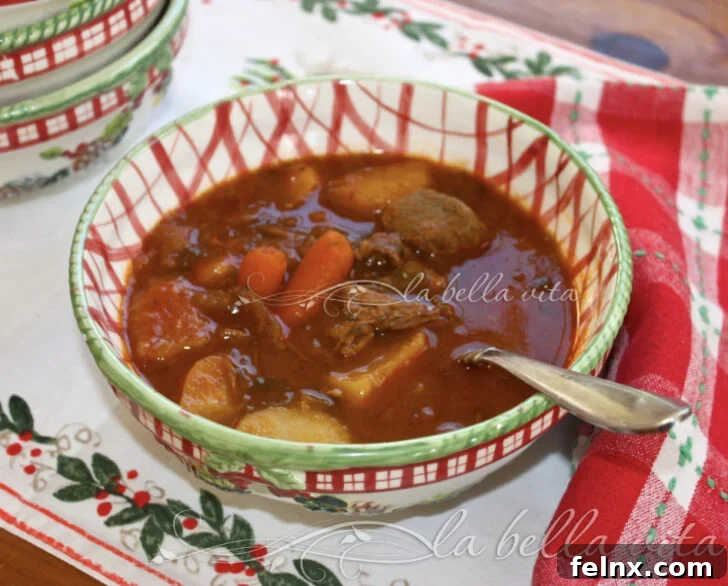
The Ultimate Guide to Nonna’s Italian Stew: A Taste of Valle d’Aosta
As the crisp autumn air turns into the biting chill of winter, our culinary cravings undergo a fundamental shift. We move away from light salads and grilled vegetables, seeking instead the kind of heartier comfort foods that provide warmth from the inside out. This is the season where “rib-sticking” meals take center stage. For my family, there is nothing that captures the essence of winter comfort more than a steaming bowl of Nonna’s Italian Stew, especially when it is served over a bed of creamy, buttery Fontina polenta.
This rustic dish is more than just a meal; it is a culinary journey to the northernmost reaches of Italy. Specifically, it is inspired by the rugged and beautiful cuisine of Valle d’Aosta. As Italy’s smallest and coldest region, nestled high in the Alps, Valle d’Aosta is a land of snow-capped peaks and ancient stone villages. In such a climate, food is not just about flavor—it is about survival and nourishment. The locals rely on hearty stews, rich cheeses, and dense polenta to keep them fueled through long, snowy winters.
A Cherished Family Tradition
In many Italian-American households, Christmas Eve is synonymous with the “Feast of the Seven Fishes.” However, my family’s roots in the mountainous northern regions of Italy meant that our traditions were quite different. Growing up far from the Mediterranean coast, we didn’t have easy access to a wide variety of fresh seafood. Instead, our ancestors relied on what the land provided: cattle, root vegetables, and preserved grains.
Because of this heritage, Nonna’s Italian Stew became the centerpiece of our Christmas Eve celebration. We would gather in the kitchen, the air thick with the aroma of slow-cooking beef and garlic, waiting for the moment when we could ladle the rich, tomato-infused gravy over thick slices of Fontina cheese. This cheese, melted onto hot, creamy polenta, creates a base that is both luxurious and deeply satisfying. This tradition continues to this day, making this dish one of the most meaningful recipes in our family repertoire.
What Makes This Italian Stew Unique?
Unlike a traditional French Beef Bourguignon or a standard American beef stew, Nonna’s version has a distinctively Italian soul. The secret lies in the base of the sauce and the method of building flavors. Rather than relying heavily on wine or flour for thickening, this stew uses a concentrated tomato paste base and a generous amount of garlic to create a deep, savory profile. The long simmering process allows the beef to break down until it is fork-tender, while the vegetables absorb the essence of the meat and aromatics.
Ingredients for Nonna’s Italian Stew
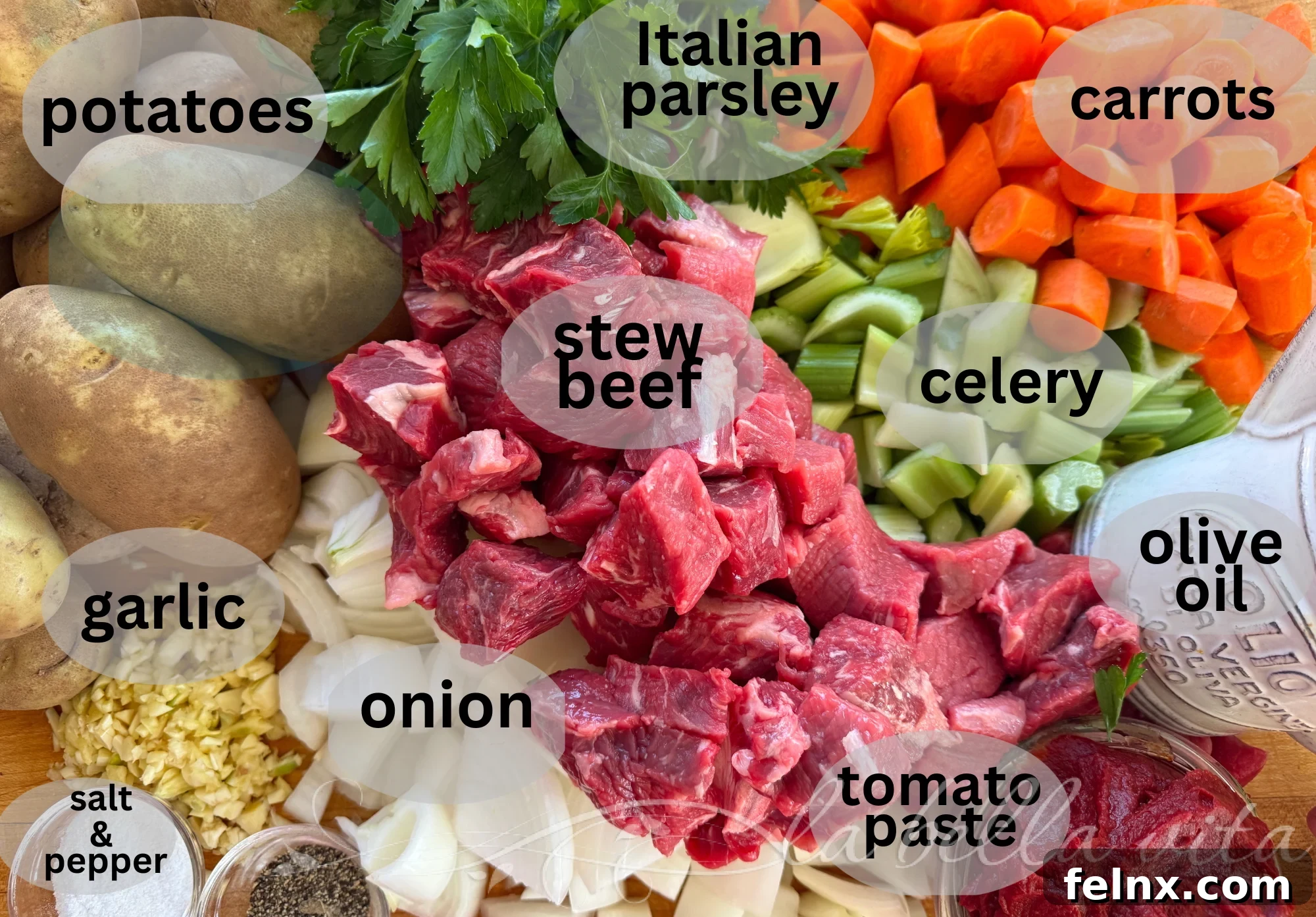
- Stew Beef: We prefer London Broil or a high-quality round steak cut into uniform cubes.
- The Trinity: Carrots, celery (including the leaves for extra flavor), and onions form the aromatic base.
- Potatoes: Large russet potatoes that hold their shape but soften beautifully.
- Garlic: At least 8 cloves to provide that signature Italian punch.
- Tomato Paste: The key to a rich, thick, and vibrant sauce.
- Olive Oil: High-quality extra virgin olive oil for browning the meat.
- Italian Parsley: Freshly chopped to add a burst of brightness at the end.
- Seasoning: Simple sea salt and freshly cracked black pepper.
The Art of Preparation: Step-by-Step
Preparing this stew is a lesson in patience and layering. It is not a dish you want to rush. The first and perhaps most important step is browning the meat. When you sear the beef cubes in olive oil over high heat, you are creating a “fond”—those delicious caramelized bits at the bottom of the pot that provide the foundation for the entire sauce.
Once the meat is deeply browned, we add the garlic. It is crucial to watch the heat during this stage; you want the garlic to become fragrant and golden, but never burnt, as burnt garlic can turn the entire stew bitter. Following the garlic, the tomato paste is added and “fried” slightly in the oil to deepen its color and mellow its acidity before the water is stirred in.
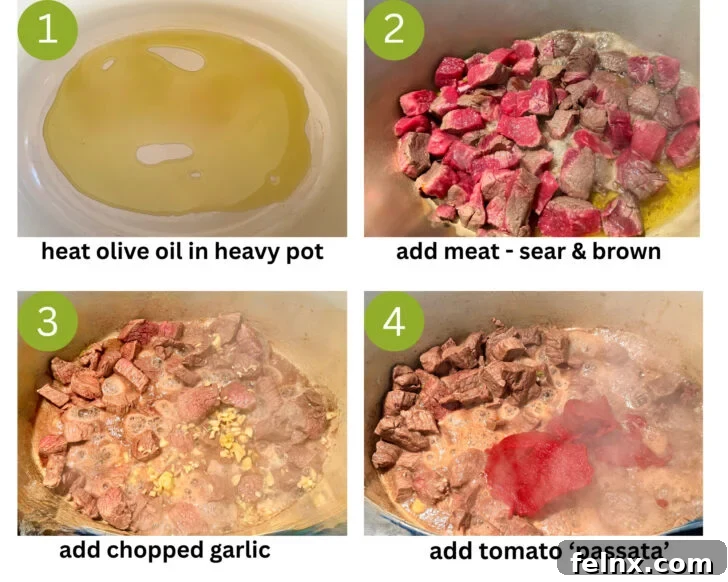
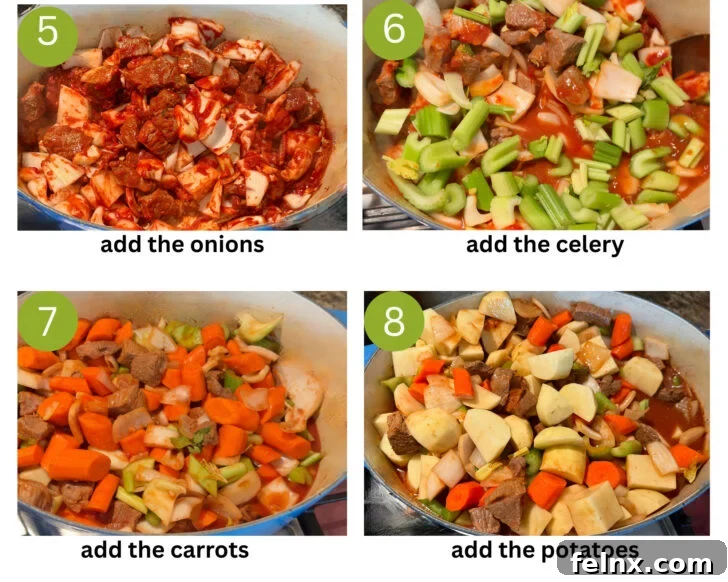
The meat then simmers in this rich tomato liquid for nearly an hour. This “pre-cook” ensures that the beef is well on its way to being tender before the vegetables are added. If you add the vegetables too early, they will turn into mush before the beef is ready. We look for “al dente” vegetables—tender to the bite but still holding their structural integrity.
Serving Suggestions: Three Ways to Enjoy
While the stew itself is a masterpiece, the way you serve it can completely change the experience. In the Alpine tradition, we almost always serve this over polenta. Polenta is essentially a cornmeal porridge, but when made correctly—slowly with plenty of water or stock—it becomes a creamy, velvety canvas for the stew’s gravy.
Nonna’s Italian stew can be served several different ways:
- Classic Over Creamy Polenta: Pour the hot stew directly over a fresh, soft mound of polenta. The gravy seeps into the cornmeal, creating the ultimate comfort food bite.
- The Fontina Melt: Place a thick slice of Fontina cheese (an Alpine cheese known for its nutty flavor and excellent melting properties) on top of the hot polenta before ladling the stew over it. The heat from both the polenta and the stew melts the cheese into a gooey, savory layer.
- Fried Polenta Style: If you have leftover polenta, let it firm up in a pan, slice it, and fry it in olive oil until the outside is crispy. Serve the stew on top for a delightful contrast in textures.
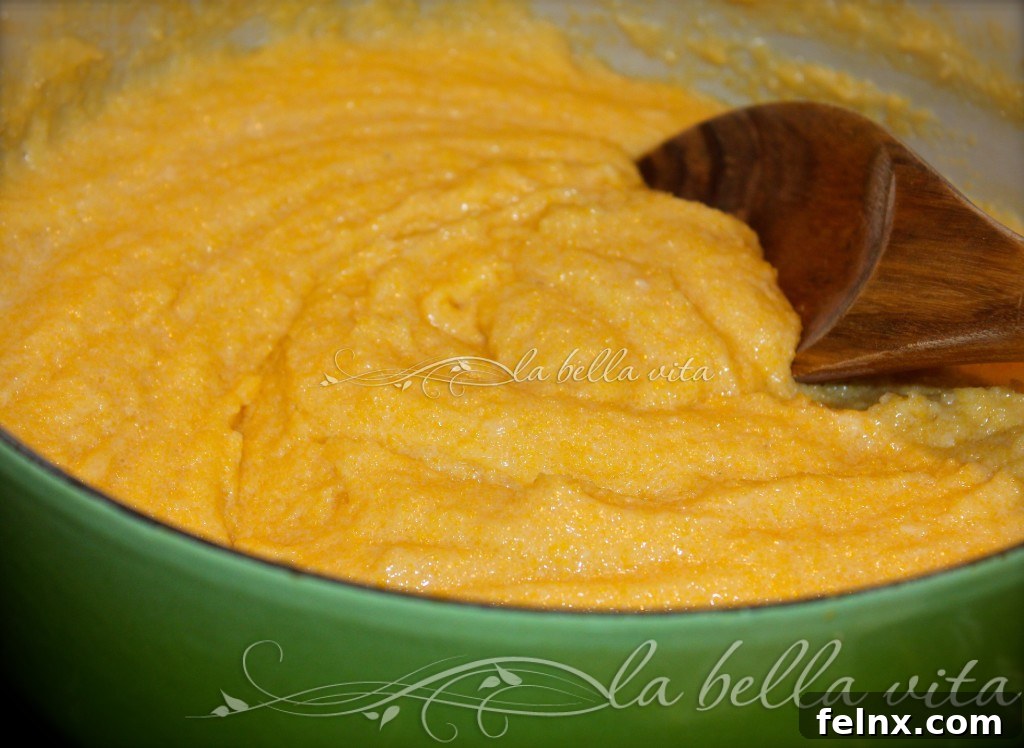
A bowl of creamy polenta, hot off the stove!
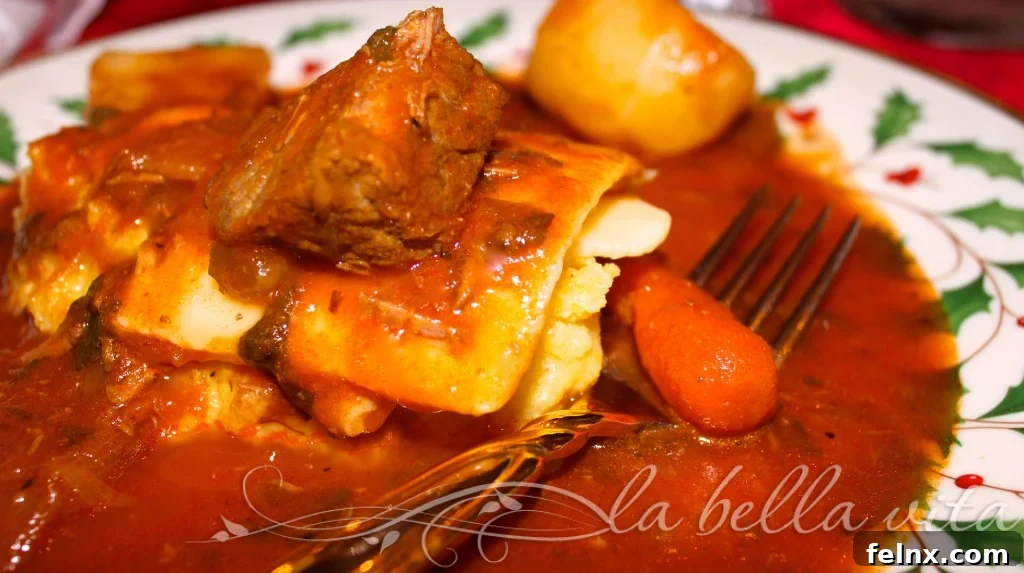
A generous layer of Fontina cheese melting into the stew.
Why Fontina Cheese?
You might be tempted to substitute the Fontina with mozzarella or provolone, but if you want the authentic taste of the Aosta Valley, Fontina is non-negotiable. Fontina Val d’Aosta is a DOP (Protected Designation of Origin) cheese made from the milk of Valdostana cows. It has a high fat content, which makes it incredibly creamy when melted. Its flavor is earthy and slightly fruity, which perfectly complements the acidity of the tomato-based stew and the sweetness of the carrots.
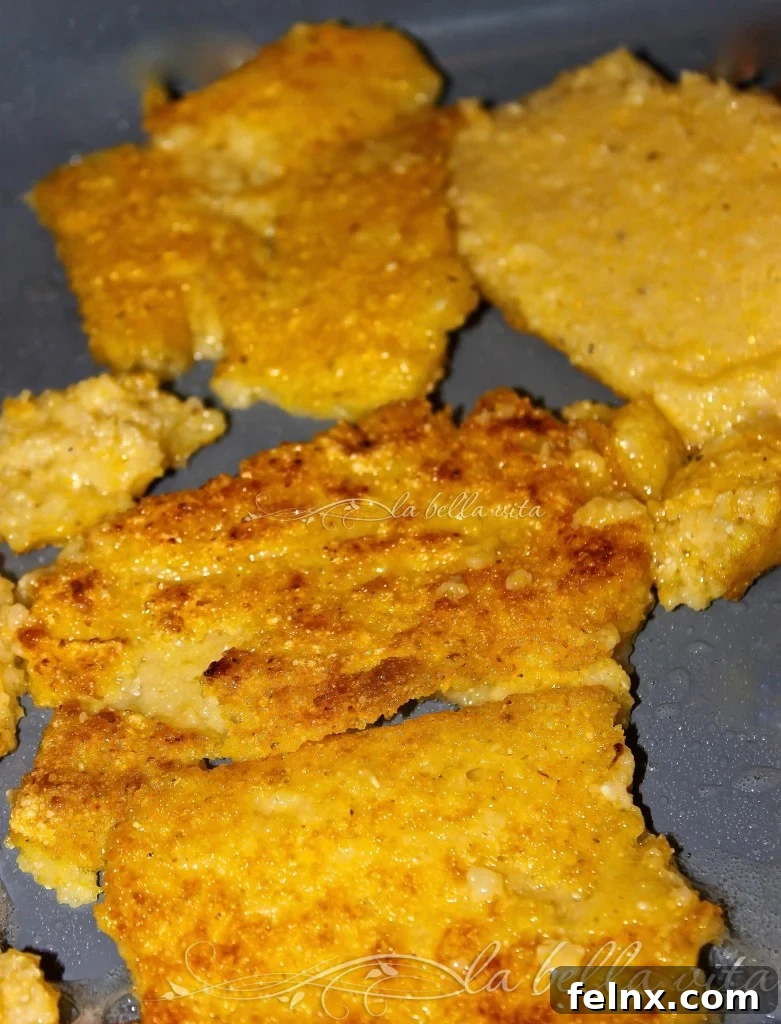
Slices of polenta being fried to a golden brown.
Andiamo a cucina! (Let’s get to the kitchen!)
If you love rich, slow-simmered flavors that tell a story of heritage and tradition, this recipe will quickly become a favorite in your household. It is a meal that invites people to linger at the table, enjoy a second helping, and savor the warmth of home. It’s so good that even our family cat, Coco, has been known to try and sneak a taste of the sauce!
Recipe: Nonna’s Authentic Italian Stew
Yield: 6 Servings | Prep time: 20 mins | Cook time: 1 hour 15 mins
Ingredients
- ▢ 2 lbs. Round steak or London Broil, cut into 1″ cubes
- ▢ 8 cloves Garlic, peeled and smashed
- ▢ 3 Tbsp. Extra virgin olive oil
- ▢ 2 Tbsp. Sea salt (adjust to taste)
- ▢ 1 tsp. Freshly cracked black pepper
- ▢ 6 Large carrots, peeled and sliced into 2″ chunks
- ▢ 10 Russet potatoes, peeled and cut into 2″ cubes
- ▢ 2 cups Celery, chopped (include the leafy tops)
- ▢ 2 Large yellow onions, quartered
- ▢ 1 bunch Fresh Italian parsley, finely chopped
- ▢ 12 oz. Tomato paste (standard 2 cans)
- ▢ 4 cups Water (plus more to achieve desired consistency)
Instructions
- Sear the Beef: In a large, deep, heavy-bottomed pot (like a Dutch oven), heat the olive oil over medium-high heat. Add the beef cubes in batches, browning them thoroughly on all sides. Do not crowd the pan.
- Aromatics: Once all the meat is browned, reduce the heat to medium and add the smashed garlic cloves. Sauté for 1-2 minutes until fragrant and golden. Be careful not to let them burn.
- The Base: Stir in the tomato paste, coating the meat and garlic. Cook the paste for 2 minutes to caramelize it slightly, then gradually pour in the 4 cups of water. Stir well to scrape up any browned bits from the bottom of the pot.
- The First Simmer: Bring the liquid to a boil, then reduce the heat to low. Cover the pot and simmer the meat for approximately 45 minutes. This ensures the beef will be tender.
- Add Vegetables: Add the carrots, potatoes, celery, and onions. If the liquid doesn’t quite cover the vegetables, add a little more water. Season with salt and pepper.
- Fresh Herbs: Stir in the chopped Italian parsley.
- The Final Cook: Simmer uncovered for another 20-30 minutes, or until the potatoes and carrots are tender (al dente). You want them cooked through but not falling apart.
- Adjust and Serve: Taste the sauce and adjust seasonings if necessary. Serve hot over creamy polenta with a thick slice of Fontina cheese.
Did you make this recipe?
Share your photos on Instagram using #italianbellavita or leave a comment below!
For those who want to dive deeper into the flavors of this region, I highly recommend exploring more about the Alpine comfort food of Northern Italy. The combination of simple, high-quality ingredients and slow cooking techniques creates a culinary experience that is truly timeless. Whether it’s a cold Tuesday night or a special Christmas Eve, Nonna’s Italian Stew is a recipe that brings warmth and love to every table.
Want to learn more? Read about the unique cuisine of Northern Italy:
Val d’Aosta Regional Flavors