Experience a Tropical Culinary Paradise: Chef Chai’s Encrusted Ahi Tuna Pupu Recipe
Greetings from a true tropical paradise! While my dedicated farm sitter stays behind to look after my furry family members during a sweltering 100-degree heatwave, my husband and I managed to escape to the refreshing, salt-kissed air of the islands. There is something truly transformative about the Hawaiian atmosphere. After spending several days fully immersing ourselves in the golden sunshine, inhaling the intoxicating aroma of tropical blossoms like hibiscus and plumeria, and falling asleep to the rhythmic sound of waves gently washing ashore, we felt a deep craving for something extraordinary to eat.
Hawaii is a melting pot of cultures, and its culinary scene reflects this beautifully. One of the standout genres here is Thai-Hawaiian fusion. Because I have a long-standing love for Thai cuisine, we decided to visit Singha Thai. This restaurant has earned countless international accolades, largely due to the innovative culinary style of its renowned chef and owner, Chai Chaowasaree. Chef Chai is a legend in the Pacific food scene, known for blending the vibrant, spicy, and sour notes of Thailand with the fresh, bountiful ingredients of Hawaii.
We entered the restaurant expecting a good meal, but we were unprepared for the masterpiece that is their signature appetizer. In Hawaii, these small bites or appetizers are affectionately known as ‘pupus’. We soon discovered that the Encrusted Ahi Tuna is one of the most famous dishes Chef Chai has ever created, serving as a staple at both of his award-winning establishments. To me, no single ingredient represents the soul of Hawaiian cuisine more perfectly than fresh Ahi Tuna. The quality of the fish here is unparalleled, often going from the boat to the plate in just a matter of hours.
I was so captivated by the flavors that I spent the evening researching the dish. To my absolute delight, Chef Chai is known for his generosity and has shared this recipe with his fans. Even my husband, who generally avoids raw fish or sushi, was completely won over by the textures and balance of this dish. It is a sophisticated, restaurant-quality appetizer that you can actually recreate in your own kitchen to bring a taste of the islands to your home.

The serene atmosphere of Singha Thai, featuring Sitting and Reclining Buddha statues.
What Makes This Ahi Tuna Pupu So Special?
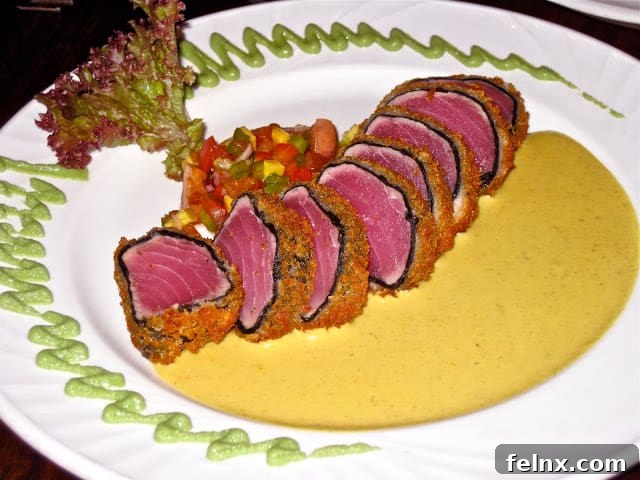
This appetizer is a masterclass in contrast. It begins with beautiful, ruby-red, sashami-grade Ahi Tuna. The tuna is first wrapped in nori (Japanese seaweed), then dipped in a light tempura batter, and finally encased in a crunchy panko (Japanese breadcrumb) crust. The cooking process is incredibly brief—just a few seconds in hot oil. This technique ensures that the panko becomes golden and crispy while the tuna remains perfectly raw and cool in the center.
The presentation is where the Thai influence truly shines. The sliced tuna is served alongside a perfectly spiced yellow curry sauce, which provides a warm, creamy depth. To add a bit of heat and zing, a wasabi drizzle is applied around the plate. Finally, the dish is topped with a fresh mango-tomato salsa. This “marriage” of sweet fruit, acidic tomato, creamy curry, and spicy wasabi creates a literal tropical culinary paradise in your mouth!
The Essentials of Working with Ahi Tuna
Before diving into the recipe, it is crucial to discuss the star ingredient. When making a dish where the fish remains largely raw, quality is everything. You must look for “sushi-grade” or “sashimi-grade” Ahi (Yellowfin or Bigeye) Tuna. Fresh Ahi should have a bright, deep red color and a firm texture. It should never smell “fishy”; instead, it should have a clean, neutral scent of the ocean.
Handling the fish properly is also key. Keep the tuna chilled until the very moment you are ready to wrap it in the nori. This maintains the temperature contrast that makes the dish so exciting to eat—the outside is hot and crunchy, while the inside is cold and silky.
Recipe: Encrusted Ahi Tuna “Pupu’s”
Ingredients
The Tempura Batter
- 3/4 cup all-purpose flour
- 1/4 cup cornstarch (for extra crispness)
- 1 large egg, lightly beaten
- 1/2 cup ice-cold water
- Salt and pepper to taste
The Ahi Tuna Katsu
- 2 blocks fresh Ahi Tuna (approx. 1.5 to 2 lbs), cut into rectangular tubes (about 1 inch thick and 6-8 inches long)
- 4 sheets nori (Japanese seaweed)
- 1 cup Panko breadcrumbs
- Vegetable oil for frying (at least 1 inch deep in the pan)
The Thai Yellow Curry Sauce
- 1/2 tbsp Thai yellow curry paste
- 1.5 cups coconut milk
- 1 tbsp fish sauce (or Aloha Shoyu for a different salt profile)
- 1/2 tbsp curry powder
- 1/2 tbsp sugar
The Mango-Tomato Salsa
- 2 tbsp ripe mango, finely diced
- 2 tbsp tomato, finely diced
- 1/2 tbsp Chinese parsley (cilantro), chopped
- 1/2 tbsp red onion, finely chopped
- 1/2 tbsp bell pepper, finely chopped
- 1/4 tbsp fresh lemon juice
- 1/4 tbsp balsamic vinegar
- 1/4 tbsp sugar
- Pinch of salt and a dash of Tabasco to taste
Step-by-Step Instructions
1. Prepare the Mango-Tomato Salsa
In a small mixing bowl, combine the diced mango, tomato, onion, bell pepper, and cilantro. Add the lemon juice, balsamic vinegar, sugar, salt, and Tabasco. Stir gently to combine the flavors. This salsa is best when allowed to sit for at least 15-20 minutes, allowing the juices to meld. Set it aside at room temperature.
2. Simmer the Thai Yellow Curry Sauce
In a small saucepan over medium heat, whisk together the coconut milk, yellow curry paste, curry powder, fish sauce, and sugar. Bring the mixture to a gentle boil, then immediately reduce the heat to low. Let the sauce simmer for about 10 minutes. You want it to thicken until it reaches the consistency of a creamy sauce or thin mustard. Once thickened, remove from heat and keep warm.
3. Assemble and Fry the Tuna
First, prepare your tempura batter by mixing the flour, cornstarch, egg, water, salt, and pepper in a bowl until smooth. Ensure there are no large lumps.
Take your Ahi Tuna tubes and wrap each one tightly in two sheets of nori. The nori helps the batter stick and adds a subtle umami flavor. Dip the wrapped tuna into the tempura batter, ensuring it is fully coated, and then immediately roll it in the panko breadcrumbs. Press the panko gently so it adheres well.
In a wok or heavy-bottomed cast iron pan, heat your vegetable oil to 375°F (190°C). It is vital that the oil is hot so the crust browns quickly without cooking the interior of the fish. Carefully place the tuna in the oil and fry for only 30 to 45 seconds until the exterior is golden brown. Remove immediately and let it rest on a paper towel for a few seconds.
4. The Art of Presentation
Using a very sharp knife, slice the tuna tubes into 1/4-inch-thick pieces. On a large white plate, arrange the tuna slices on one side. Spoon a generous amount of the Mango-Tomato Salsa next to the tuna. On the other side of the plate, pour a pool of the Thai Yellow Curry Sauce. For the final touch, drizzle wasabi sauce (wasabi paste mixed with a little water or mayo) in an artistic pattern around the plate.
Why This Dish Works
The genius of Chef Chai’s recipe lies in the layers of flavor. The yellow curry sauce provides an earthy, aromatic base with hints of turmeric and cumin. The mango salsa introduces a bright, acidic sweetness that cuts through the richness of the fried crust. Meanwhile, the tuna itself provides a clean, buttery texture that serves as the perfect canvas for the spices. It is a dish that engages all parts of the palate: sweet, salty, sour, and spicy.
If you are hosting a dinner party, this is the ultimate “wow factor” appetizer. It looks like it came straight out of a high-end restaurant kitchen in Waikiki, yet the components can be prepared in advance. You can have the salsa and the curry sauce ready to go, meaning you only need to spend one minute at the stove frying the tuna before serving.
Did you make this recipe?
We would love to see your creations! Please leave a comment below and share your experience. If you’re on Instagram, tag your photos with #italianbellavita or tag us @italianbellavita so we can see your beautiful plating!
Mahalo (thank you) to Chef Chai and his aloha generosity for sharing this recipe with the world!