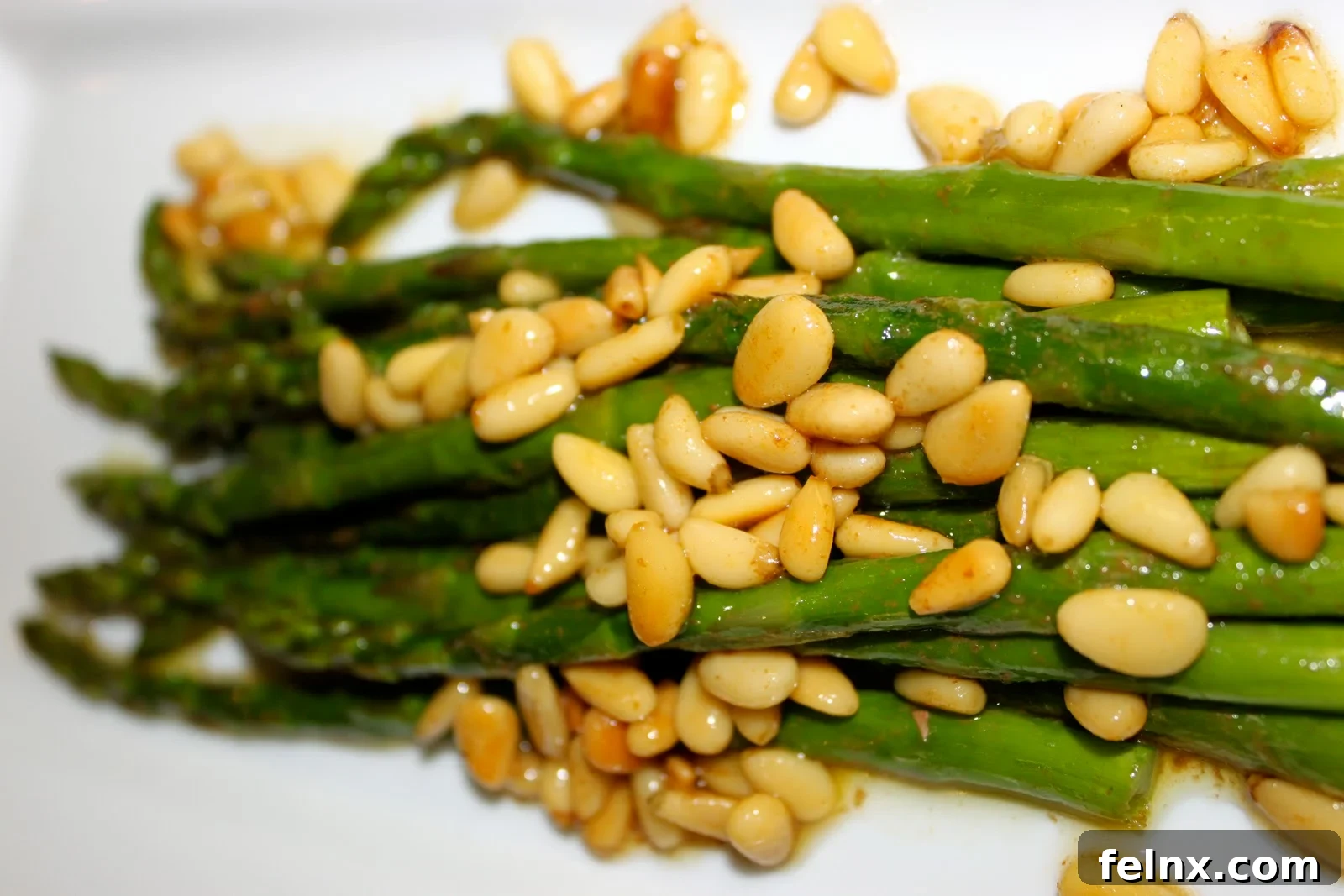
Brown Buttered Asparagus with Pignoli: A Simple Seasonal Delight
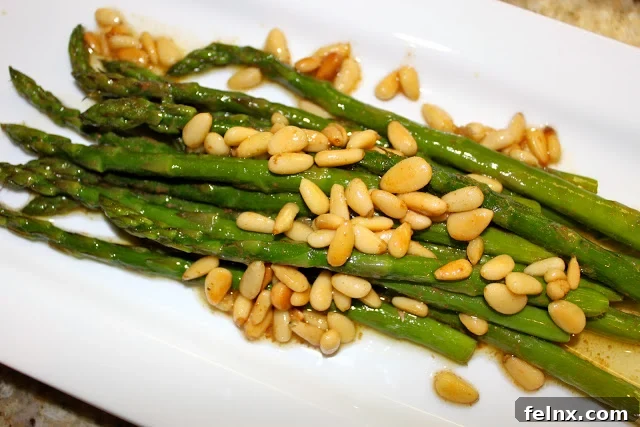
Spring brings a vibrant palette of vegetables to our kitchens, and perhaps none is more celebrated than the elegant asparagus. When you find yourself with a fresh bunch of these green spears, the goal is often to highlight their natural flavor rather than masking it under heavy sauces. Recently, while exploring the culinary insights of Susan Middleton’s cookbook, Fast, Fresh, and Green (2010), I discovered a method that perfectly encapsulates the philosophy of simple, high-quality cooking. This Brown Buttered Asparagus with Pignoli is a recipe that every home cook should have in their repertoire.
The beauty of this dish lies in the balance of textures and the depth of flavor created by “beurre noisette,” or brown butter. When combined with the crunch of toasted pine nuts (pignoli) and a bright spark of lemon juice, the asparagus is transformed from a basic side dish into a sophisticated culinary experience. This recipe is not just about eating your greens; it is about celebrating the season with minimal effort and maximum taste.
The Health Benefits of Asparagus
Before we dive into the cooking process, it is worth noting why asparagus is such a fantastic addition to your diet. Beyond its delicious taste, asparagus is a nutritional powerhouse. It is low in calories but rich in essential vitamins and minerals. It is particularly high in Vitamin K, which is vital for bone health and blood clotting. Additionally, it provides a healthy dose of folate, which is essential for cell repair and growth.
Asparagus is also an excellent source of dietary fiber, promoting healthy digestion. It contains antioxidants like Vitamin E, Vitamin C, and various polyphenols that help combat oxidative stress in the body. When you prepare asparagus using a quick method like blanching and tossing in healthy fats, you preserve most of these nutrients while ensuring the vegetable remains crisp and appetizing.
Understanding Brown Butter: The Secret Ingredient
The star of this recipe, aside from the asparagus itself, is the brown butter. In French cooking, this is known as “beurre noisette,” which literally translates to “hazelnut butter.” This name refers to both the golden-brown color and the distinctively nutty aroma that the butter develops when heated correctly.
Browning butter involves melting unsalted butter over medium heat. As the butter melts, it separates into water, fat, and milk solids. As the water evaporates, the milk solids begin to toast at the bottom of the pan. This process creates a complex, toasted flavor that is far more intense and savory than regular melted butter. It adds a gourmet touch to almost any vegetable, but it pairs exceptionally well with the earthy notes of asparagus and pine nuts.
The Role of Pignoli (Pine Nuts)
Pignoli, or pine nuts, are the edible seeds of certain pine trees. They have been a staple in Mediterranean cuisine for centuries, notably in Italian pesto and various roasted vegetable dishes. They have a high oil content, which gives them a buttery texture that complements the brown butter perfectly. When toasted, their flavor becomes more pronounced and nutty.
Adding pine nuts to this dish provides a necessary crunch that contrasts with the tender asparagus spears. While they can be expensive, a little goes a long way in elevating the texture of the dish. If you cannot find pignoli, slivered almonds or chopped walnuts can serve as a substitute, though the flavor profile will shift slightly.
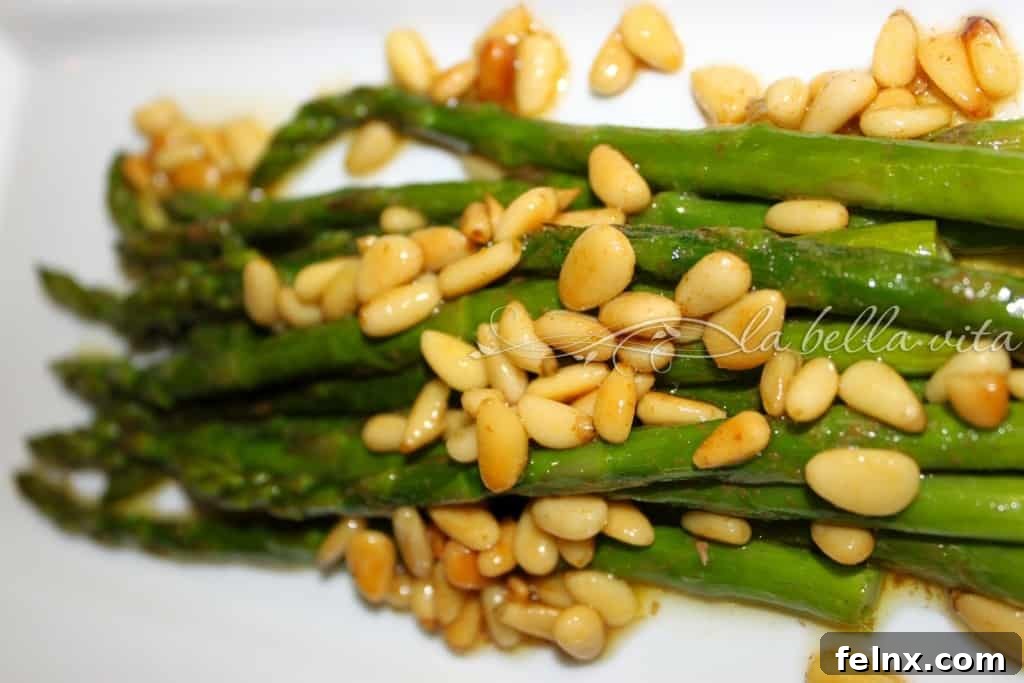
Brown Buttered Asparagus with Pignoli Recipe
This quick and elegant side dish features fresh asparagus tossed in a rich, nutty brown butter sauce with toasted pine nuts and a hint of lemon.
Ingredients
- 1 bunch fresh asparagus: Ends trimmed. You can cut them on a diagonal for a more professional look.
- 4 Tbsp. butter: High-quality unsalted butter works best for browning.
- 1/3 cup pine nuts (pignoli): For that classic Mediterranean crunch.
- 1/2 tsp. lemon juice: Freshly squeezed to provide a bright acidity.
- Freshly ground black pepper: To taste.
- Sea salt: For the blanching water and final seasoning.
Step-by-Step Instructions
- Prepare the Butter and Nuts: In a large frying pan or skillet, melt the butter over medium heat. Continue cooking, swirling the pan occasionally, until the butter stops foaming and begins to turn a light golden brown.
- Toast the Pignoli: Add the pine nuts to the browning butter. Lower the heat slightly and cook for about 3 to 4 minutes. Watch closely! Pine nuts can go from golden to burnt very quickly. Once they are a beautiful golden color and the butter smells like toasted hazelnuts, remove the pan from the heat.
- Blanch the Asparagus: While the butter is browning, fill a large saucepan with water and add 2 teaspoons of salt. Bring it to a rolling boil. Drop the trimmed asparagus into the boiling water.
- Cook to Crisp-Tender: Boil the asparagus for only 3 to 4 minutes. The goal is “crisp-tender”—the spears should be bright green and have a slight bite to them. Do not overcook, as they will continue to soften once tossed in the warm butter.
- Combine: Drain the asparagus thoroughly. Immediately place the hot asparagus into the skillet with the brown butter and toasted pine nuts.
- Season and Serve: Toss the asparagus well to ensure every spear is coated in the nutty butter. Sprinkle with the freshly squeezed lemon juice and toss again. Season with a generous amount of freshly ground black pepper.
- Final Touch: Serve immediately while the asparagus is hot and the butter is still glistening.
Tips for Choosing the Best Asparagus
To make the most of this recipe, the quality of your asparagus is paramount. Look for spears that are firm to the touch, not limp or rubbery. The tips, or “buds,” should be tightly closed and dark green or slightly purple. Avoid asparagus with tips that are spreading or looking mushy, as this is a sign of age.
The thickness of the spear is often a matter of personal preference. Thin spears are tender and cook very quickly, making them ideal for salads or quick sautés. Thicker spears have a more robust “meaty” texture and are excellent for roasting or blanching. If you use very thick spears, you may want to peel the bottom inch with a vegetable peeler to remove any woody exterior.
How to Avoid Burning Your Butter
Browning butter is an art that requires your full attention. The transition from golden brown to burnt happens in a matter of seconds. Use a light-colored pan if possible; this allows you to see the color of the milk solids as they change. If you use a dark or cast-iron skillet, you will have to rely more on your sense of smell. As soon as you smell a rich, nutty aroma and see brown flecks at the bottom, the butter is ready. If you feel it is browning too fast, you can add a small teaspoon of cold butter or the lemon juice to immediately drop the temperature.
Serving Suggestions and Pairings
This Brown Buttered Asparagus with Pignoli is incredibly versatile. It was originally paired with a Halibut in Prosciutto-Herb Cream Sauce, which is a match made in heaven. The saltiness of the prosciutto and the richness of the cream sauce are perfectly balanced by the earthy asparagus and acidic lemon juice.
Other great pairings include:
- Roasted Chicken: The nutty butter complements the crispy skin of a roast chicken perfectly.
- Grilled Salmon: The lemon and pine nuts enhance the healthy fats of the salmon.
- Pasta: You can chop the cooked asparagus and toss it with linguine, parmesan cheese, and the remaining brown butter sauce for a quick vegetarian meal.
- Steak: It serves as a light, elegant side to a heavy ribeye or filet mignon.
Variations to Try
While this recipe is perfection in its simplicity, you can certainly experiment with variations. For a bit of heat, add a pinch of red pepper flakes to the butter while toasting the pine nuts. If you want a more savory depth, grate some fresh Parmesan or Pecorino Romano cheese over the top just before serving. For a different citrus profile, try orange juice and zest instead of lemon; this works particularly well if you are serving the asparagus with duck or pork.
Storing and Reheating
Asparagus is always best enjoyed immediately after cooking. However, if you have leftovers, they can be stored in an airtight container in the refrigerator for up to two days. When reheating, avoid the microwave, as it will make the asparagus mushy. Instead, quickly toss them in a hot skillet for 1-2 minutes until warmed through. This will help maintain the texture of the pine nuts and the integrity of the butter sauce.
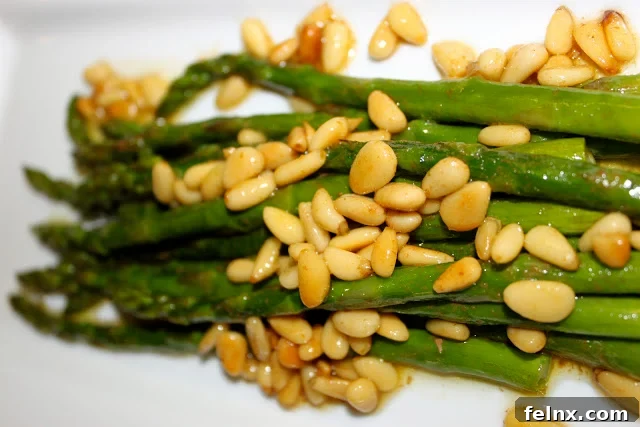
Final Thoughts
Great cooking doesn’t always require hours of preparation or complex techniques. Sometimes, the most memorable meals are those that respect the ingredients and use simple methods to highlight their natural beauty. Susan Middleton’s approach in Fast, Fresh, and Green reminds us that with a little butter, a handful of nuts, and a squeeze of lemon, we can create something truly extraordinary.
Whether you are hosting a formal dinner party or looking for a quick weeknight side dish, this Brown Buttered Asparagus with Pignoli is sure to impress. It is a testament to the fact that simplicity is often the ultimate sophistication in the kitchen. Enjoy the fresh flavors of the season!
Did you make this recipe?
I would love to see your creations! Please leave a comment below or share a photo on Instagram. Tag @italianbellavita or use the hashtag #italianbellavita to join our community of food lovers.