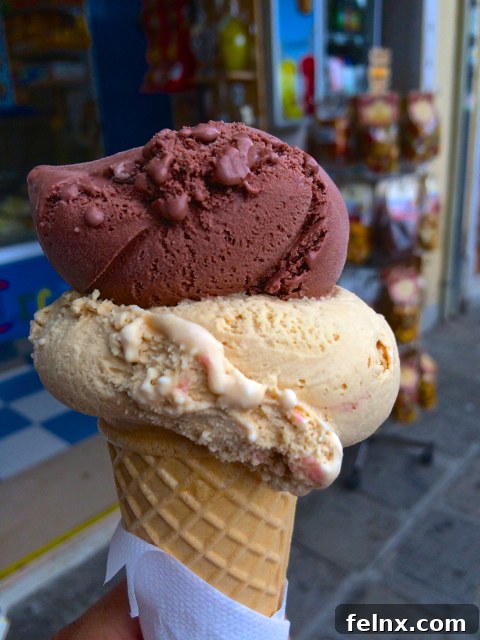
A beautiful array of creamy gelato flavors including chocolate, Nutella, strawberry, and lemon captured during a trip to Rome and Venice.
The Ultimate Guide to Homemade Nutella and Pistachio Gelato
When the summer heat becomes intense and the mercury on your thermometer starts climbing toward the triple digits, there is only one thing on everyone’s mind: finding a way to cool down. While traditional ice cream is a staple of the season, there is something even more indulgent and satisfying that stands in a category of its own. We are talking about authentic Italian Gelato.
If you have ever walked through the cobblestone streets of Rome or the winding alleys of Venice, you know that a visit to a local gelateria is a rite of passage. The vibrant colors, the visible creaminess, and the intense flavors are enough to make anyone a lifelong fan. Today, we are bringing that experience into your kitchen with a recipe that combines two of Italy’s most beloved flavors: the iconic chocolate-hazelnut spread, Nutella, and the crunchy, earthy goodness of Pistachios.
Why Gelato Trumps Regular Ice Cream
Many people wonder what actually separates gelato from American-style ice cream. It isn’t just a fancy name; the differences lie in the ingredients, the air content, and the serving temperature. Gelato typically contains more milk and less cream than ice cream, which means it has a lower percentage of butterfat. While this might sound less indulgent, it actually allows the main flavors—like Nutella or fruit—to shine through more clearly without being coated by fat.
Furthermore, gelato is churned at a much slower speed. This process incorporates less air, resulting in a denser, silkier texture. Finally, gelato is served about 10 to 15 degrees warmer than ice cream. This ensures that your tongue isn’t numbed by the cold, allowing you to fully experience the complexity of the flavors. When you combine this technique with the rich, velvety taste of Nutella, you get a dessert that is truly world-class.
The Magic of Nutella: An Italian Tradition
Nutella is more than just a spread in Italy; it is a cultural icon. Created in the Piedmont region after World War II when cocoa was scarce and hazelnuts were plentiful, it has become a staple of the Italian breakfast table. It is not uncommon to see Italian children enjoying a Nutella-stuffed pastry or a simple slice of bread generously coated in this hazelnut heaven before heading to school. It certainly offers a delicious alternative to standard cereal!
Interestingly, many travelers and culinary enthusiasts have noted a distinct difference between the Nutella sold in Italy and the versions exported to the United States or other countries. Italian Nutella is often praised for being creamier, less oily, and having a more pronounced hazelnut flavor. This is because the quality of ingredients often varies by region. If you can get your hands on an imported jar for this recipe, you will notice a significant upgrade in the final result, though any high-quality hazelnut spread will still produce a fantastic gelato.
The true consistency of gelato is soft and supple. Since it contains less fat and air, it begins to melt beautifully the moment it hits the bowl.
How to Make Nutella and Pistachio Gelato at Home
Making gelato at home is a rewarding process that requires patience and a few key ingredients. This particular recipe uses a starch-based thickening method, which is common in many parts of Italy, especially for recipes that don’t rely on egg yolks. This creates a clean finish on the palate and lets the Nutella take center stage.
Recipe: Authentic Nutella and Pistachio Gelato
This recipe creates a rich, decadent treat that balances the sweetness of chocolate-hazelnut with the salty crunch of roasted pistachios.
Ingredients You Will Need:
- 1¾ cups Heavy Cream: Provides the necessary richness and body.
- 2¼ cups Whole Milk: The base of the gelato; ensure it is divided as per the instructions.
- ½ cup Granulated Sugar: To sweeten the base without overpowering the Nutella.
- 2 tablespoons Cornstarch: The secret to a thick, smooth texture without eggs.
- A pinch of Sea Salt: Enhances the chocolate and nut flavors.
- 1 cup Nutella: The star ingredient. Use room temperature spread for easier mixing.
- ½ to 1 cup Chopped Pistachios: Roasted and slightly salted pistachios work best for contrast.
Step-by-Step Instructions:
- Prepare the Base: In a medium saucepan, combine the heavy cream and 1½ cups of the whole milk. Set this over medium-low heat. You want to bring it to a gentle simmer, not a rolling boil.
- Mix the Thickener: While the milk and cream are heating, take a separate small bowl and whisk together the remaining ¾ cup of milk, the sugar, cornstarch, and the pinch of salt. Ensure there are no lumps from the cornstarch.
- Combine and Thicken: Once the mixture in the saucepan is simmering, slowly pour in the milk and cornstarch mixture. Stir continuously to ensure a smooth transition.
- Incorporate the Nutella: Slowly whisk the Nutella into the warm liquid. Continue to stir over medium-low heat. You will notice the mixture beginning to thicken. This usually takes about 10 to 15 minutes. It is ready when the liquid can thicky coat the back of a wooden spoon.
- Cooling Phase: Remove the pan from the heat. For the smoothest possible texture, pass the mixture through a fine-mesh strainer into a clean bowl. Let it cool to room temperature, then cover it with plastic wrap (pressing the wrap against the surface to prevent a skin from forming). Refrigerate for at least 4 hours, or ideally overnight.
- Churning: Once the base is thoroughly chilled, give it a quick whisk. Pour it into your electric ice cream maker. Follow the manufacturer’s instructions, usually churning for about 25 to 30 minutes.
- The Finishing Touch: About 5 minutes before the churning process is complete, add your chopped pistachios through the opening in the lid. This allows them to be evenly distributed without losing their crunch.
- Serving: The gelato will be very soft right out of the machine. If you prefer a firmer scoop, transfer it to an airtight container and freeze for an additional 2 hours.
Tips for the Best Results
To achieve a professional-grade dessert, keep these tips in mind. First, always use full-fat dairy. Gelato relies on the protein and fat in whole milk and cream to create its signature structure. Second, don’t rush the cooling process. A cold base is essential for a smooth churn; if the mixture is too warm, large ice crystals will form, making the gelato grainy.
When it comes to the pistachios, try to find “Bronte” pistachios if possible, as they are world-renowned for their emerald green color and intense aroma. If those aren’t available, simply ensure your pistachios are fresh. Stale nuts can ruin the delicate balance of the gelato.
The Cultural Experience of Gelato
In Italy, eating gelato is more than just consuming a dessert; it is a social event. Families, couples, and friends often partake in the “passeggiata”—a slow evening stroll through the town square—with a cone or cup in hand. Whether it’s a simple “piccolo” (small) or a “grande” (large), the joy of gelato is universal. By making this Nutella and Pistachio version at home, you are capturing a piece of that Italian “Bella Vita” (beautiful life).
This recipe is adapted to work in standard home ice cream makers. While home machines can’t always replicate the industrial power of a professional Italian “mantecatore,” the results of this homemade version are incredibly close and far superior to anything you can buy in a grocery store tub.
A warm “Buon Appetito” from a traditional gelateria in Italy!
Buon Appetito!
Join the Conversation
Did you try making this Nutella and Pistachio Gelato? We would love to see your results! Culinary creations are meant to be shared. Please leave a comment below or share your photos on social media. You can tag your masterpieces with #ItalianBellaVita on Instagram to connect with other food lovers and show off your homemade Italian treats.