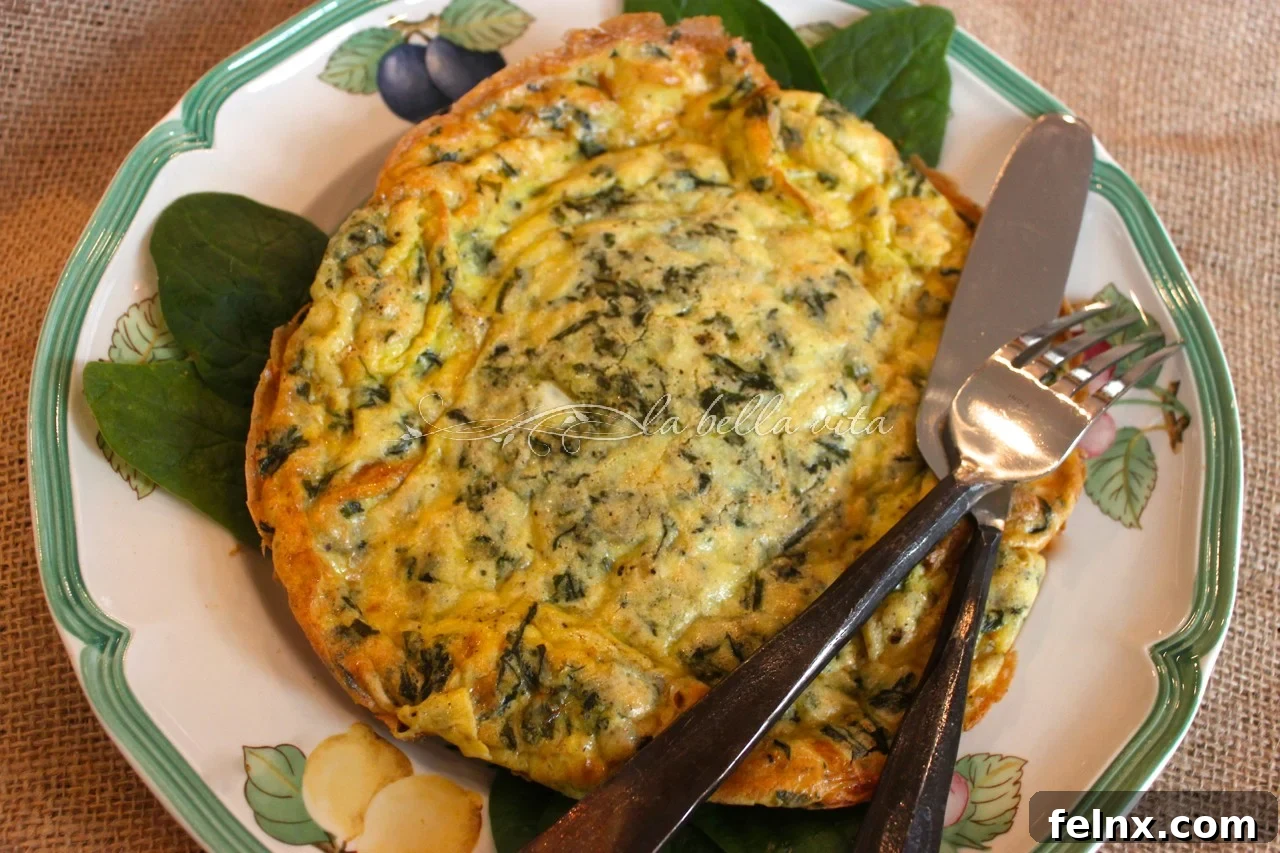
Authentic Italian Frittata with Swiss Chard and Pecorino Romano: A Family Legacy
Eggs are often called the most versatile ingredient in the culinary world, and for good reason. They are the humble foundation of countless masterpieces, ranging from delicate soufflés to hearty breakfast casseroles. In my kitchen, eggs are not just a staple; they are the star of the show. Whether they are transformed into a fluffy omelette, a rich quiche, or classic deviled eggs, there is something deeply satisfying about the simple elegance of a well-cooked egg dish. However, if there is one preparation that holds a special place in my heart and my heritage, it is the authentic Italian frittata.
The beauty of a frittata lies in its simplicity and its ability to turn humble leftovers into a gourmet meal. Recently, while spending time in the kitchen with my mother, we found ourselves with a small bowl of leftover Swiss chard and cheese filling after making a batch of handmade ravioli. Rather than letting those delicious flavors go to waste, my mother shared a memory that instantly bridged the gap between generations. She told me, “My mother used to take the leftover ravioli filling and make a frittata with it.”
A Recipe Steeped in Family History
This simple suggestion was more than just a cooking tip; it was a connection to my maternal nonna, Catherine Lazzaretti Santi. I never had the chance to meet her, as she passed away far too young during the birth of my uncle Joseph. My mother was only 17 when she lost her mother, a tragedy that left a void in her life but also a treasure trove of culinary memories. By making this Swiss chard frittata, I felt as though I was bringing a piece of my grandmother’s kitchen back to life.
When I surprised my mother with this frittata the next morning, her reaction was all the validation I needed. She loved it, and for a moment, the flavors of the Swiss chard, sharp Italian cheese, and fresh eggs brought back the essence of her mother’s cooking. In Italian culture, food is the language of love and memory, and this dish is a perfect example of that tradition. If you are looking for a recipe that combines nutrition, flavor, and a touch of history, this Frittata with Swiss Chard and Italian Cheese is the perfect choice.
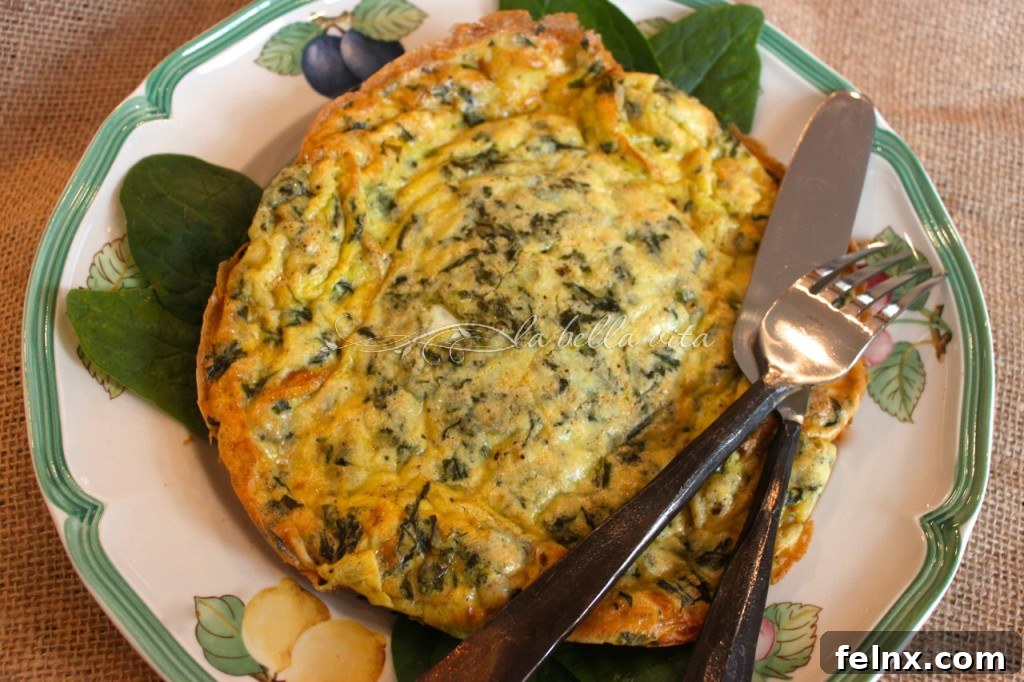
The Essentials of a Perfect Frittata
One of the best things about this recipe is how incredibly easy it is to prepare. All you need are five jumbo eggs, about two-thirds of a cup of leftover Swiss chard filling (or freshly sautéed chard with garlic), and a generous half-cup of grated Pecorino Romano cheese. A touch of fresh cracked black pepper adds just the right amount of heat to balance the richness of the eggs and the saltiness of the cheese.
The secret to a successful frittata is the pan. Using a small, well-oiled skillet—preferably one with a metal handle that can go from the stovetop to the oven—is crucial. Ensuring the pan is properly greased with high-quality olive oil prevents the eggs from sticking and allows the frittata to slide out effortlessly onto your plate. This dish proves that you don’t need expensive ingredients or complex techniques to create something truly delicious.
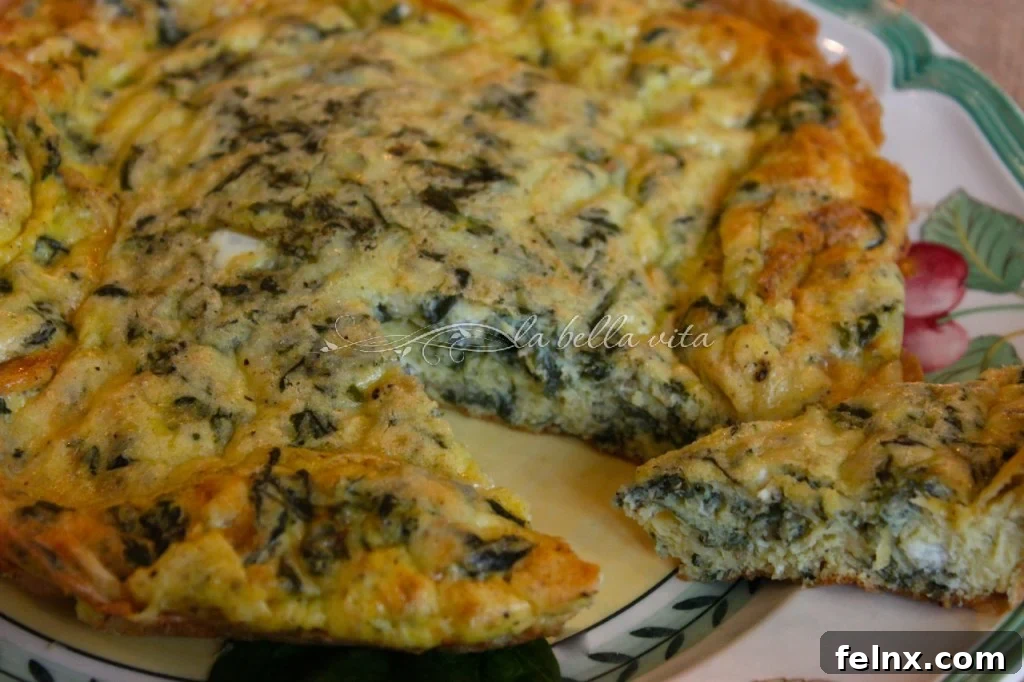
Frittata vs. Omelette: Understanding the Difference
The word “frittata” comes from the Italian verb friggere, which means “to fry.” While it is often compared to an omelette, there are five key characteristics that make an Italian frittata a distinct culinary creation:
- Integrated Ingredients: Unlike an omelette, where the fillings are folded into the center of the cooked eggs, a frittata incorporates the ingredients directly into the raw egg mixture before cooking begins.
- Airy Texture: The eggs for a frittata are often beaten more vigorously than those for an omelette. This incorporates more air, resulting in a deeper, fluffier texture that can support heavy fillings like greens and cheeses.
- Slow and Low Heat: A frittata is cooked over very low heat for 5 to 10 minutes. This slow process allows the bottom to set perfectly while the top remains slightly runny before the final cooking stage.
- No Folding: A frittata is never folded. It remains a flat, open-faced disc that showcases the vibrant colors of its ingredients.
- The Finishing Touch: While an omelette is finished on the stove, a frittata is typically finished under a broiler or in a hot oven. This creates a beautiful golden-brown crust on top and ensures the center is fully set.
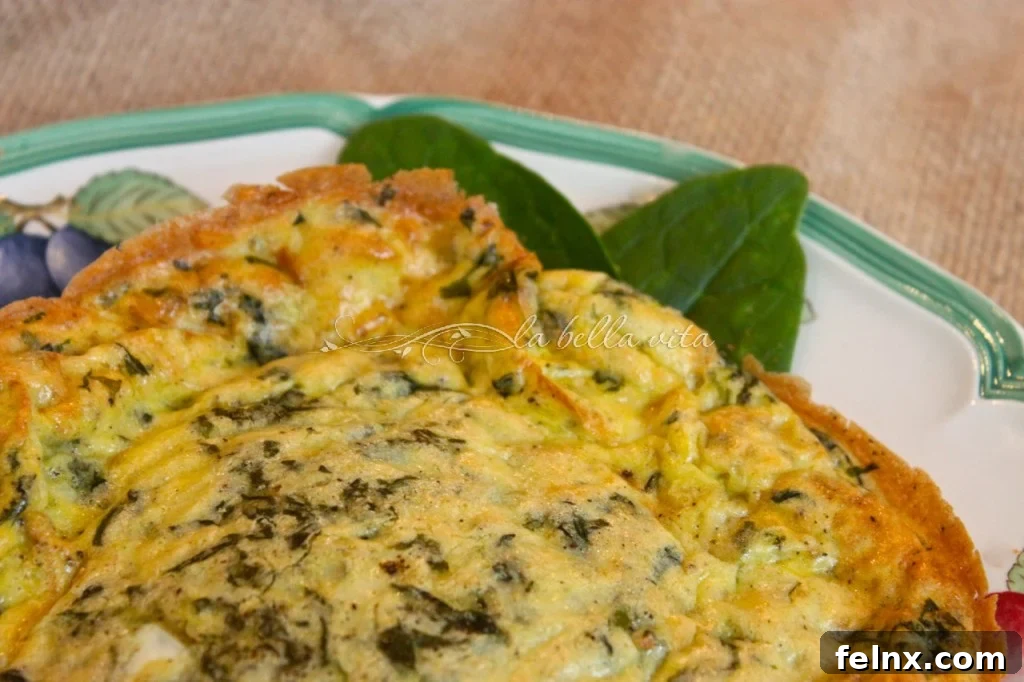
Detailed Recipe: Frittata with Swiss Chard and Italian Cheese
This recipe is excellent served hot right out of the oven, but it is equally delicious when served at room temperature or even cold. In Italy, it is very common to see frittata slices packed for work lunches, picnics, or outdoor outings. It is the ultimate versatile meal.
Ingredients
- 5 Jumbo Eggs: Use the freshest eggs you can find for the best flavor and lift.
- Leftover Ravioli Swiss Chard Filling: Approximately 2/3 cup. If you don’t have leftovers, you can sauté fresh Swiss chard with a bit of garlic and ricotta cheese.
- 1/2 Cup Pecorino Romano Cheese: This aged sheep’s milk cheese provides a sharp, salty kick that defines the Italian profile of this dish.
- Fresh Cracked Black Pepper: To taste.
- Extra Virgin Olive Oil: For greasing the skillet.
Cooking Instructions
Step 1: Preparation
Start by preheating your oven to 450 degrees Fahrenheit. While the oven is heating, take a small bowl and beat the five jumbo eggs thoroughly. You want to see some bubbles forming, as this air will help the frittata rise and become light and fluffy.
Step 2: Mixing the Flavors
Add the Swiss chard filling, the grated Pecorino Romano cheese, and the cracked black pepper to the beaten eggs. Whisk everything together until the ingredients are evenly distributed. The filling should be well-incorporated so that every bite of the frittata contains a perfect balance of greens, cheese, and egg.
Step 3: Stovetop Cooking
Heat a small, oven-safe, teflon-coated skillet over low to medium heat. Add a generous amount of olive oil, ensuring the bottom and the sides of the pan are well-coated. Pour the egg mixture into the pan. Let it cook slowly for about 10 minutes.
Step 4: Creating Edges
As the frittata cooks, use a spatula to gently lift the edges. This allows the liquid egg on top to flow underneath, helping the dish cook more evenly and preventing the bottom from burning while the top is still raw.
Step 5: The Oven Finish
Once the underside is set but the top is still slightly runny, transfer the skillet to the preheated oven. Bake for approximately 5 minutes. Keep a close eye on it during this stage; you want the eggs to set completely without becoming rubbery.
Step 6: Broiling for Color
To finish the dish, turn on the broiler for a minute or two. This will give the top of the frittata a beautiful golden-brown hue and a slightly crisp texture around the edges. Watch it carefully, as the broiler can burn food very quickly.
Step 7: Serving
Remove the pan from the oven and let it rest for a minute. Slide the frittata onto a serving plate and slice it into wedges. It can be enjoyed immediately as a warm breakfast or saved for a sophisticated cold lunch later in the day.
The Nutritional Power of Swiss Chard
Adding Swiss chard to your frittata isn’t just about tradition; it’s also a fantastic way to boost the nutritional value of your meal. Swiss chard is a nutritional powerhouse, packed with vitamins A, K, and C. It is also rich in minerals like magnesium, potassium, and iron. When sautéed and mixed with the protein-rich eggs, it creates a balanced meal that provides lasting energy throughout the day.
The earthy flavor of the chard pairs perfectly with the sharpness of the Pecorino Romano. If you find Swiss chard too bitter, you can always substitute it with spinach or kale, though the traditional Italian version using chard offers a unique depth of flavor that is hard to beat.
Variations and Tips for Success
While this recipe focuses on Swiss chard and Italian cheese, the beauty of the frittata is its adaptability. You can add sautéed onions, bell peppers, mushrooms, or even small pieces of cooked pancetta for a smokier flavor. If you prefer a milder cheese, Parmigiano-Reggiano is an excellent substitute for Pecorino Romano.
To ensure your frittata is always a success, remember these pro tips:
- Don’t Overcook: Eggs continue to cook for a few moments even after they are removed from the heat. Take the frittata out of the oven just as the center stops jiggling.
- Quality Matters: Since there are so few ingredients, the quality of your olive oil and cheese will make a significant difference in the final taste.
- Seasoning: Be mindful of salt. Pecorino Romano is naturally quite salty, so you may not need to add extra salt beyond what is in the cheese and the filling.
Conclusion: A Taste of Italy at Your Table
This Frittata with Swiss Chard and Italian Cheese is more than just a meal; it is a celebration of family, history, and the simple joys of Italian cooking. Whether you are honoring your own heritage or simply looking for a delicious and healthy way to use up leftovers, this recipe is sure to become a favorite in your household. It is a testament to the fact that with a few eggs and a little bit of creativity, you can create a dish that is both nourishing for the body and comforting for the soul.
So the next time you find yourself with a bit of leftover greens or a surplus of eggs, remember my Nonna Catherine and the tradition of the Italian frittata. Buon appetito!
Did you make this recipe?
Please leave a comment and share your experience! You can also share a photo of your creation on Instagram and tag us with #italianbellavita. We love seeing how you bring these traditional recipes to life in your own kitchen!