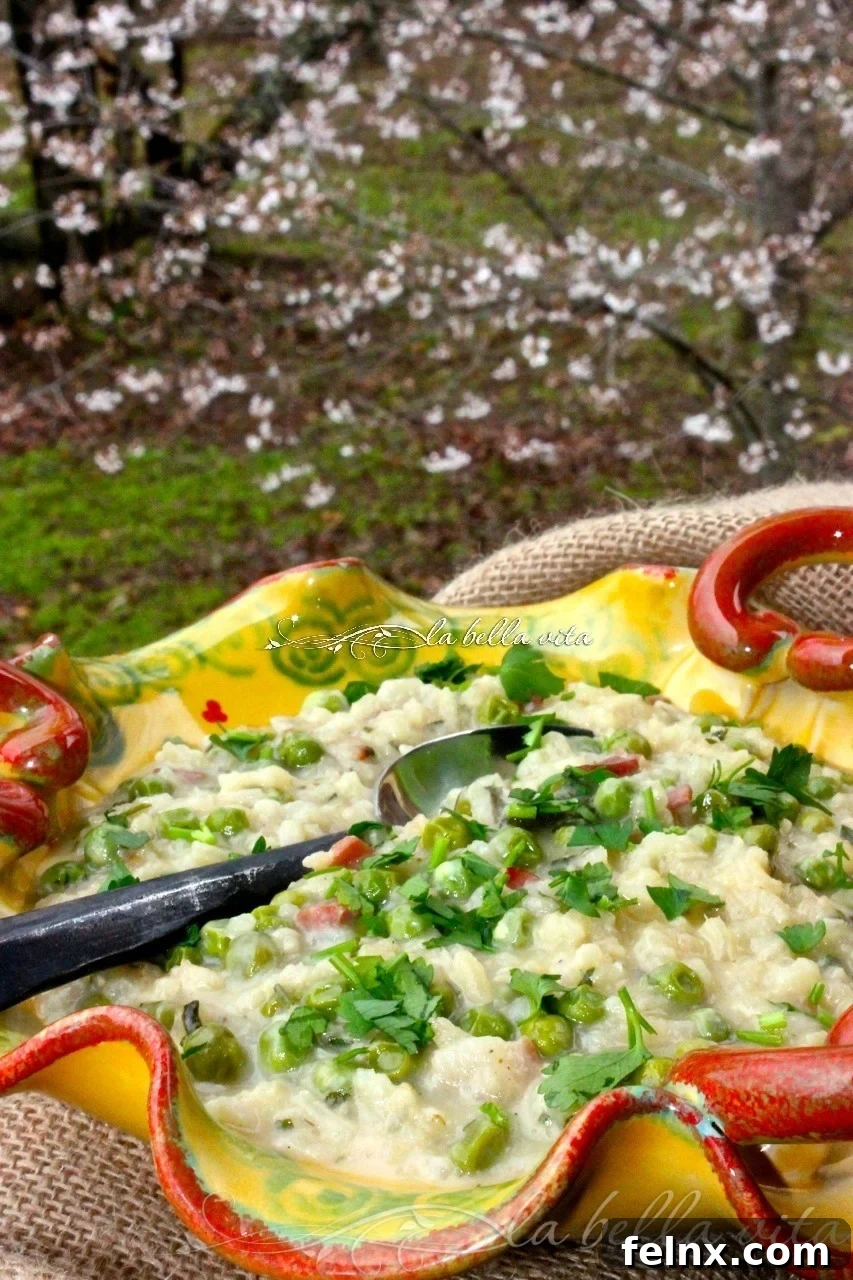
Cherry trees bloom behind a perfect springtime recipe – Risi e Bisi.
Risi e Bisi: Embrace the Flavors of Spring with this Classic Venetian Rice and Peas Dish
There’s an undeniable magic in the air when spring finally arrives. After the long, cold embrace of winter, the world awakens, bursting with vibrant colors and the promise of fresh, seasonal delights. For food enthusiasts, this means a joyous return to cooking with ingredients at their peak – and few embody the essence of spring quite like the humble, sweet pea.
In the culinary heartland of Venice, where rice often takes precedence over pasta, one dish stands out as the ultimate celebration of this verdant season: Risi e Bisi (Rice and Peas). More than just a meal, it’s a testament to Venetian tradition, a dish historically revered and now cherished by all. This delightful recipe perfectly encapsulates the freshness and lightness that spring cuisine is all about, making it an ideal addition to your seasonal cooking repertoire.
A Journey Through Time: The Noble Origins of Risi e Bisi
The history of Risi e Bisi is as rich and captivating as the city from which it hails. This iconic dish was once an exclusive delicacy, reserved for the most esteemed palates in Venice. Traditionally, it graced the tables of the Doge – the supreme ruler and magistrate of the Republic of Venice – specifically on April 25th, the Feast of St. Mark, the patron saint of Venice. This annual celebration marked a moment of profound cultural and religious significance, and Risi e Bisi symbolized the city’s agricultural bounty and refined culinary heritage. Imagine the grand halls of the Doge’s Palace, adorned with exquisite art and architecture, where this seemingly simple dish was served to royalty. It speaks volumes about the reverence held for fresh, seasonal ingredients and the skillful preparation that transformed them into a feast fit for a king. The exclusivity of the dish for the Venetian Doges underscored its prestige and connection to the city’s elite.
Today, while the exclusivity is gone, the prestige remains. Risi e Bisi is now a beloved springtime staple, enjoyed in homes and trattorias throughout Veneto and beyond. Its seasonal appeal is intrinsically linked to the availability of freshly harvested peas, which burst with unparalleled sweetness and flavor during the spring months. To truly appreciate this traditional Venetian recipe, one must seek out the freshest peas possible, as they are the undisputed stars of the show. The dish’s evolution from a royal delicacy to a universally enjoyed comfort food highlights its enduring appeal and adaptability within Italian cuisine.
The Subtle Art of Risi e Bisi: A Symphony of Flavors
Unlike many Italian dishes that boast bold, assertive flavors, Risi e Bisi offers a delicate, almost understated taste experience. It’s a dish of remarkable subtlety, where each ingredient plays a harmonious role without overpowering the others. The gentle sweetness of the peas, the creamy texture of the Arborio rice, and the savory undertones create a balanced profile that is both comforting and incredibly satisfying. This inherent mildness is not a weakness but a distinct characteristic that sets Risi e Bisi apart from other vibrant Italian flavors. It’s a testament to the idea that sometimes, less is truly more, allowing the natural goodness of the ingredients to shine through.
For those accustomed to robust culinary sensations, this dish might initially seem too subtle. However, its true beauty lies in its ability to highlight the natural goodness of its core components. It’s often served as a *primo piatto* (first course) or a flavorful side dish, particularly alongside an entrée that offers a more intense flavor explosion. The gentle, clean palate of Risi e Bisi provides a wonderful counterpoint, cleansing and preparing the taste buds for richer flavors. This makes it an incredibly versatile dish, capable of complementing a variety of main courses without competing for attention.
Customizing Your Risi e Bisi: A Touch of Personal Flair
While tradition emphasizes simplicity, culinary exploration is always welcome. If your family, like many, prefers a more ‘amped-up’ flavor profile, Risi e Bisi readily accommodates subtle enhancements. The addition of sautéed pancetta introduces a delightful smoky, savory depth, its crispy texture offering a pleasing contrast to the soft rice and peas. A splash of dry white wine, added after the rice has been toasted, deglazes the pan, adding a bright, acidic note that elevates the overall taste profile and contributes to a richer broth. These additions, though not strictly traditional to the most austere versions, have become popular adaptations that truly make a difference for those seeking a richer experience without overshadowing the essential role of the fresh peas. Experimenting with these elements allows you to tailor the classic Risi e Bisi recipe to your personal taste preferences, creating a dish that truly resonates with you and your loved ones.
More Than a Risotto: Understanding the Unique Consistency
One of the most common misconceptions about Risi e Bisi is that it is simply a type of risotto. While both are rice-based dishes originating from Northern Italy and share some preparation methods, Risi e Bisi traditionally boasts a distinct consistency. It is generally conceived as more of a “rich, heavy soup” or a very liquidy stew, rather than the thick, creamy, and often firmer consistency of a typical risotto. The expectation is that you would need a spoon to enjoy it, indicating a higher liquid content. This looser texture is a hallmark of authentic Venetian Risi e Bisi, differentiating it from its Arborio-based cousin.
Achieving the perfect consistency is key to an authentic Risi e Bisi experience. If you desire a more brothy, soup-like texture, you can add the chicken or vegetable broth all at once, allowing the rice to cook through without the constant stirring and gradual absorption method common to risotto. This approach results in a looser, more fluid dish, where the rice grains are suspended in a flavorful, pea-infused broth. However, if you prefer a slightly thicker version, leaning closer to a very soft risotto, you can employ the classic risotto technique of adding broth one cup at a time, stirring until absorbed before adding the next. This method yields a creamier, denser consistency, albeit still softer than a typical risotto. Should your Risi e Bisi become too thick for your liking at any point, simply add more hot broth until the desired consistency is achieved, remembering that continuous stirring is less crucial here than in a traditional risotto. The flexibility in preparation allows home cooks to customize the dish to their preferred texture, making it adaptable while still respecting its roots.
Regardless of the exact consistency you aim for, Risi e Bisi is surprisingly filling. Even a modest serving can be quite substantial, making it a satisfying dish on its own or a generous accompaniment to a lighter main course. Its hearty nature, combined with its fresh flavors, makes it an ideal meal for a cool spring evening.
The Star of the Show: The Glorious Pea
As its name, “Rice and Peas,” clearly states, the peas are not merely an afterthought; they are the unequivocal focus of this Venetian classic. You should expect to see a generous amount of peas in Risi e Bisi – indeed, the dish should be vibrant green with them! Their fresh, sweet flavor and tender texture are what truly define this recipe, making it an ode to springtime produce. The selection of high-quality, fresh peas is paramount; their natural sugars and crispness elevate the entire dish, transforming it from good to truly exceptional. While frozen peas can be used as a convenient alternative, the unparalleled sweetness and delicate pop of fresh peas will undoubtedly provide a superior Risi e Bisi experience.
When preparing Risi e Bisi, aim for a pea-to-rice ratio that clearly emphasizes the peas. This is where the dish truly shines, capturing the very essence of spring in every delightful spoonful. The abundance of peas not only contributes to the visual appeal but also ensures that their distinct flavor is at the forefront. This commitment to fresh, seasonal ingredients is a cornerstone of Italian cuisine, and Risi e Bisi exemplifies it beautifully. This delightful Venetian classic offers a unique blend of history, tradition, and exquisite seasonal flavor. It’s a dish that invites you to slow down, savor the simple goodness of fresh ingredients, and transport yourself, if only for a moment, to the enchanting canals of Venice. Prepare it, and you’ll certainly capture the essence of spring in this delightful culinary masterpiece, bringing a piece of Venetian heritage into your kitchen.
The cheerful forsythia bloomed this week in the Carolinas, a sure sign of spring’s vibrant return!
Experience Venice: A Glimpse into the Doge’s Palace
To truly appreciate the historical context of Risi e Bisi, one might imagine the grandeur of the Doge’s Palace in Venice. This architectural marvel, a symbol of Venetian power and prestige, was once the exclusive setting where Risi e Bisi was first served to Venetian royalty. Its opulent chambers and intricate designs offer a window into the past, where culinary traditions were deeply intertwined with social status and seasonal celebrations. Walking through its historic halls, one can almost feel the presence of the Doges and their esteemed guests, savoring a dish that symbolized both their authority and the city’s bounty. The palace is not just a building; it’s a living testament to Venice’s rich cultural and culinary heritage.
The breathtaking entrance to the Doge’s Palace, an epitome of extraordinary, intricate marble work.
Covered porticos nestled within the ancient walls of the Doge’s Palace, echoing tales of Venetian history.
The famous “Bridge of Sighs,” a historical walkway connecting the grandeur of the Doge’s Palace to its adjacent prison, where prisoners were said to catch their last glimpse of the outside world before their incarceration.
Authentic Risi e Bisi Recipe: A Taste of Venetian Spring
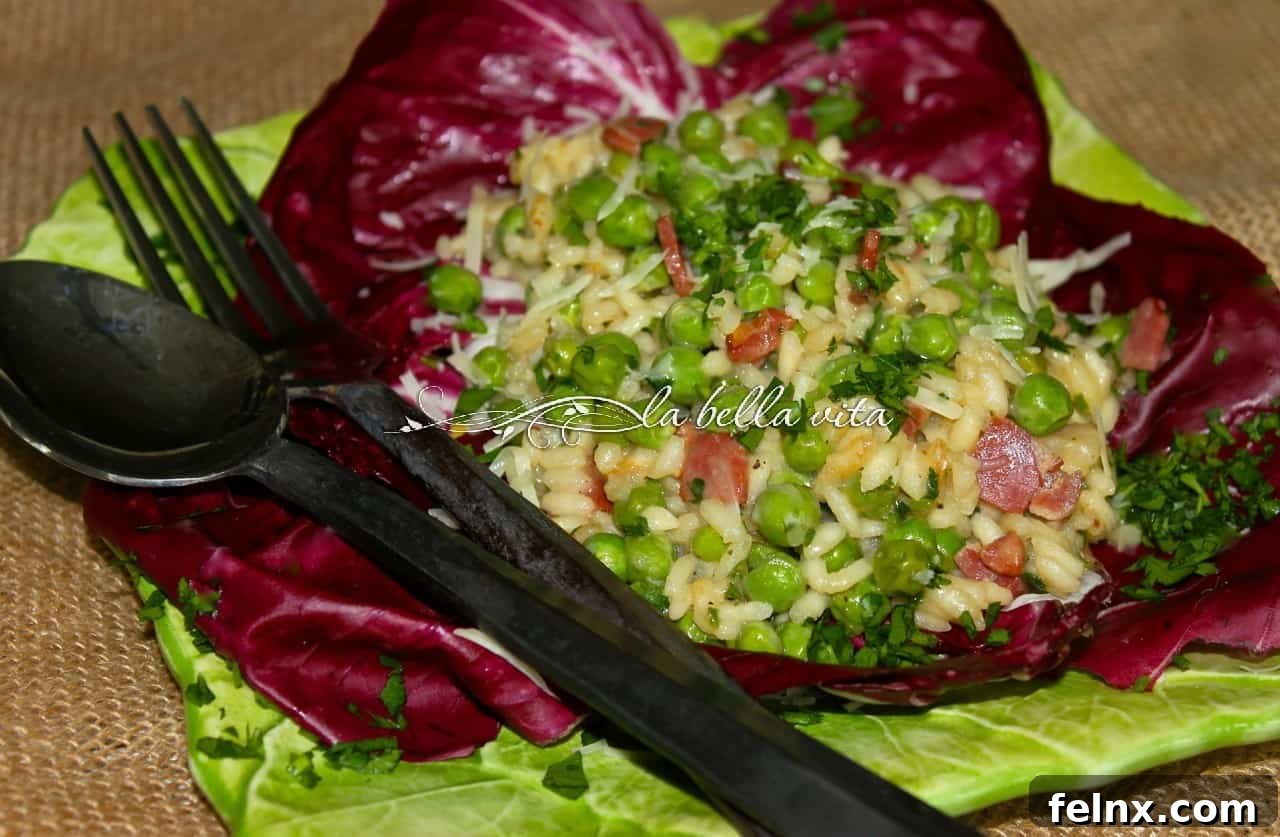
Risi e Bisi (Venetian Rice and Peas)
Pin Recipe
Leave a Comment
This traditional Venetian Risi e Bisi recipe captures the very essence of springtime with fresh, sweet peas. While it shares some characteristics with risotto, it’s typically served with a looser, more soup-like consistency, making it a delightful first course or a light main. For those who enjoy a richer flavor, optional additions like garlic and pancetta truly enhance the dish. Adjust the broth to achieve your preferred texture, from brothy to a softer, thicker rice stew, allowing the fresh peas to be the undisputed star.
Ingredients
- 2 Tbsp. butter
- 2 Tbsp. olive oil
- 1 cup of finely diced yellow onion
- 2 large cloves of garlic, minced
- 4 oz. pancetta, cut into ¼” cubes (optional, for richer flavor)
- 2 cups Arborio rice
- ½ cup dry white wine (optional, for enhanced flavor)
- 6 leaves of fresh sage
- 6 – 8 cups of chicken or vegetable broth/stock, warmed
- 4 cups of fresh peas (frozen peas can be used if fresh are unavailable)
- ½ – 1 cup freshly grated Parmigiano Reggiano cheese
- ½ cup freshly grated Grana Padano cheese (or additional Parmigiano Reggiano)
- 4 Tbsp. chopped Italian parsley, plus extra for garnish
Instructions
- Gently warm the chicken or vegetable broth/stock in a medium-sized pot and keep it at a low simmer throughout the cooking process. This ensures it’s hot when added to the rice, preventing the cooking temperature from dropping.
- In a wide, deep saucepan or Dutch oven, melt 2 tablespoons of butter along with 2 tablespoons of olive oil over medium heat.
- Add the finely diced yellow onion to the pan and sauté for approximately 7-8 minutes, or until the onions become translucent and soft, but not browned.
- If using, add the minced garlic and the cubed pancetta to the pan. Continue to sauté for another 8-10 minutes, stirring occasionally, until the pancetta is slightly crispy and the garlic is fragrant. Be careful not to burn the garlic, as it can turn bitter.
- Add the Arborio rice to the saucepan. Cook on low-medium heat for about 5 minutes, stirring constantly, until the edges of the rice grains start to turn glassy (toasting the rice). This step helps the rice absorb liquid evenly and maintains its texture.
- If using, pour in the dry white wine and simmer for 2 minutes, allowing the alcohol to evaporate and the wine to be absorbed by the rice. This adds a layer of depth and acidity to the dish.
- Stir in the whole sage leaves, which will infuse a subtle, aromatic flavor.
- Now, begin adding the warm broth. For a traditional, soup-like Risi e Bisi, you can add most of the broth (e.g., 6 cups) at once, stirring occasionally until the rice is cooked al dente and has absorbed much of the liquid, but remains soupy. If you prefer a slightly thicker, softer risotto-like consistency, add the broth one cup at a time, stirring continuously until each cup is mostly absorbed before adding the next. Continue this process until the rice is cooked to your preferred tenderness (usually 20-25 minutes).
- Throughout the cooking process, if the Risi e Bisi becomes too thick for your preference (more like a traditional risotto), simply add more hot broth until you achieve the desired liquid consistency. Remember, it should be loose enough to eat with a spoon.
- Stir in the fresh peas (or frozen peas; if using frozen, add them a few minutes earlier to ensure they are fully cooked). Cook for just a few minutes until the peas are tender and vibrant green, preserving their freshness.
- Remove from heat and stir in the freshly grated Parmigiano Reggiano and Grana Padano cheeses until melted and creamy, enriching the texture and flavor of the dish.
- Finally, stir in the chopped Italian parsley, adding a final burst of fresh herbaceousness.
- Serve immediately in warm bowls, garnished with an extra sprinkle of grated Parmigiano Reggiano cheese and a sprig of fresh parsley. Enjoy this authentic taste of Venetian spring, a dish that truly celebrates the season’s bounty!
Did you enjoy this authentic Risi e Bisi recipe? We’d love to hear from you! Please leave a comment below or share your culinary creation on Instagram by tagging @italianbellavita or using the hashtag #italianbellavita. Your culinary adventures inspire us!