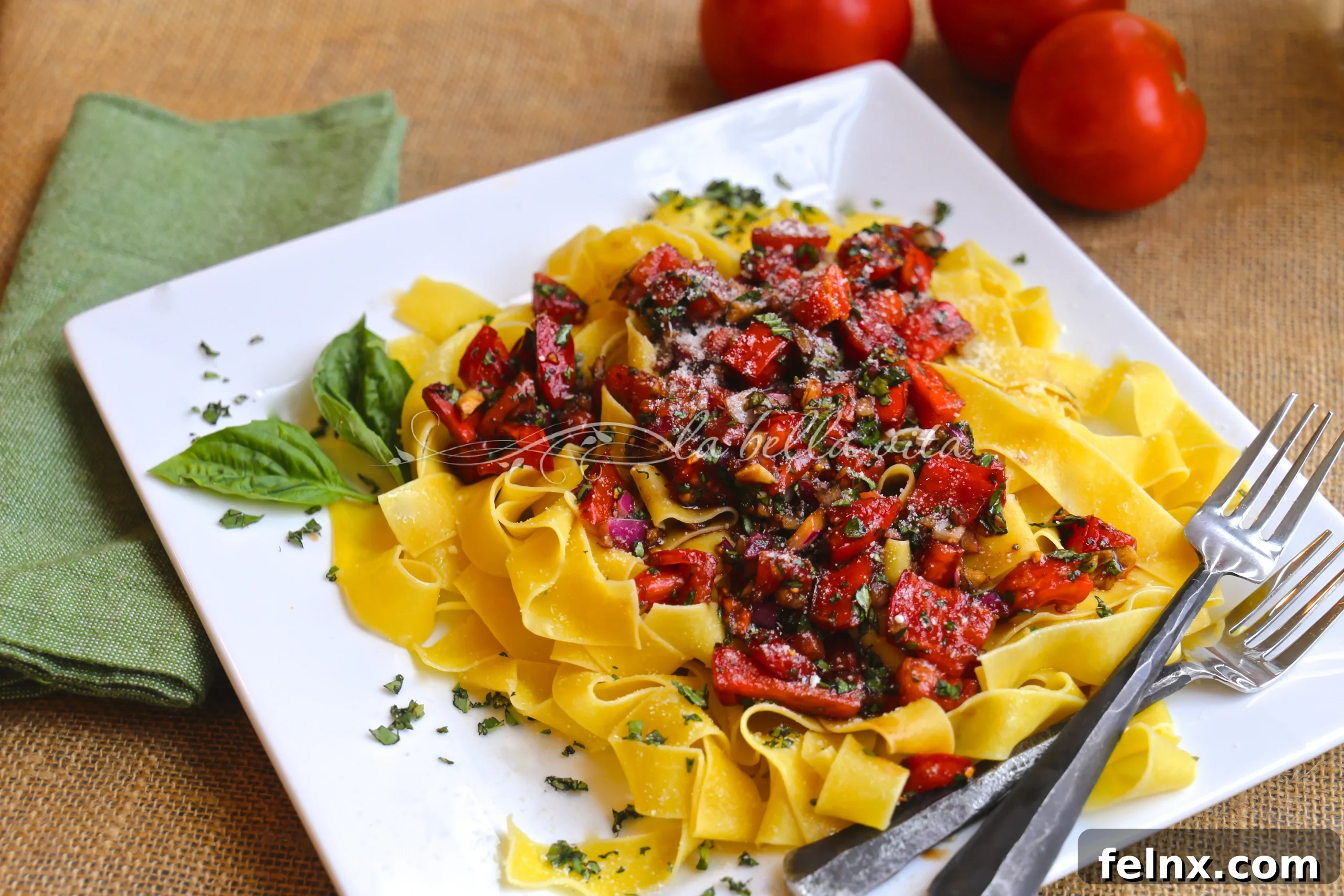
Refreshing Bruschetta Pappardelle: The Ultimate Fresh Italian Summer Pasta Recipe
When the heat of summer arrives, our appetites naturally shift toward meals that are light, vibrant, and incredibly fresh. There is nothing quite like the combination of sun-ripened vegetables and high-quality pasta to celebrate the season. This Bruschetta Pappardelle recipe is the perfect embodiment of that philosophy. It is fat-free, easy to prepare, and absolutely bursting with the authentic flavors of Northern Italy.
Inspired by the classic culinary wisdom found in “The Splendid Table: Recipes from Emilia-Romagna, the Heartland of Northern Italian Food” by Lynne Rossetto Kasper, this dish reimagines the traditional bruschetta topping as a luxurious pasta sauce. While the original inspiration might suggest tagliatelle, using wide, ribbon-like pappardelle adds a rustic elegance that holds the fresh tomato mixture beautifully. Whether you are hosting a garden party or looking for a quick weeknight dinner that doesn’t feel like a compromise, this recipe is a guaranteed winner.
The Magic of Cold Sauce on Hot Pasta
The secret to this dish’s success lies in a simple yet effective Italian culinary technique: serving a cold, marinated sauce over steaming hot pasta. As the hot noodles hit the chilled tomato and balsamic mixture, they slightly warm the ingredients, releasing the oils in the basil and the aroma of the garlic without actually cooking the fresh produce. This preserves the “crunch” of the tomatoes and the “zing” of the vinegar, creating a contrast in temperature and texture that is incredibly refreshing on a humid July or August evening.
Because the sauce is not cooked, the quality of your ingredients is paramount. There is nowhere for mediocre flavors to hide. This recipe demands the best of what the season offers: vine-ripened tomatoes that smell like the earth, aromatic basil picked straight from the garden, and the complex sweetness of a high-quality balsamic vinegar.
Choosing Your Ingredients for Maximum Flavor
The Tomatoes: The Heart of the Dish
For this Bruschetta Pappardelle, you should ideally use large, vine-ripe tomatoes. Roma or San Marzano varieties work well due to their lower water content and meaty texture, but a mix of colorful heirloom tomatoes can also add a beautiful visual appeal. The key is to ensure they are at peak ripeness. If the tomatoes are too firm, they won’t release the juices necessary to coat the wide pappardelle ribbons.
The Balsamic Vinegar: Modena’s Liquid Gold
Balsamic vinegar is not just an ingredient here; it is the backbone of the flavor profile. Traditional Modenese balsamic vinegar is thick, sweet, and complex. If you don’t have access to an expensive, aged bottle, don’t worry. You can achieve a similar depth of flavor by using a balsamic glaze. Commercial balsamic vinegars in the United States tend to be quite acidic and thin. By mixing a standard balsamic with a thicker glaze, or adding a touch of sugar as suggested in the instructions, you balance the acidity and mimic the syrupy consistency of the authentic Italian variety.
The Pasta: Why Pappardelle?
Pappardelle are large, broad, flat pasta noodles, similar to wide fettuccine. Traditionally, these are egg-based, giving them a rich, pale yellow color and a silky mouthfeel. The width of the noodle provides a large surface area for the balsamic and tomato juices to cling to. While tagliatelle is a traditional choice for the Emilia-Romagna region, pappardelle offers a more substantial bite that turns a light sauce into a satisfying meal.
Egg pappardelle has a subtle pale yellow color and a perfect texture for fresh sauces.
The Importance of the Maceration Process
One of the most critical steps in this recipe is the 15-minute marinating period. While your pasta water is coming to a boil, you combine the balsamic vinegar, minced garlic, and diced red onions. This process is known as maceration. The acidity of the vinegar “mellows” the raw bite of the onions and garlic, infusing the liquid with their essential oils. If you skip this step, the raw garlic might be too overpowering. After fifteen minutes, the flavors harmonize, creating a sophisticated base for the tomatoes and basil.
Step-by-Step Bruschetta Pappardelle Recipe
This recipe is designed to be quick. From start to finish, you can have a gourmet-level Italian meal on the table in about 25 minutes.
Ingredients List
- 1 cup high-quality balsamic vinegar: Use the best you can find. Alternatively, use 1/2 cup regular balsamic mixed with 1/2 cup balsamic glaze.
- Sugar: Added to taste (optional), to balance the acidity if your vinegar is particularly tart.
- 2 large garlic cloves: Finely minced.
- 1 medium red onion: Finely diced.
- 8 large vine-ripe tomatoes: Approximately 3 pounds, cored and cut into bite-sized pieces.
- 2/3 cup fresh basil leaves: Minced or chiffonade (thinly sliced).
- Sea salt and black pepper: Freshly cracked, to taste.
- 1 pound dried egg pappardelle: Imported Italian brands often provide the best texture.
- 1 cup Parmigiano-Reggiano cheese: Freshly shaved or grated.
Cooking Instructions
Step 1: Prepare the Pasta Water
Fill a large stockpot with plenty of water. Add approximately 2 tablespoons of salt. This is your only chance to season the pasta itself, so don’t be shy with the salt—it should taste like the sea. Bring the water to a rolling boil.
Step 2: Marinate the Aromatics
While the water is heating, take a medium-sized glass or stainless steel bowl. Pour in your balsamic vinegar and add the minced garlic and diced red onion. Let this mixture sit for at least 15 minutes. This is the time when the “magic” happens and the sharp flavors soften into a sweet, savory base.
Step 3: Season the Sauce
After 15 minutes, taste the vinegar mixture. If it feels too sharp or makes you wince, add a tiny pinch of sugar. Continue adding sugar in small increments until the flavor is balanced. Once satisfied, fold in the chopped tomatoes and the fresh basil. Season with plenty of freshly cracked black pepper and sea salt.
Step 4: Boil the Pasta
Once the water is boiling vigorously, drop in the pappardelle. If you are using dried egg pasta, it will typically take about 5 minutes to reach al dente. If you are lucky enough to have fresh pasta, it may only need 2 minutes. Always test a noodle a minute before the box says it’s done—nothing ruins a fresh bruschetta sauce like mushy pasta!
Step 5: Assemble and Serve
Drain the pasta well, but do not rinse it. The natural starches on the surface of the noodles will help the balsamic sauce stick. Immediately toss the hot pasta with the cold tomato mixture in a large serving bowl. The heat from the pasta will slightly wilt the basil and warm the tomatoes, creating a beautiful aromatic steam.
Step 6: Finishing Touches
Top each portion generously with shaved Parmigiano-Reggiano. The salty, nutty profile of the cheese is the perfect counterpoint to the sweet acidity of the balsamic tomatoes. Serve immediately.
Variations and Pro-Tips
While this recipe is perfection in its simplest form, here are a few ways to customize it:
- Add Protein: For a heartier meal, add grilled shrimp, sliced grilled chicken breast, or even small balls of fresh mozzarella (Bocconcini).
- Extra Spice: If you enjoy a bit of heat, add a pinch of dried red pepper flakes to the balsamic marinade.
- Nutty Texture: Toasted pine nuts added at the very end provide a delightful crunch.
- Storage: This dish is best served fresh. Because the tomatoes are raw, they will release more water as they sit, which can make the leftovers a bit soggy. However, the marinated vinegar base can be prepared an hour or two in advance if kept at room temperature.
Health Benefits of a Fresh Pasta Diet
This recipe is a wonderful example of the Mediterranean diet. It is naturally low in fat, as it relies on the juices of the tomatoes and the richness of the balsamic vinegar rather than heavy oils or creams. Tomatoes are packed with lycopene, a powerful antioxidant, while fresh basil provides vitamins K and A. Using a high-quality egg pasta also ensures you get a good amount of protein compared to standard flour-and-water pasta.
Final Thoughts
Bruschetta Pappardelle is more than just a recipe; it’s a celebration of the harvest. It reminds us that when we have great ingredients, we don’t need complicated techniques or hours in the kitchen. This dish has converted even the pickiest of eaters in my family, and I am confident it will become a staple in your summer rotation as well. Enjoy the freshness, the simplicity, and the beautiful flavors of Italy right in your own home!
I hope that you enjoy this delicious recipe for Bruschetta Pappardelle!
Did you make this recipe?
Please leave a comment and share your photos with us! Tag us on Instagram @italianbellavita or use the hashtag #italianbellavita. We love seeing your culinary creations!