Experience the Magic of Christmas in Bavaria: A Journey Through Landshut
Spending Christmastime in Bavaria is a dream that many travelers hold close to their hearts. The region, known for its snow-dusted fairy-tale villages, rich history, and warm hospitality, truly comes alive during the holiday season. Recently, I had the incredible opportunity to fulfill this dream. My journey took me to Landshut, a stunning town that served as the original capital of Bavaria before Munich took the title. Invited to teach a marketing seminar at Landshut University, I found myself immersed in a world where medieval history meets modern academic life.
Landshut is more than just a university town; it is a living museum. The residents here take immense pride in preserving their historical culture, and this dedication is visible in everything from the architecture to the local delicacies. As I walked through the “Altstadt” or old town, I was immediately struck by the beautifully preserved buildings dating back to the 1500s. The atmosphere is thick with history, making you feel as though you’ve stepped back in time to a period of knights, craftsmen, and royal celebrations.
In Bavarian towns and villages, the signs on the outside of buildings are not only beautifully ornate in design, but they also visually inform you of the specialty of the house—in this case, freshly baked pretzels!
The Architectural Splendor of Medieval Landshut
One of the first things you notice in Landshut is the intricate architectural detail. The town is located in a deeply traditional Catholic region, and this spiritual heritage is reflected in the buildings. Many structures feature ornate embellishments dedicated to the Blessed Mother Mary and various saints. These visual tributes to the Christian faith are integrated seamlessly into the facades of homes and shops alike.
The streets are lined with tall, narrow buildings topped with gabled roofs, a classic hallmark of Bavarian design. Interestingly, the signs hanging outside the shops are works of art themselves. Traditionally, these ornate wrought-iron signs used symbols rather than words to tell passersby what was sold inside—a tradition from a time when not everyone could read. Seeing a golden pretzel hanging above a bakery or a boot above a cobbler adds a layer of charm that is hard to find in modern cities.
Beautiful, ornate designs on an ancient 1500s building in Landshut, the historic first capital of Bavaria.
Authentic Bavarian Dining: A Visit to an Ancient Tavern
For many travelers, the highlight of visiting Germany is the food, and I am no exception. I wanted to experience something truly authentic, away from the typical tourist traps. My hosts recommended “Augustiner an der St. Martins-Kirche,” an ancient tavern located near the iconic St. Martin’s Church. Entering this tavern felt like walking into a warm embrace. The interior was characterized by dark wood ceilings and floors, polished by centuries of use, creating an intimate and cozy environment.
Augustiner an der St. Martins-Kirche: A portal to old-world Bavarian hospitality.
Outside the tavern, the Christmas decorations were understated yet elegant. Simple wreaths and lights graced the windows, inviting people to escape the winter chill. Inside, the air was filled with the sound of laughter and the clinking of heavy glass mugs. German beer culture is world-renowned, and for good reason. The beer here is brewed according to strict purity laws, resulting in a flavor profile that is remarkably clean and refreshing. Hops hung from the rafters as a testament to the town’s brewing heritage.
The simplicity of German Christmas decorations creates a truly magical and festive atmosphere.
Fresh hops, the soul of Bavarian beer, decorate the interior of the tavern.
Locals enjoying a well-deserved glass of world-class Bavarian beer after a long week.
A Feast for the Senses: Pork Knuckle and Potato Dumplings
When in Bavaria, one must eat as the Bavarians do. I ordered the legendary Pork Knuckle (Schweinshaxe) served on the bone, accompanied by a rich Dark Beer Sauce and traditional Potato Dumplings. When the plate arrived, I was stunned by the size of the portion. It looked like a meal fit for a medieval king! The pork was perfectly roasted—the skin was incredibly crispy, while the meat underneath was moist, tender, and infused with the flavors of salt, pepper, and caraway.
A classic Bavarian delicacy: Pork Knuckle in Dark Beer Sauce with Potato Dumplings.
The dark beer sauce was a revelation. Contrary to what some might think, it didn’t taste like alcohol; the beer is reduced until it leaves behind a velvety, savory sauce that perfectly complements the richness of the pork. The potato dumplings were soft and dense, acting as the perfect vessel to soak up every drop of that delicious gravy. Despite the intimidating size of the dish, I found myself finishing every bite. It was, without a doubt, one of the most satisfying meals I have ever had.
The pork was so juicy and well-seasoned that it was impossible to stop eating.
Proof of a meal well-enjoyed—only the bone remained!
Indulging in Bavarian Sweets: Apfeljucherl
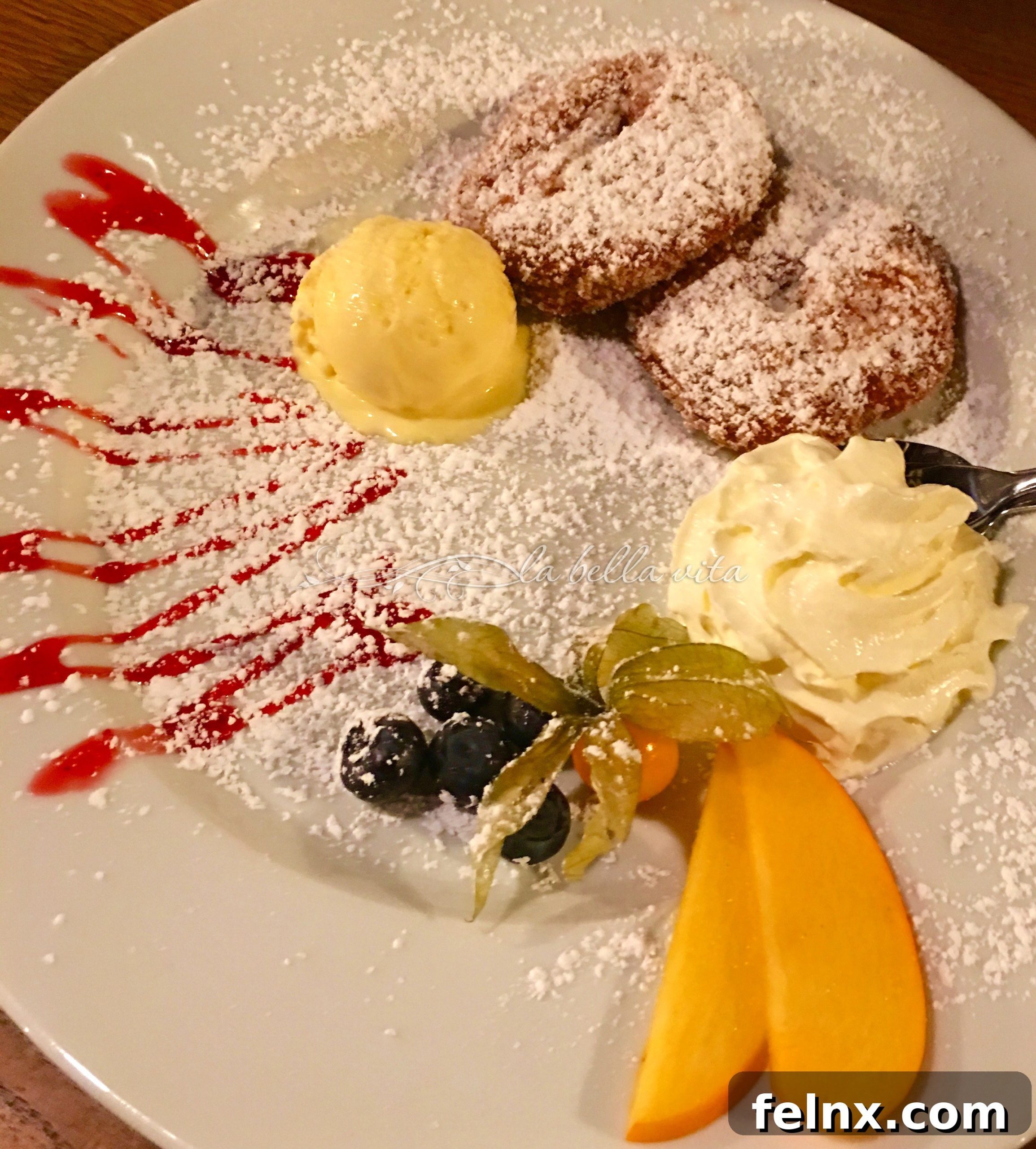
Even though I was quite full, I couldn’t pass up dessert. I was told that I simply had to try the “Apfeljucherl,” a local specialty of fried apple fritters. The menu, thoughtfully printed in German, English, and Italian, described them as a must-try for any visitor. When they arrived, they were light and golden, dusted with cinnamon and powdered sugar. Unlike many fried foods, they weren’t greasy at all. They were served with a scoop of vanilla ice cream, fresh fruit drizzled in raspberry sauce, and a dollop of rich Bavarian cream. The combination of warm apples and cold ice cream was pure bliss.
Strolling Through Landshut’s History
After that incredible meal, I spent some time exploring the architectural wonders of the town. Landshut is home to the tallest brick-only steeple in Europe, which towers over the old town and serves as a constant landmark. The buildings are adorned with statues of saints, often protected by thin mesh to prevent birds from damaging these historical treasures. Every corner you turn in Landshut reveals a new piece of the past, from heavy wooden doors dating back to the 1500s to contemporary buildings designed to mimic the medieval style of their neighbors.
Landshut’s architecture beautifully blends the ancient with contemporary homages to its medieval past.
Even the doors in Landshut tell stories of the 16th century.
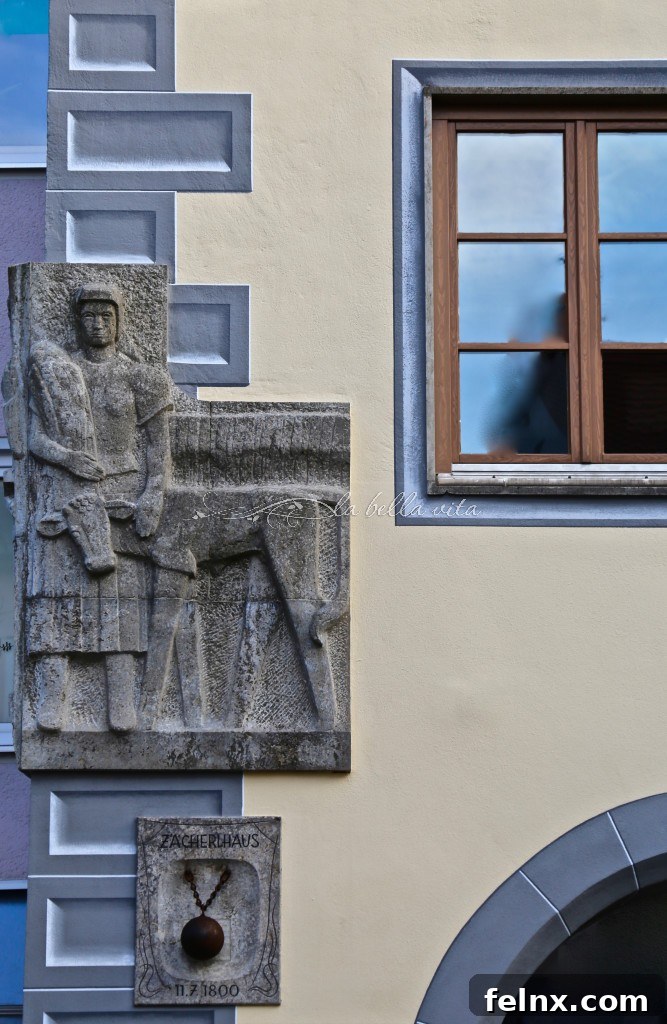
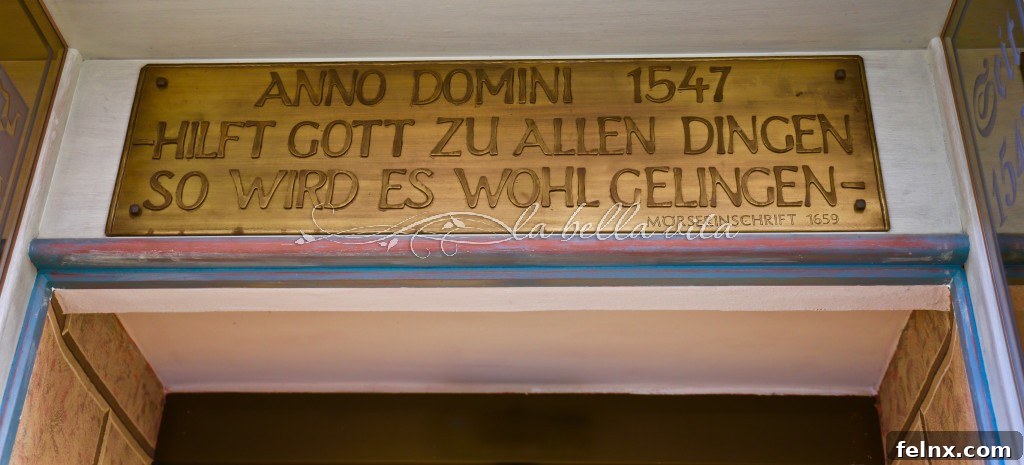
Detailed statuary of saints adorns many of the historical buildings.
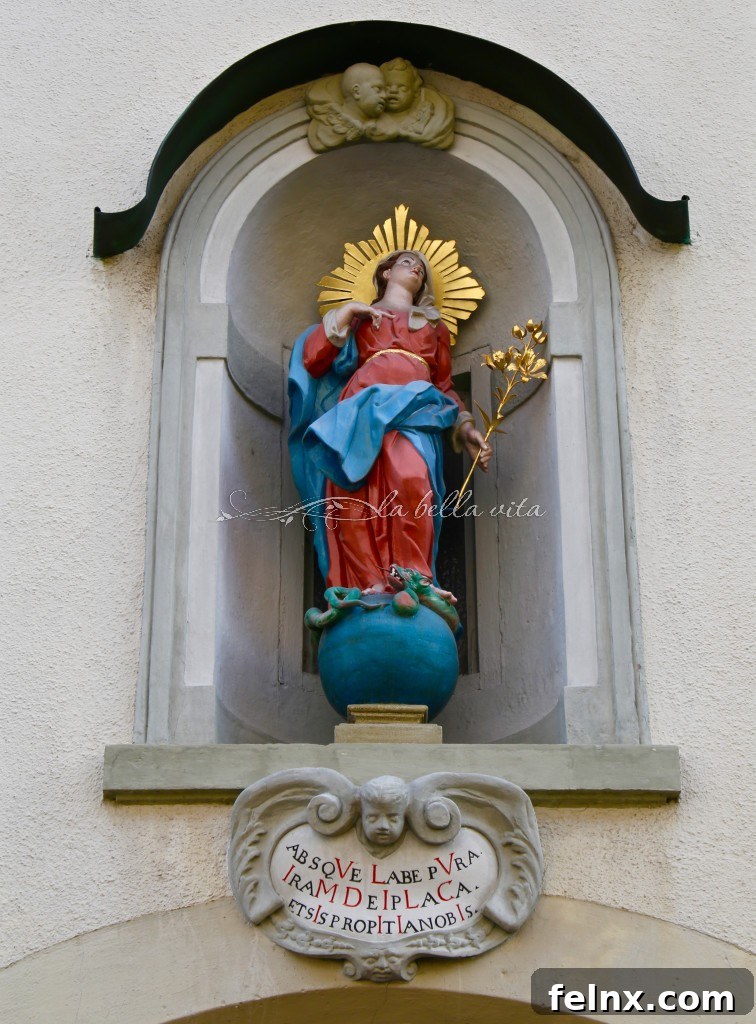
The towering steeple of St. Martin’s Church dominates the Landshut skyline.
Festive Window Shopping and Holiday Treats
Since it was Sunday, all the shops were closed, which is a common practice in Germany. However, this gave me the perfect opportunity to go “window shopping” without the crowds. The displays were breathtakingly festive. From windows filled with “Stollen” (a traditional fruit bread) in every flavor combination imaginable to artistic marzipan creations, the Germans’ love for holiday treats is evident. Marzipan, often associated with Italy, is equally beloved here, and the craftsmanship involved in shaping these almond-paste sweets is remarkable.
Windows filled with traditional German Christmas cookies and pastries.
Beautifully crafted marzipan, a favorite festive treat in Bavaria.
Each shop window tells a story of local tradition and holiday cheer.
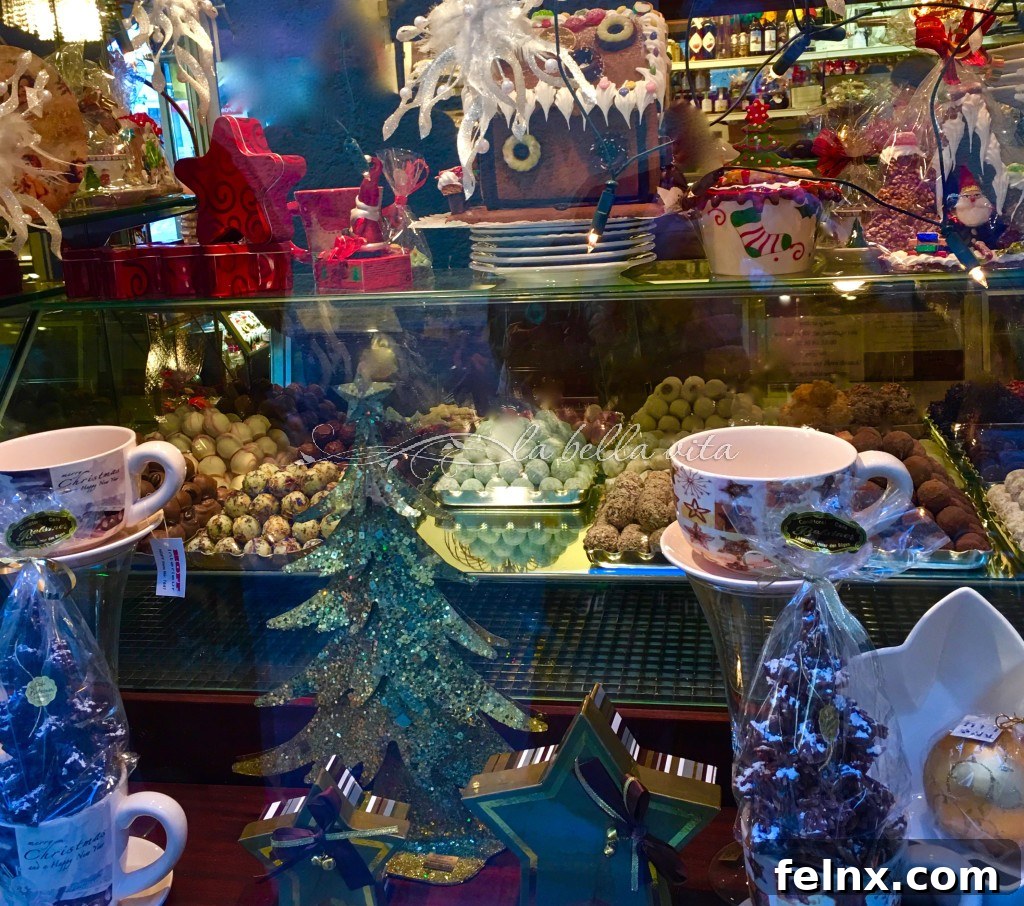
Stollen, the iconic German Christmas bread, available in many varieties.
The Landshut Wedding: A Medieval Celebration
Before concluding this look at Landshut, I must mention its most famous event: the Landshut Wedding (Landshuter Hochzeit). This is one of the largest medieval festivals in Europe, held every four years. It commemorates the 1475 wedding of Princess Hedwig of Poland to George, the son of the Duke of Bavaria. During the festival, the entire town transforms. More than 2,000 citizens dress in authentic period costumes, recreating the splendor of the late Middle Ages. Visitors can enjoy knight tournaments, jousting, and medieval music, all set against the original backdrop of Trausnitz Castle and St. Martin’s Church. It’s an event that truly brings history to life, complete with the aroma of roasting ox and the taste of fresh Bavarian ale.
The Landshut Wedding reenactment is a massive cultural event that honors the town’s rich medieval history.
I hope this glimpse into my trip to Landshut has inspired you to explore this beautiful region. Whether you are a fan of history, a lover of fine food and beer, or simply someone looking for the magic of a traditional European Christmas, Bavaria has something unforgettable to offer. Stay tuned for more posts as I continue my journey through Bavaria and Austria with my husband!