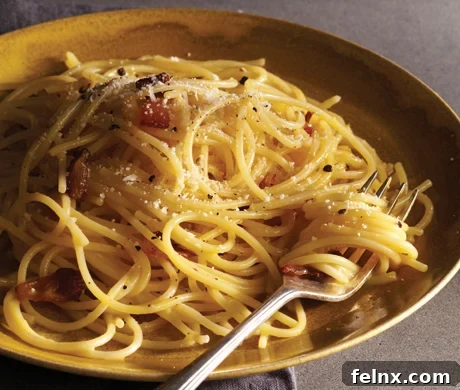
The Ultimate Guide to Authentic Roman Spaghetti Carbonara
Spaghetti Carbonara with Guanciale enjoyed in the heart of Rome.
There is an old and famous saying that suggests, “When in Rome, do as the Romans do.” For my husband and me, this isn’t just a catchy phrase; it is a philosophy we live by whenever we travel. Immersing ourselves in the local culture means eating exactly what the locals eat, where they eat it, and how they prepare it. On our most recent journey to Italy, we fully embraced this mindset. We spent our days wandering through the cobblestone streets of Rome, eating every meal like true Romans. While we might have returned with a few extra pounds, the experience was worth every single calorie. Fortunately, Rome is a city built for walking, making it easy to balance indulgence with exploration.
Eating traditionally is the most authentic way to experience a new destination. Whether we are exploring the Hawaiian Islands, visiting the Amish villages of Iowa, or traveling through the diverse regions of Italy, we prioritize local flavors. By consuming the foods that have sustained generations of natives, we connect more deeply with the history and soul of a place. This curiosity led me to research the true origins of the dishes we enjoyed in the Eternal City. This article marks the beginning of a series dedicated to Roman cuisine. We will explore legendary staples like Veal Saltimbocca alla Romana, Cacio e Pepe, Carciofi alla Giudea, Bucatini all’Amatriciana, and Roman-style Pizza. However, there is no better place to start than with the king of Roman pasta: Spaghetti alla Carbonara.
The Mysterious Origins of Carbonara
Despite its global fame, the exact history of Spaghetti alla Carbonara remains somewhat of a mystery. Culinary historians and local chefs often debate where this dish truly came from. The name itself provides the first clue. “Carbonara” is derived from the Italian word for “charcoal burner.” Some believe the dish was originally prepared as a hearty, filling meal for Italian charcoal workers (carbonari). In the United States, this connection even led to the term “coal miner’s spaghetti.” This history feels personal to me, as both of my grandfathers were coal miners who immigrated from Italy to Iowa in the early 1910s.
Other legends suggest the recipe originated in the Abruzzo region, where woodcutters would cook pasta over hardwood charcoal fires, much like an outdoor grill. Some even whisper that the dish was a tribute to the Carbonari, a secret revolutionary society that played a role in Italian history. Another popular theory involves the post-WWII era. It is said that during food shortages in Rome, Allied troops provided local citizens with rations of eggs and bacon, which were then combined with Italian pasta to create the modern version of Carbonara we know today.
Perhaps the most reliable explanation comes from the definitive Italian cookbook, The Silver Spoon. It suggests that Carbonara-style pasta has always existed in Italian home kitchens (cucine) and small local eateries (osterie). Long before it became a global culinary icon, it was simply a humble, everyday meal enjoyed by Roman families. Regardless of which story you believe, one thing is certain: having Spaghetti alla Carbonara at its source in Rome is an unforgettable experience.
Simplicity: The Secret to Italian Genius
The beauty of Italian cuisine lies in its simplicity. Carbonara is a perfect example of how a few high-quality ingredients can create a masterpiece. However, because it is so simple, there is a fierce debate over the “proper” way to prepare it. At its core, authentic Roman Carbonara is a pasta dish defined by a silky “white sauce” made from eggs, Pecorino Romano cheese, cured pork, and plenty of freshly ground black pepper. While spaghetti is the most traditional choice, bucatini is an excellent alternative.
The success of this dish depends entirely on the quality of your ingredients. In Rome, chefs are very particular about the type of pork used. To achieve an authentic flavor, you must use guanciale, which is cured pork cheek. Guanciale is a delicacy from the Lazio region and is prized for its high fat content and deep, savory flavor. The fat is essential; it melts down and becomes the base of the creamy emulsion. While guanciale can be difficult to find and expensive outside of Italy, you can substitute it with high-quality pancetta or, as a last resort, thick-cut unsmoked bacon. Just remember: in the world of Carbonara, the fat is where the flavor lives!
Authentic Guanciale found at the Campo de’ Fiori market in Rome.
Mastering the Technique
The preparation of Carbonara is as much about technique as it is about ingredients. The goal is to create a rich, golden cream that coats the pasta without turning into scrambled eggs. This requires careful temperature management. The pasta is cooked until it is al dente (firm to the bite) and then tossed with the rendered fat from the guanciale. The heat from the pasta itself is what “cooks” the raw egg and cheese mixture, creating a smooth, luscious texture.
There is also a debate regarding the eggs. Should you use whole eggs or only yolks? Traditionally, Italian coal miners wouldn’t have wasted the whites. However, many modern chefs prefer using mostly yolks to avoid a “slimy” texture and to achieve a richer, more vibrant yellow color. I recommend using high-quality, room-temperature, free-range eggs for the best results. Another critical rule: never use cream or butter. In a classic Roman kitchen, adding cream is considered a culinary sin. The creaminess should come solely from the emulsion of eggs, cheese, and a splash of starchy pasta water.
Piazza Navona, a perfect backdrop for enjoying Roman cuisine.
Common Misconceptions and Variations
As Carbonara traveled across the globe, many variations emerged. Some recipes include onions, garlic, or even peas. While these can be delicious, they are not part of an authentic Roman Carbonara. Traditionalists believe that garlic and onions distract from the pure flavors of the Pecorino and guanciale. Even parsley is technically a non-traditional garnish, though it is sometimes used for a pop of color. To keep it truly Roman, stick to the basics: pasta, pork, eggs, cheese, and pepper.
When it comes to cheese, Pecorino Romano is the standard. It is a salty, tangy sheep’s milk cheese that reflects the terroir of Rome. Some people find it a bit too sharp and choose to mix it with Parmigiano-Reggiano for a more balanced flavor. Regardless of your choice, ensure the cheese is freshly grated so it melts perfectly into the sauce.
Classic Spaghetti Carbonara Recipe
This recipe is as authentic as it gets. It is fast, easy, and relies on the harmony of five core ingredients. Ready in just 15 minutes!
Ingredients
- 1 lb. Imported Italian dried spaghettoni (the largest size of spaghetti)
- 4 – 6 oz. Guanciale (or Pancetta), cut into ¼” cubes
- 1 Tbsp. Quality olive oil (for sautéing)
- 2 Jumbo eggs plus 2 egg yolks (at room temperature)
- ½ cup Freshly-grated Pecorino Romano cheese
- ½ cup Freshly-grated Parmigiano-Reggiano
- Freshly-cracked black pepper (be generous!)
- 1 tsp. Salt (for the pasta water)
- Optional: Fresh parsley for garnish
Instructions
- Boil the Pasta: Fill a large pot with 4-6 quarts of water. Add a teaspoon of salt and bring to a boil. Add the spaghetti and cook until just before it reaches al dente. It will finish cooking in the pan.
- Sauté the Pork: While the pasta is cooking, heat the olive oil in a large skillet over medium heat. Add the guanciale and sauté for about 3 minutes until the fat has rendered and the edges are crispy and golden. Do not drain the fat! Turn the heat to low.
- Prepare the Egg Mixture: In a small bowl, whisk together the eggs, egg yolks, and grated cheeses until smooth.
- Combine: Drain the pasta, but save at least 1 cup of the hot pasta water. Add the hot pasta directly into the skillet with the guanciale. Toss well for a minute to coat the strands in the rendered pork fat.
- The Emulsion: Remove the skillet from the heat entirely. This is crucial to prevent the eggs from scrambling. Pour in the egg and cheese mixture. Stir rapidly and continuously. If the sauce is too thick, add a small amount of the reserved pasta water (about 1/8 cup at a time) until you reach a silky, creamy consistency.
- Season and Serve: Add a generous amount of freshly cracked black pepper. Transfer to warmed plates, garnish with a bit more cheese, and serve immediately.
Final Thoughts
Authentic Roman Carbonara is a celebration of texture and flavor. To complete the experience, pour yourself a glass of white wine from the Lazio region—a fruity Frascati is a wonderful choice. Serve the pasta with a basket of warm bread to mop up any remaining sauce on your plate. Whether you are in a bustling Roman piazza or your own kitchen at home, this dish is sure to impress. Buon Appetito!
The perfect emulsion: golden, creamy, and rich.