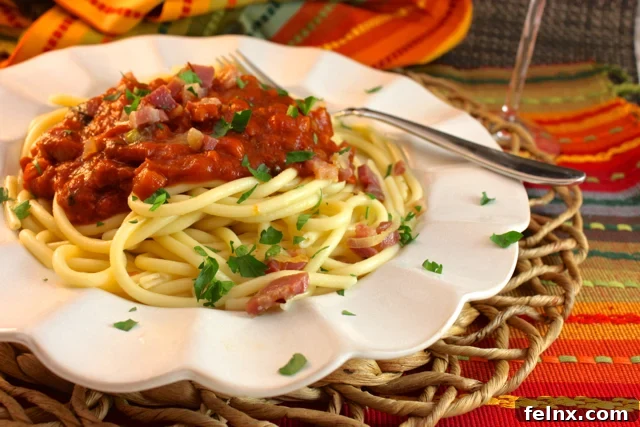
Authentic Bucatini all’Amatriciana: A Classic Roman Pasta Recipe
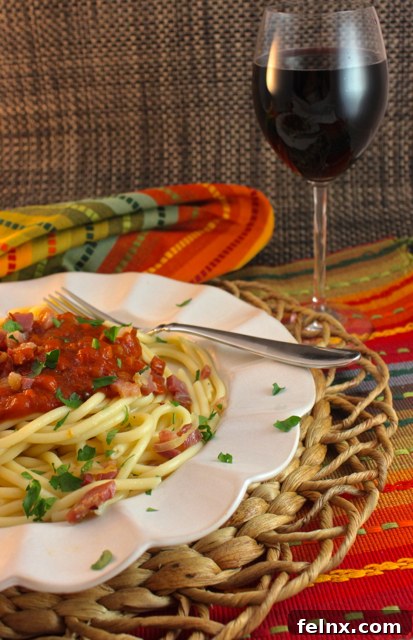
Bucatini all’Amatriciana is more than just a meal; it is a symbol of Italian culinary heritage. Originating from the town of Amatrice in the Lazio region, this dish has become a staple of Roman cuisine. Over the years, this recipe has been shared as a tribute to the resilience of the people of Amatrice, especially following the tragic earthquake that struck the town. Food bloggers and chefs worldwide have embraced this classic dish, ensuring that the legacy of Amatrice lives on through its robust and comforting flavors.
This particular version of the recipe is deeply personal. It has been refined through generations and was most recently prepared in my own kitchen by my cousins, Francesco Santi and Filippo Gualdi, who visited from Modena, Italy. They brought with them authentic ingredients shipped directly from Italy, reminding us that the secret to great Italian cooking lies in the quality of the components and the love put into the preparation.
The History and Soul of Amatriciana Sauce
Amatriciana sauce, known in Italian as sugo all’amatriciana, is one of the “holy trinity” of Roman pastas, alongside Carbonara and Cacio e Pepe. While it is now synonymous with Rome, its roots are firmly planted in the mountainous province of Rieti. Traditionally, shepherds in the region prepared a similar dish called Gricia, which used guanciale and pecorino but lacked tomatoes. When tomatoes were introduced to Italian cuisine, the Amatriciana we know today was born.
The beauty of this dish lies in its simplicity. With only a handful of ingredients—pork, cheese, tomatoes, and a hint of spice—it creates a complex flavor profile that is salty, sweet, and slightly fiery. It is a robust sauce that demands a sturdy pasta like bucatini to hold up to its intensity.
Essential Ingredients for Success
To create an authentic Bucatini all’Amatriciana, you must pay attention to the specific ingredients used. While substitutions are possible, the traditional components provide the most genuine experience.
1. Guanciale vs. Pancetta
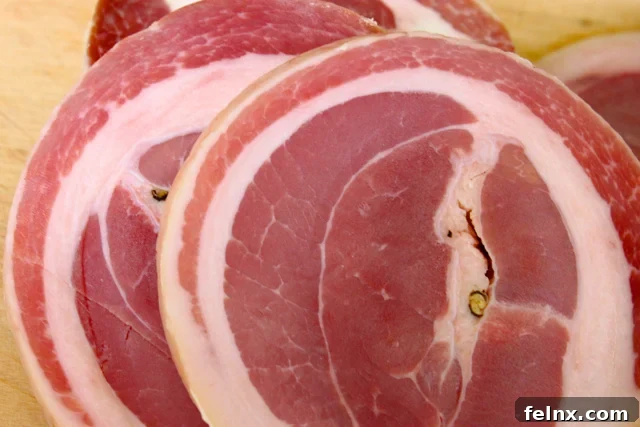
The soul of the dish is the pork. Purists insist on using guanciale, which is cured pork cheek. Guanciale has a higher fat-to-meat ratio than bacon or pancetta, and its fat renders into a silky, flavorful oil that forms the base of the sauce. It is seasoned with black pepper and dried herbs, giving it a distinctive funk that defines Roman pasta. If you cannot find guanciale, a high-quality, unsmoked pancetta is the best substitute. Avoid American-style smoked bacon, as the smoky flavor will overpower the delicate balance of the sauce.
2. San Marzano Tomatoes
The acidity and sweetness of the tomatoes are crucial. Imported Italian San Marzano tomatoes are the gold standard because they are grown in volcanic soil, resulting in a thick flesh and low acidity. For a smoother consistency, many Italian families use a tomato passata, such as the Mutti brand. This provides a velvety texture that coats every strand of pasta perfectly.
3. Pecorino Romano Cheese
Unlike many Northern Italian dishes that use Parmesan, Amatriciana requires Pecorino Romano. Made from sheep’s milk, this cheese is salty and sharp, providing the necessary bite to balance the richness of the pork fat and the sweetness of the tomatoes.
4. The Pasta: Why Bucatini?
While you can use penne or rigatoni, bucatini is the traditional choice. Bucatini looks like thick spaghetti but has a hollow center. This “hole” allows the sauce to travel inside the pasta, ensuring that every bite is bursting with flavor. It offers a unique “al dente” chew that is unmatched by other pasta shapes.
Step-by-Step Preparation with the Santi Cousins
Experience the authentic process as taught by my family from Modena.
STEP ONE: Rendering the Fat
Begin by dicing your guanciale or pancetta into small strips or cubes. In a heavy-bottomed skillet, sauté the meat in a tablespoon of extra-virgin olive oil over medium heat. You aren’t just cooking the meat; you are rendering the fat. Add finely chopped onions, minced garlic, and a pinch of red pepper flakes (peperoncino). Sauté until the pork is golden and crispy, and the onions are translucent and fragrant. This process usually takes about 10 minutes.
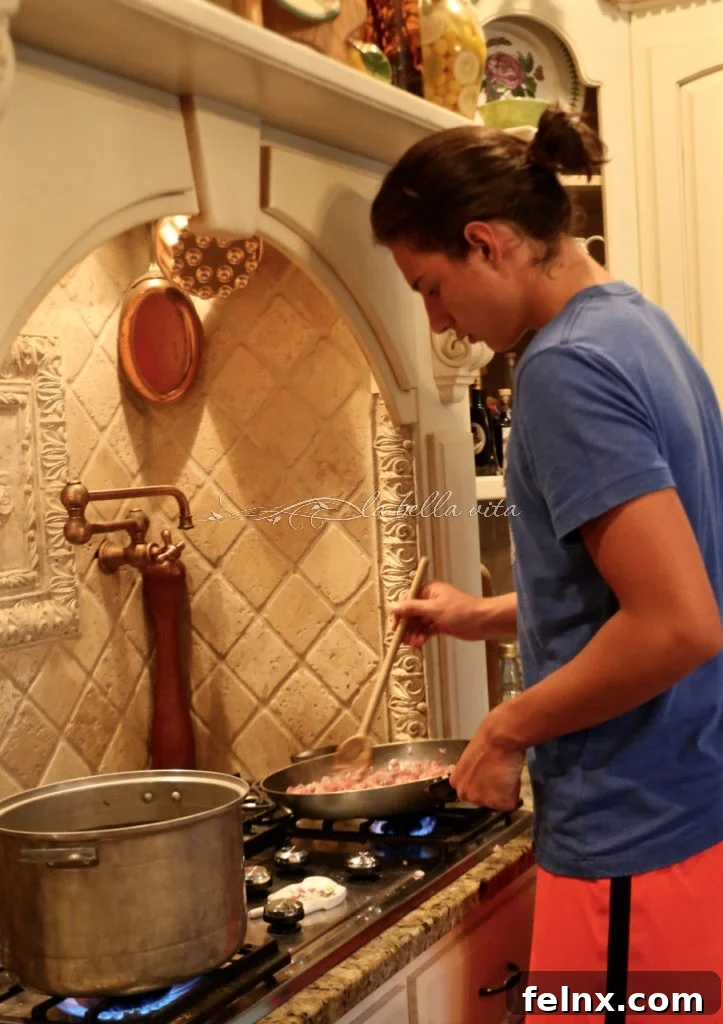
Slowly rendering the fat from the guanciale creates the flavorful foundation of the sauce.
STEP TWO: Building the Sauce
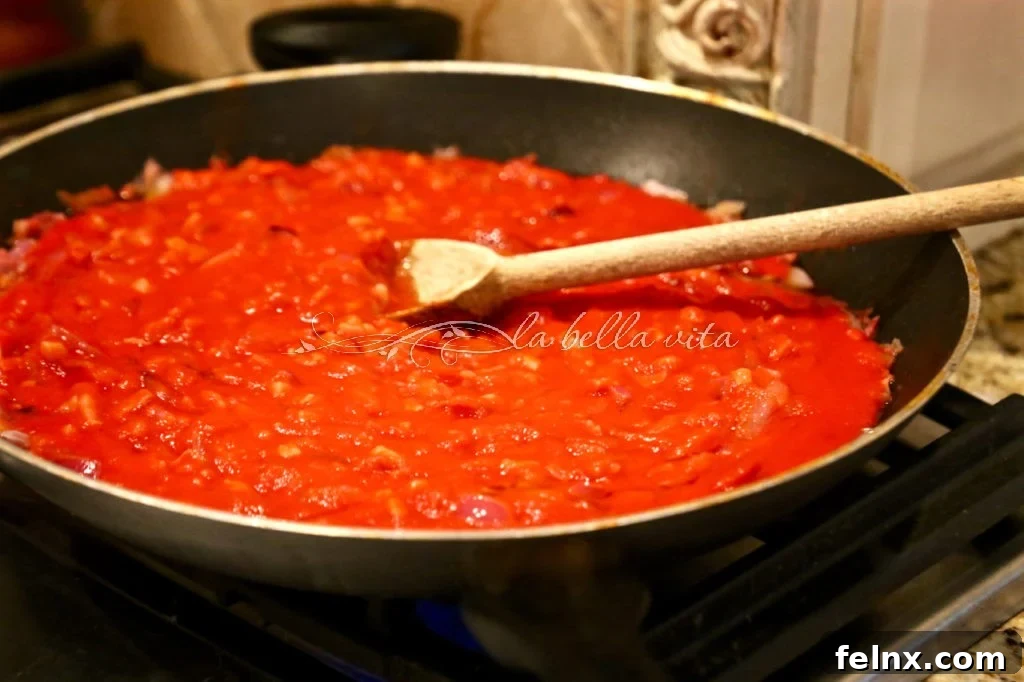
Once the base is aromatic, add your San Marzano tomatoes or passata. Some prefer to deglaze the pan with a splash of dry white or red wine before adding the tomatoes, though this is optional depending on family tradition. Stir the mixture gently to combine the rendered fat with the tomatoes. Bring the sauce to a gentle simmer, then reduce the heat to low. Allow it to cook for about 20 minutes. You want the sauce to thicken and the flavors to meld into a cohesive, rich topping.
STEP THREE: The Al Dente Pasta
While the sauce simmers, bring a large pot of salted water to a boil. Cook the bucatini for about 1-2 minutes less than the package directions. It should be “al dente”—firm to the bite. Before straining the pasta, reserve at least half a cup of the starchy pasta water. This water is “liquid gold” and will help the sauce emulsify and cling to the noodles.
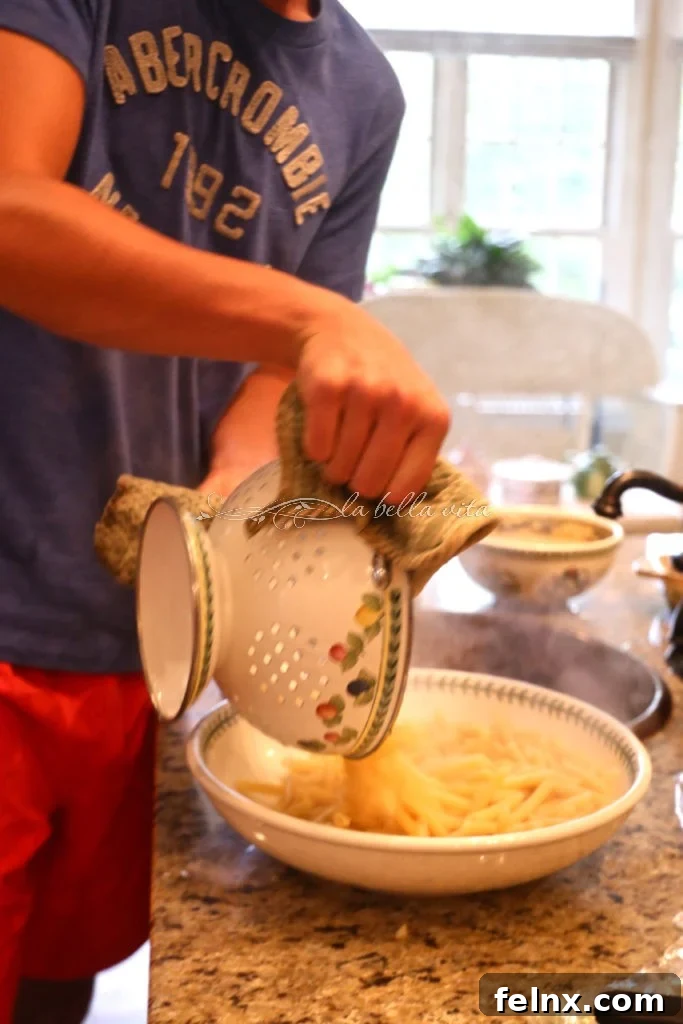
STEP FOUR: The Marriage
Add a handful of freshly grated Pecorino Romano directly into the simmering sauce and stir until it melts. Then, transfer the hot pasta into the skillet or a large warmed bowl. Pour the Amatriciana sauce over the pasta. This is the moment where the ingredients “marry” together.
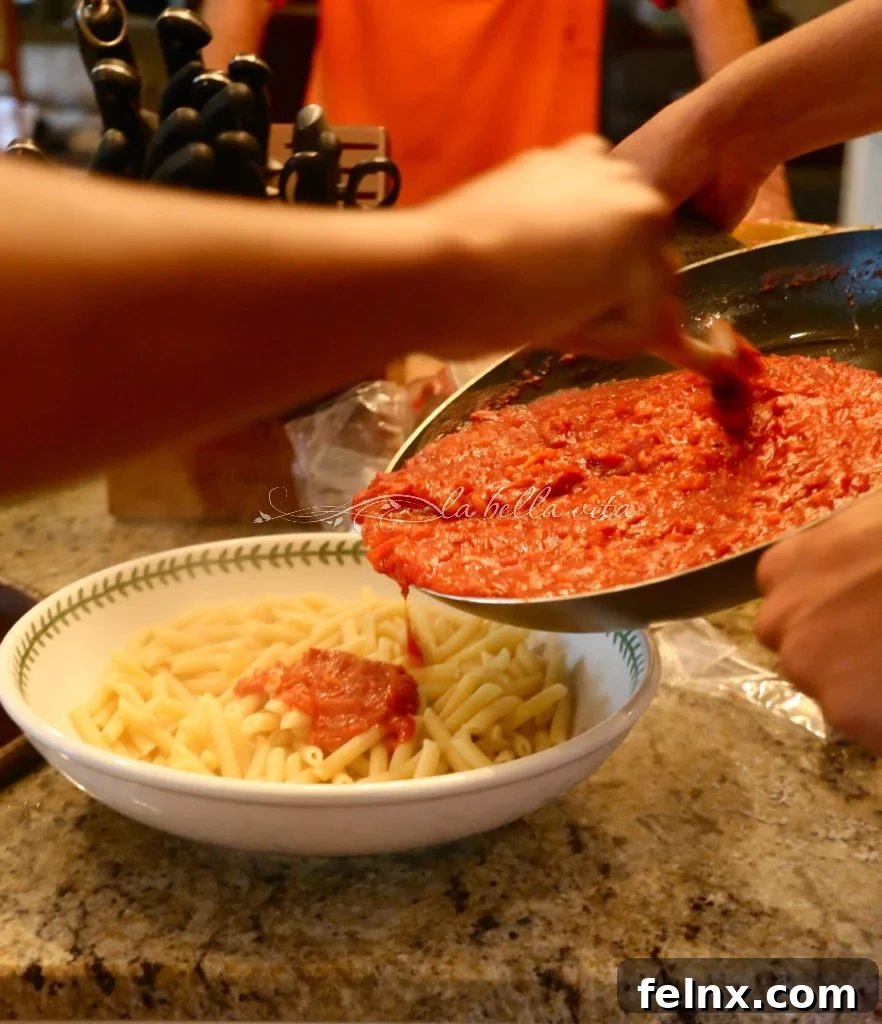
STEP FIVE: Finishing Touches
Toss the pasta and sauce thoroughly. If the sauce seems too thick, add the reserved pasta water a tablespoon at a time until you reach a silky consistency. The starch in the water ensures the sauce isn’t runny but instead coats every inch of the bucatini.
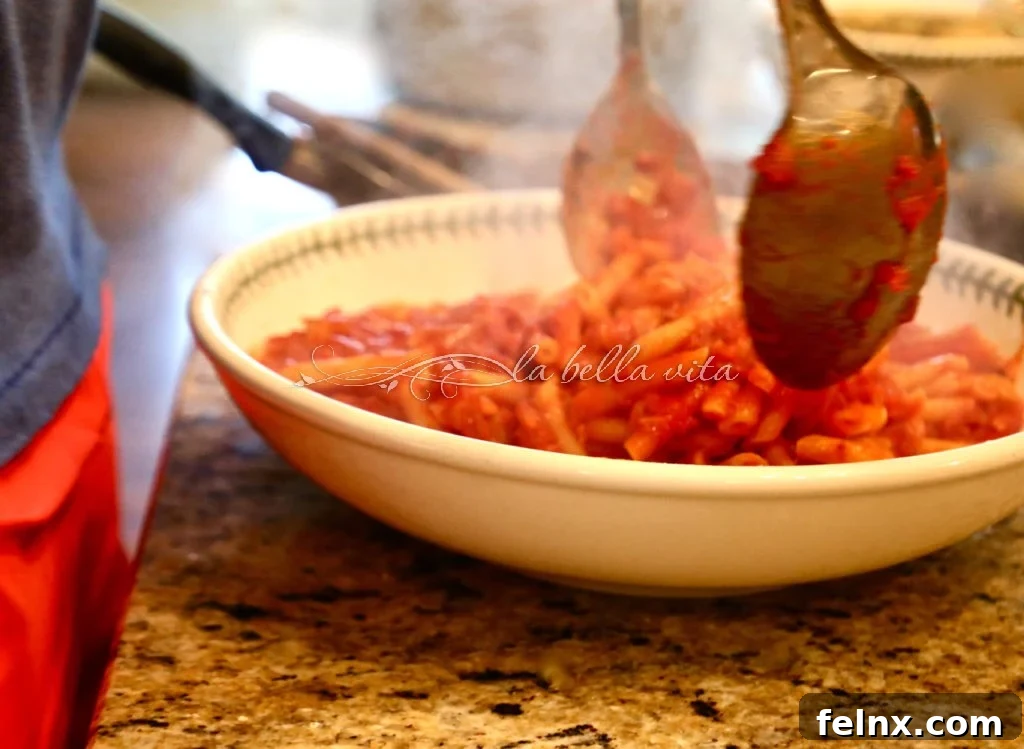
A Family Gathering at the Table
In Italy, dinner is more than nutrition; it is a time for connection. Seeing Francesco and Filippo in the kitchen was a reminder of how food brings generations together. As we sat at the table, we enjoyed the meal in the traditional Italian way—without ice in our drinks and with plenty of extra cheese passed around. As we say in our family, “You can never have enough cheese.”

Tips for a Perfect Amatriciana
- Don’t Rush the Pork: The meat needs to render slowly to release all its flavor. If the heat is too high, it will burn before the fat melts.
- Salt the Water: Your pasta water should taste like the sea. This is your only chance to season the pasta itself.
- Fresh Herbs: While the traditional recipe is very simple, a touch of fresh basil or Italian parsley at the end can add a bright, fresh note to the heavy sauce.
- The Cheese: Always grate your Pecorino Romano fresh. Pre-grated cheese often contains anti-clumping agents that prevent it from melting smoothly into the sauce.
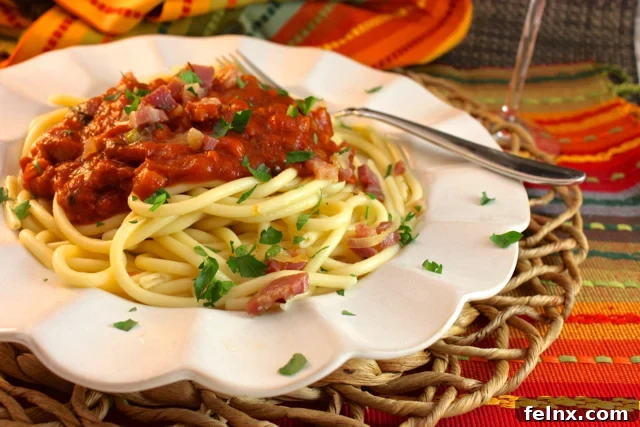
Mastering the Prep
Slice your guanciale or pancetta into 1/4 inch thick strips. This ensures you get a bit of crispy exterior and a chewy interior in every bite. When sautéing, the kitchen will fill with an incredible aroma that is the hallmark of Roman cooking.
Recipe: Bucatini all’Amatriciana
Ingredients
- 1 lb Bucatini pasta
- 12 oz Guanciale or Pancetta, diced
- 2 tbsp Extra-virgin olive oil
- 1 Onion, finely chopped
- 5 Cloves garlic, minced
- 28 oz San Marzano tomatoes (pureed or crushed)
- 1/4 tsp Red pepper flakes (peperoncino)
- 1/2 cup Pecorino Romano cheese, freshly grated
- 1/2 cup Reserved pasta water
- Salt and black pepper to taste
- Optional: 2 tbsp Dry red wine
- Optional: Fresh Italian parsley or basil for garnish
Instructions
- Sauté: Heat olive oil in a large skillet. Add guanciale/pancetta and cook until crispy and the fat has rendered.
- Aromatics: Add onions, garlic, and red pepper flakes. Cook until the onions are soft and slightly browned.
- Deglaze (Optional): Add wine and let it reduce by half.
- Simmer: Add the tomatoes. Season with a little salt and pepper (remember the cheese and pork are salty). Simmer on medium-low for 20 minutes.
- Boil Pasta: Cook bucatini in salted water until al dente. Reserve 1/2 cup of water before straining.
- Combine: Add the pasta to the sauce. Stir in the Pecorino Romano and the reserved pasta water.
- Serve: Toss until the sauce is thick and glossy. Garnish with more cheese and fresh herbs.
Buon Appetito! Enjoy this taste of Amatrice in your own home.