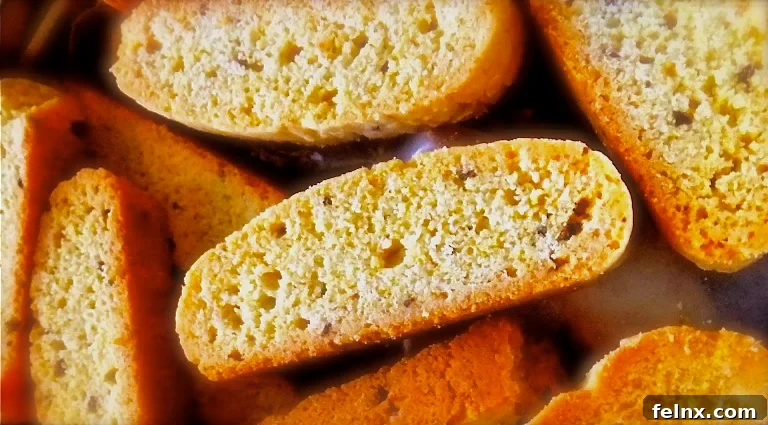
The Art of Traditional Italian Contucci: A Christmas Journey Through Generations
In many households across the American Midwest, the arrival of the Christmas season is marked by the sweet aroma of classic sugar cookies. Families gather to cut dough into stars, bells, and reindeer, covering them in thick layers of frosting and bright sprinkles. However, in my family, the holiday scents were quite different. Instead of overwhelming sweetness, our kitchen was filled with the sophisticated notes of toasted almonds, fresh lemon zest, and the distinct, aromatic fragrance of anise. My mother didn’t just make cookies; she crafted traditional Italian contucci, also widely known as biscotti.
Growing up, I must admit that I didn’t appreciate these twice-baked treasures as much as I do now. As a child, my palate sought the soft, moist, and sugary textures of typical holiday treats. To me, contucci seemed too hard, lacking the colorful decorations and whimsical shapes that defined “fun” cookies. They weren’t dipped in chocolate or topped with gumdrops. They were simple, rustic, and strictly golden brown. I often wondered why the adults in my family were so obsessed with these crunchy biscuits, watching them with fascination as they dipped them into steaming cups of espresso or glasses of sweet dessert wine after dinner.
The Evolution of Taste: From Misunderstood Biscuit to Global Favorite
As I matured, so did my appreciation for authentic Italian flavors. I eventually realized that the beauty of contucci lies in their restraint. They aren’t meant to be a sugar-bomb; they are designed to complement a beverage, providing a satisfying crunch that yields to a tender center once soaked. This realization wasn’t just personal; it mirrored a broader cultural shift in America. In the 1960s, you would rarely find biscotti outside of an Italian-American home. Today, they are a staple in every high-end coffee shop and even on the shelves of local grocery stores. What was once a humble family secret is now a worldwide symbol of Italian culinary excellence.
The rise of coffee culture helped propel the popularity of these “twice-baked” biscuits. People discovered that a sturdy cookie was the perfect companion for a latte or a cappuccino. Unlike a soft cookie that falls apart when dipped, the contucci holds its structure, absorbing the flavors of the drink while retaining its soul.
A Legacy Wrapped in History: The Iowa Christmas Story
Every recipe in our family comes with a story, and the story of our contucci is rooted in deep tradition and love. My mother and her sister carried a beautiful memory of Christmas at my great-grandmother Martina’s house in Iowa. In those days, the rituals of the holiday were strict and meaningful. On Christmas Eve, they would stay overnight to ensure they could attend the 5:00 AM Mass on Christmas morning.
Life was not always easy for them. My mother’s mother had passed away during childbirth years earlier, and my grandfather was not a practicing Catholic at the time. Therefore, the spiritual guidance and holiday magic came from my great-grandparents. One of the most significant rules of that era was the fast; Catholics were required to abstain from food after midnight until the Christmas morning Mass was concluded. For two little girls, this was a long time to wait for breakfast.
My great-grandfather, knowing how hungry and cold they would be after the early morning service, always had a secret hidden in his coat pockets. As they stepped out of the church into the crisp Iowa air, he would reach in and pull out handfuls of homemade contucci. These weren’t just cookies; they were a reward for their faith and a warm gesture of grandfatherly love. To this day, the taste of anise and almond reminds my mother of those early mornings in Iowa, standing on the church steps with her family.
Sharing the Tradition: Our Family Recipe
Despite the busy nature of modern life, my mother still finds time to bake these traditional cookies for our holiday celebrations. This year, even while caring for my father in rehabilitation, she made sure our cookie jars were filled. Baking these is a way of keeping our ancestors alive in our kitchen. Our family version of the recipe is designed to make a large quantity because these cookies are meant to be shared. They make excellent gifts, as they have a long shelf life and stay fresh much longer than standard butter cookies.
Traditional Italian Contucci (Biscotti) Recipe
This authentic recipe yields a large batch of crunchy, almond-filled biscuits perfect for dipping in coffee or wine.
Ingredients for a Large Batch
- 1 pound high-quality unsalted butter
- 4 pounds all-purpose flour
- 12 teaspoons baking powder
- 2 pounds granulated sugar
- A pinch of fine sea salt
- 2 large lemons (you will need both the juice and the finely grated rind)
- 2 cups slivered or whole blanched almonds
- 12 large eggs, well-beaten
- 4 teaspoons anise seed (or 1-1/2 teaspoons oil of anise for a stronger flavor)
Step-by-Step Instructions
- Prepare the Butter: Gently melt the butter in a small bowl and set it aside to cool slightly.
- Mix Dry Ingredients: In an extra-large mixing bowl, sift together the flour, baking powder, sugar, and salt. Mixing these thoroughly ensures an even rise.
- Add Aromatics: Incorporate the fresh lemon juice, the lemon rind, and the slivered almonds into the dry mixture.
- Combine Wet and Dry: Pour in the melted butter and the beaten eggs (it is best to add the eggs gradually). Add the anise seeds or oil.
- Knead the Dough: Work the ingredients together until a consistent dough forms. This may require some arm strength as the batch is quite large!
- Shape the Logs: Divide the dough into 3 to 4 manageable batches. On a lightly floured surface, roll each batch into long strips or “logs.” Aim for a width of about 3 inches and a length of 12 inches.
- First Bake: Place the logs on a greased or parchment-lined cookie sheet. Bake at 350 degrees Fahrenheit (175°C) for 20–25 minutes, or until the dough is lightly golden and firm to the touch.
- The Slicing: Remove the logs from the oven and let them cool for just a few minutes (long enough to handle). Using a serrated knife, cut the logs diagonally into slices about 1 inch thick.
- The Second Bake (Optional for Extra Crunch): For the traditional “hard” version, place the slices back on the cookie sheet on their sides. Bake for an additional 5–10 minutes. In our family, we usually do half of the batch this way and leave the other half after the first bake for those who prefer a softer cookie.
Professional Baking Tips for the Best Contucci
- Toasting Almonds: For a deeper flavor, lightly toast your almonds in a pan before adding them to the dough.
- Lemon Zest: Ensure you only grate the yellow part of the lemon peel. The white pith underneath is bitter and can ruin the delicate balance of the cookie.
- Storage: Once completely cool, store these in an airtight container. They will last for several weeks, making them the perfect “make-ahead” holiday treat.
Why Contucci Deserve a Place on Your Holiday Table
In a world of fast food and instant gratification, the process of making contucci is a reminder of the value of slow traditions. The “bis-cotto” or twice-baked method is an ancient technique that was originally used to create durable food for travelers and sailors. Today, it serves a more aesthetic purpose, creating a texture that is unmatched by any other cookie.
Beyond the texture, the flavor profile of the Italian Contucci is sophisticated. The anise provides a subtle licorice note that cleanses the palate, while the lemon zest adds a bright acidity that cuts through the richness of the butter and eggs. When you pair this with a glass of Vin Santo, a classic Italian dessert wine, the flavors harmonize in a way that feels like a celebration in itself.
A Tradition to Pass On
Baking these cookies is more than just following a recipe; it is an act of storytelling. When I bake a batch of contucci, I am thinking of Great-Grandmother Martina in Iowa. I am thinking of my mother’s childhood and the resilience of our family. I am thinking of the generations of Italians who used simple ingredients like flour, eggs, and nuts to create something that brings people together.
If you are looking to add a new tradition to your holiday season, I encourage you to try this recipe. It might not have the bright colors of a sugar cookie, but it has a depth of flavor and a rich history that will make your Christmas feel truly special. Whether you enjoy them as a morning treat with coffee or as a late-night snack dipped in wine, these contucci are a testament to the “Bella Vita”—the beautiful life.
We would love to hear about your holiday baking traditions! Did you grow up with a specific family recipe that felt different from everyone else’s? If you decide to try our family contucci, please share your results. These cookies are built on a foundation of love and history, and there is nothing we enjoy more than seeing this recipe travel to new kitchens around the world.
Did you make this recipe?
We invite you to join our community of food lovers! Please leave a comment below or share a photo of your baking journey on Instagram. Tag us using #italianbellavita so we can see your beautiful creations and share them with our readers. Happy baking and Buon Natale!