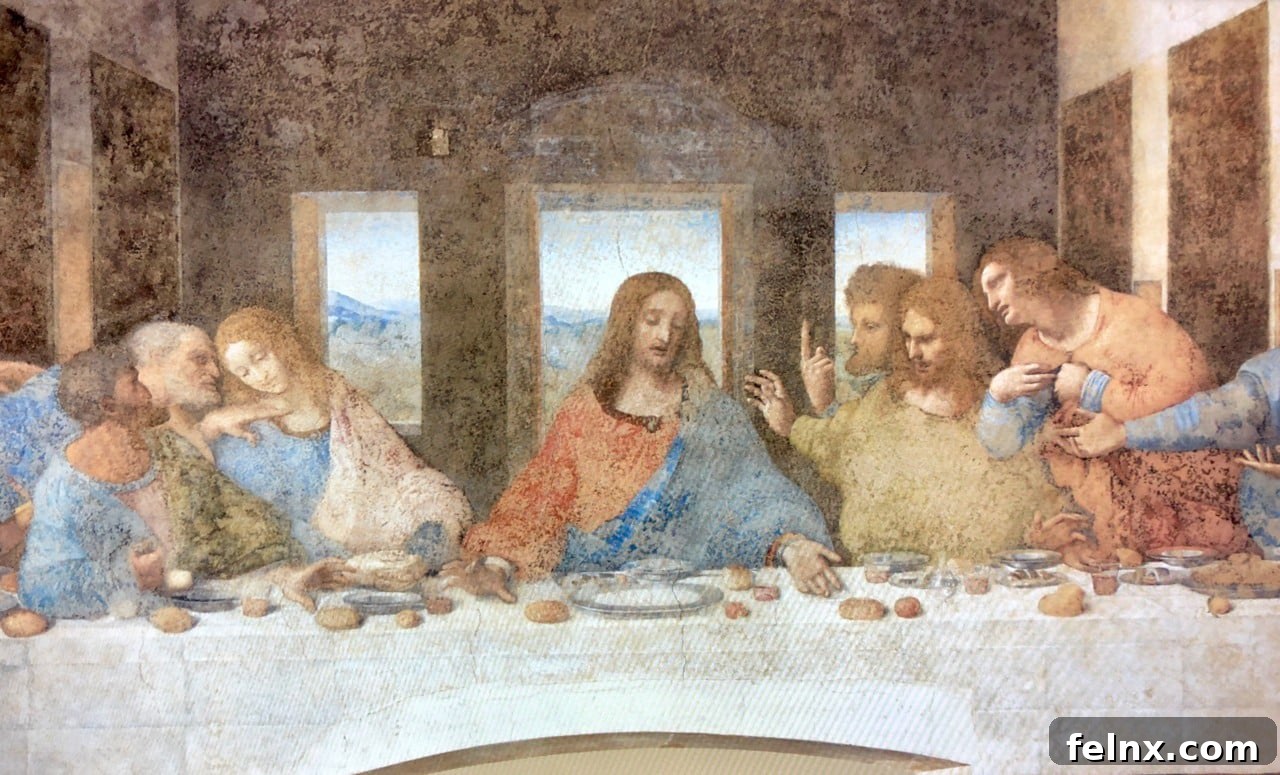
Milan: Discovering the Northern Jewel and Leonardo da Vinci’s Masterpiece
Milan was the first destination of our three-week Italian journey this year, and if we had to describe it in a single word, it would be “WOW!” This city is a breathtaking blend of the ancient and the modern, a clean and vibrant metropolis where high fashion meets deep history. While many travelers flock to Rome, Florence, or Venice, often bypassing Milan entirely, we found this to be a significant oversight. Milan, often called the “Northern Jewel” of Italy, possesses a unique charm that rewards those who take the time to savor its atmosphere.
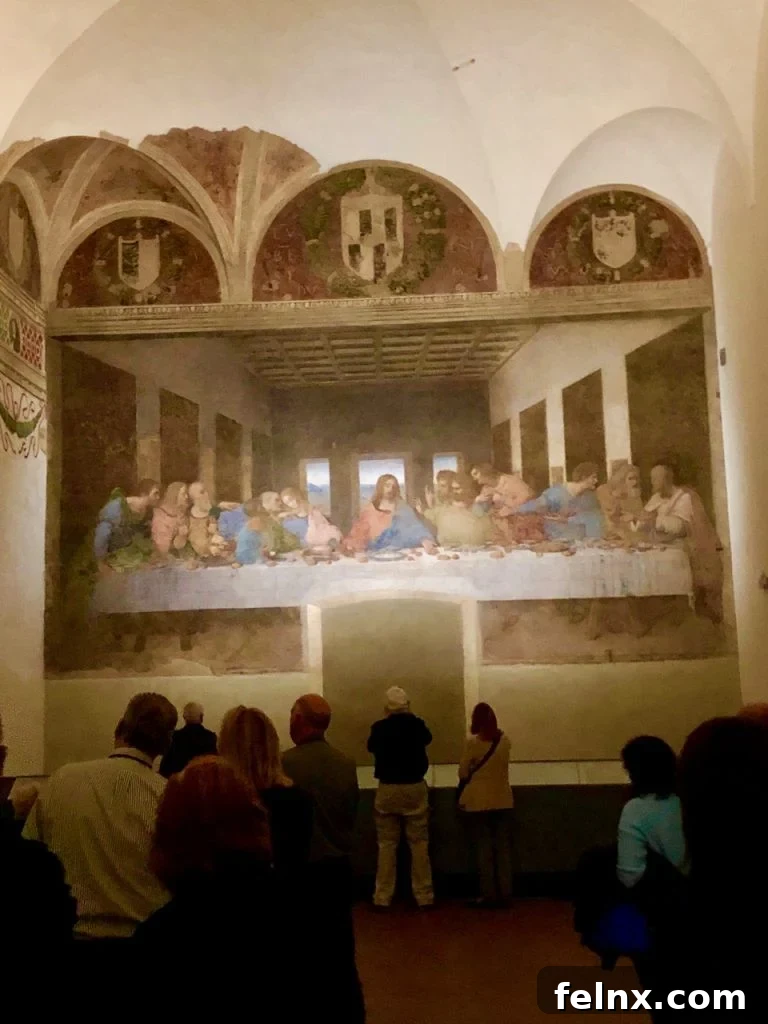
The Last Supper fresco covers an entire wall inside the church’s old dining hall. The room is dimly-lit to protect the masterpiece from light damage.
Compared to other Italian cities, Milan and Modena stood out as exceptionally well-kept and modern. As the world’s fashion capital, Milan is home to impeccably dressed people and sleek architecture, yet it remains rooted in its glorious past. The city center is a maze of ancient cathedrals and historic landmarks, all set against a backdrop of industrial prowess and a flourishing arts scene. Our three-day visit was nothing short of extraordinary, filled with cultural discoveries that began the moment we checked into our hotel.
The Ultimate Art Experience: Leonardo da Vinci’s “The Last Supper”
Our primary objective in Milan was to witness one of the most famous artworks in human history: Leonardo da Vinci’s The Last Supper (Il Cenacolo). Seeing this masterpiece is not as simple as walking into a gallery; it requires careful planning and, ideally, a specialized tour to truly appreciate its scale and historical significance.
We opted for an “after-hours” tour, which we highly recommend to any art lover. While standard daytime visits are limited to a mere 20 minutes amidst large crowds, our evening tour granted us a full hour. This extended time allowed us to listen to a detailed lecture on the fresco, Da Vinci’s revolutionary painting techniques, and the history of the church itself. In the dimly lit refectory, the atmosphere is somber and respectful, providing a rare opportunity to connect with the art without the usual tourist bustle.
The History of Santa Maria delle Grazie
The masterpiece is located within the refectory (dining hall) of the Convent of Santa Maria delle Grazie. This church is a testament to the Italian tradition of wealthy aristocratic families commissioning great works of art for their private places of worship. During the Renaissance, Milan was ruled by the powerful Sforza family, who sought to transform this church into their family mausoleum.
It was Ludovico Sforza, the Duke of Milan, who commissioned Leonardo da Vinci to paint the Last Supper. Today, the church is recognized as a UNESCO World Heritage site, celebrated as a pinnacle of human creative genius. It remains one of the few places where a Renaissance fresco of this magnitude and importance is still visible in its original setting.
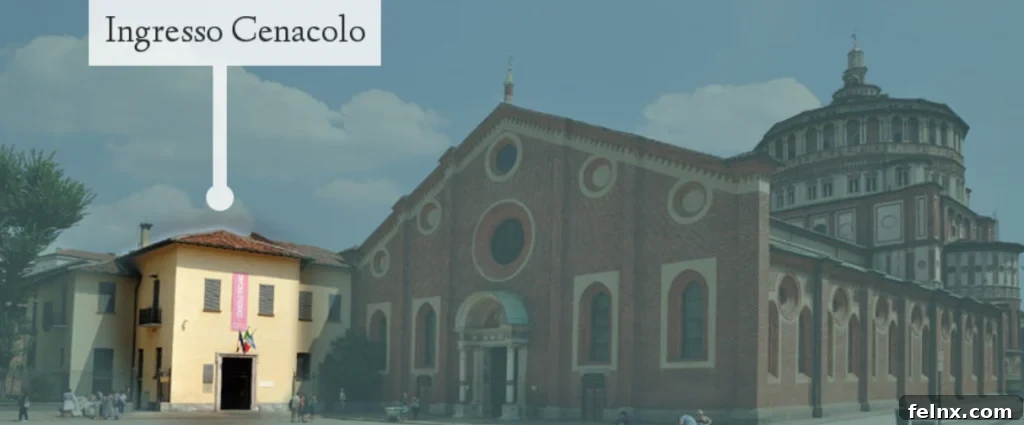
The “cenacolo” or dining hall is attached to the side of the church. In Italian, “cena” means dinner, referencing the Last Supper.
Understanding the Artistry and Symbolism
When you stand before the Last Supper, the first thing you notice is its sheer size—covering an entire wall of the dining hall. However, you also notice the toll that time has taken. Painted in the late 1400s, the fresco has suffered from environmental damage and Da Vinci’s own experimental techniques. Unlike traditional frescoes painted on wet plaster, Leonardo used an experimental dry method that began to deteriorate almost immediately after completion.
Despite the fading, the genius of the composition remains clear. Leonardo chose to capture the exact moment described in the Gospel of John, where Jesus announces, “One of you will betray me.” The painting is a study of human emotion—shock, anger, denial, and grief are etched onto the faces of the twelve apostles.
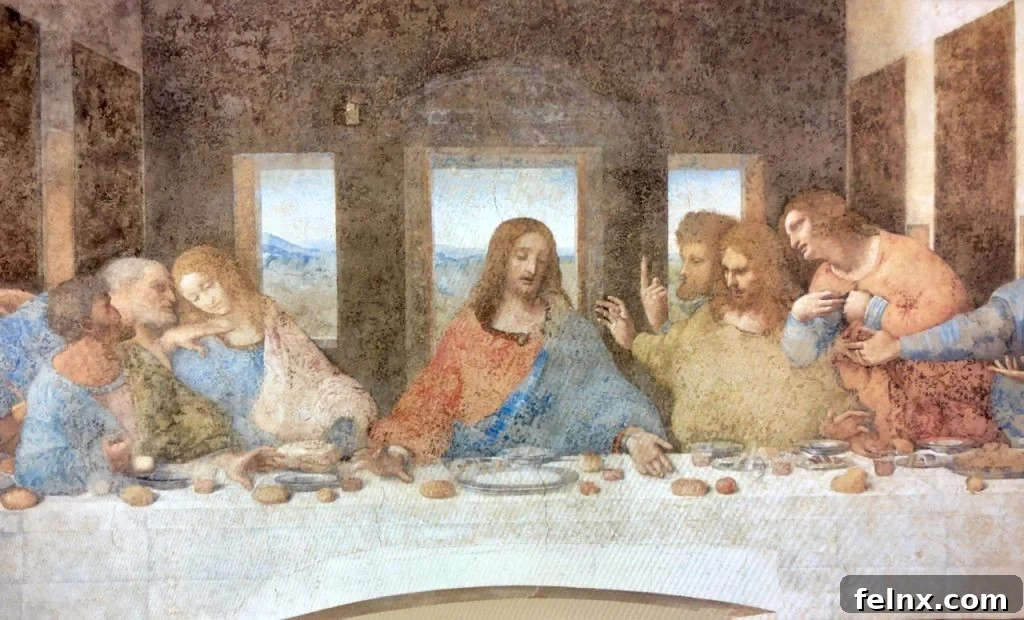
Leonardo’s use of perspective is revolutionary. The room in the painting appears to be an extension of the actual dining hall, creating an immersive experience for the monks who once ate there. He also utilized symbolic groupings; the apostles are arranged in four groups of three. This repetition of three is widely interpreted as a reference to the Holy Trinity. Even the layout of the windows behind Jesus provides a natural halo effect, emphasizing his divinity without the use of traditional gold leaf.
Identifying the Figures
Among the apostles, Judas Iscariot is perhaps the most famous figure to identify. He is the third person to the left of Jesus, leaning back into the shadows. Unlike earlier depictions of the Last Supper where Judas was often placed on the opposite side of the table, Leonardo placed him among the others, though his darker skin tone and the small bag of silver he clutches distinguish him as the betrayer.
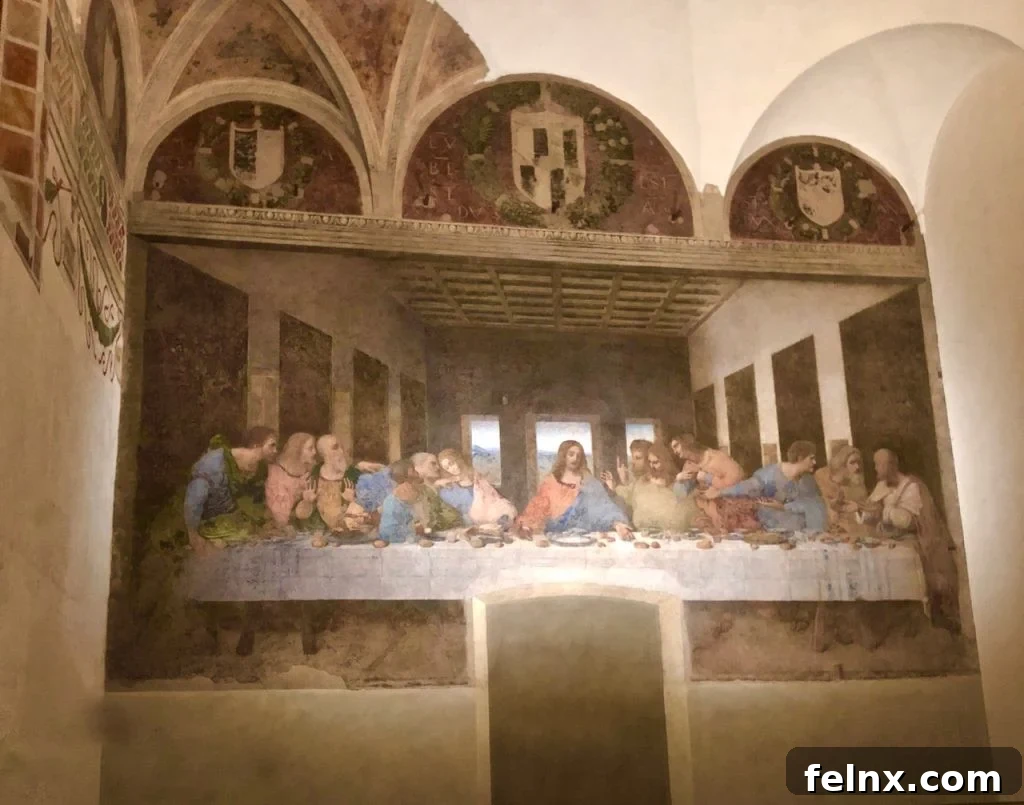
One tragic historical detail is the door that was cut into the bottom of the wall centuries after Leonardo finished the work. This door, which once led to the kitchen, removed the feet of Jesus and several apostles. Although it was later filled in with concrete, the damage to the original composition is a reminder of how art was often treated as a functional part of a building rather than a protected treasure.
The Forgotten Masterpiece: The Crucifixion
While everyone comes to see Leonardo’s work, the opposite wall of the dining hall holds another breathtaking fresco: The Crucifixion, painted by Giovanni Donato da Montorfano in 1495. This work is incredibly detailed and remains in much better physical condition than the Last Supper because it was painted using traditional fresco techniques on wet plaster.
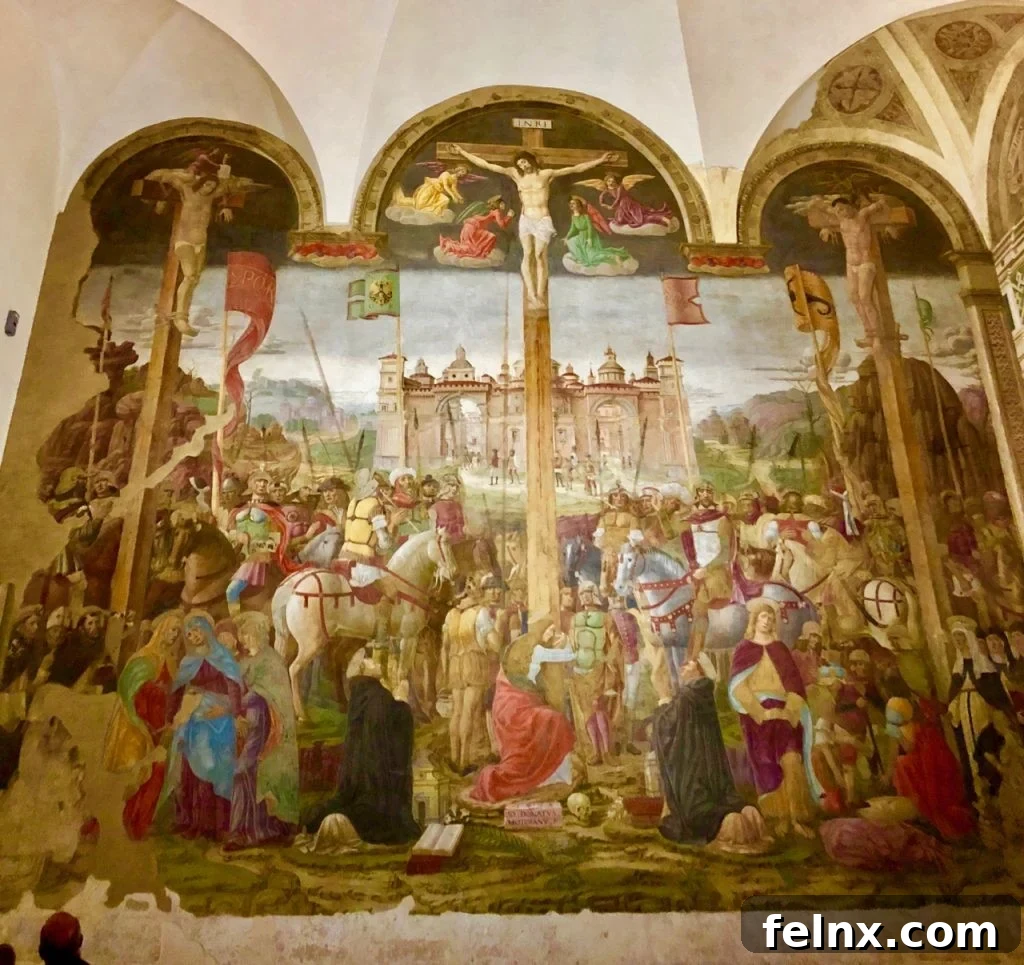
The Crucifixion at the opposite end of the dining hall, painted in 1495, offers a stark contrast to Leonardo’s work.
Standing between these two massive works—one representing the beginning of the Passion of Christ and the other representing the end—is a profound experience. The contrast between Leonardo’s psychological realism and Montorfano’s crowded, traditional narrative style provides a perfect lesson in the evolution of Renaissance art.
A Miracle of Survival: WWII and the Bombing of Milan
The fact that we can see these paintings today is nothing short of a miracle. In August 1943, during World War II, Milan was heavily bombed by Allied forces. The Church of Santa Maria delle Grazie and its convent were struck, suffering catastrophic damage. Large portions of the refectory were reduced to rubble.
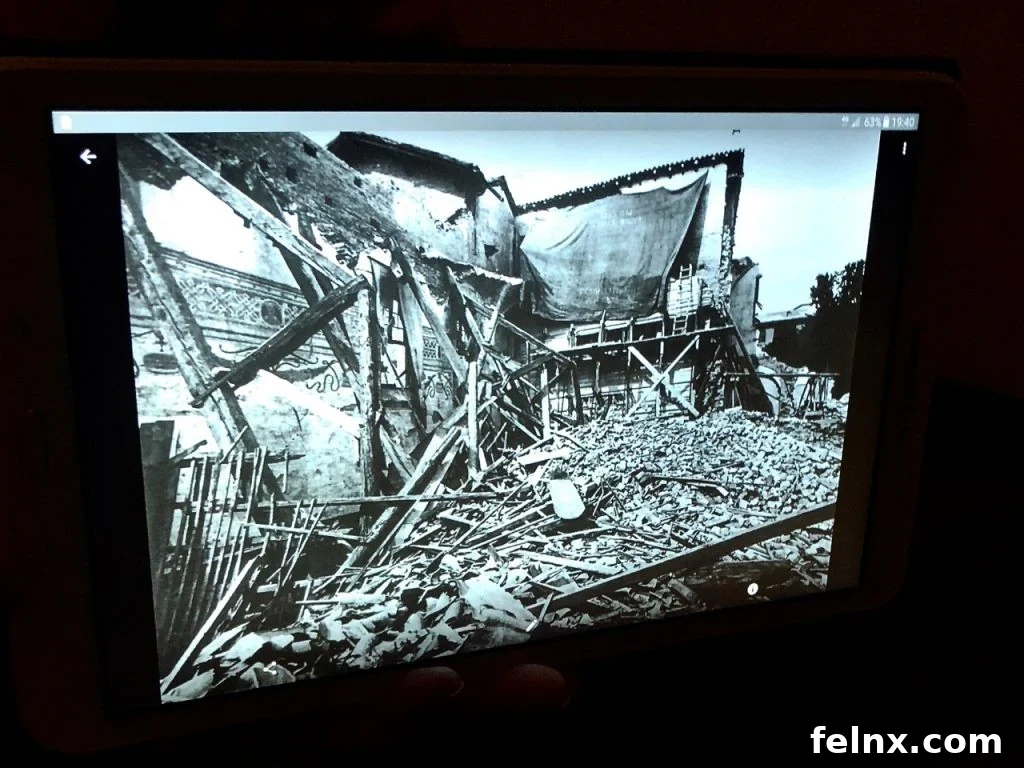
A historical photo showing the remains of the church and refectory after the 1943 bombings.
Foreseeing the danger, the citizens of Milan had reinforced the walls containing the frescoes with massive stacks of sandbags and wooden scaffolding. When the bombs fell, the side walls of the refectory collapsed, but the two walls holding the Last Supper and the Crucifixion remained standing, protected by the sandbags. For several months, the paintings were exposed to the elements before a temporary roof could be built, yet they survived.
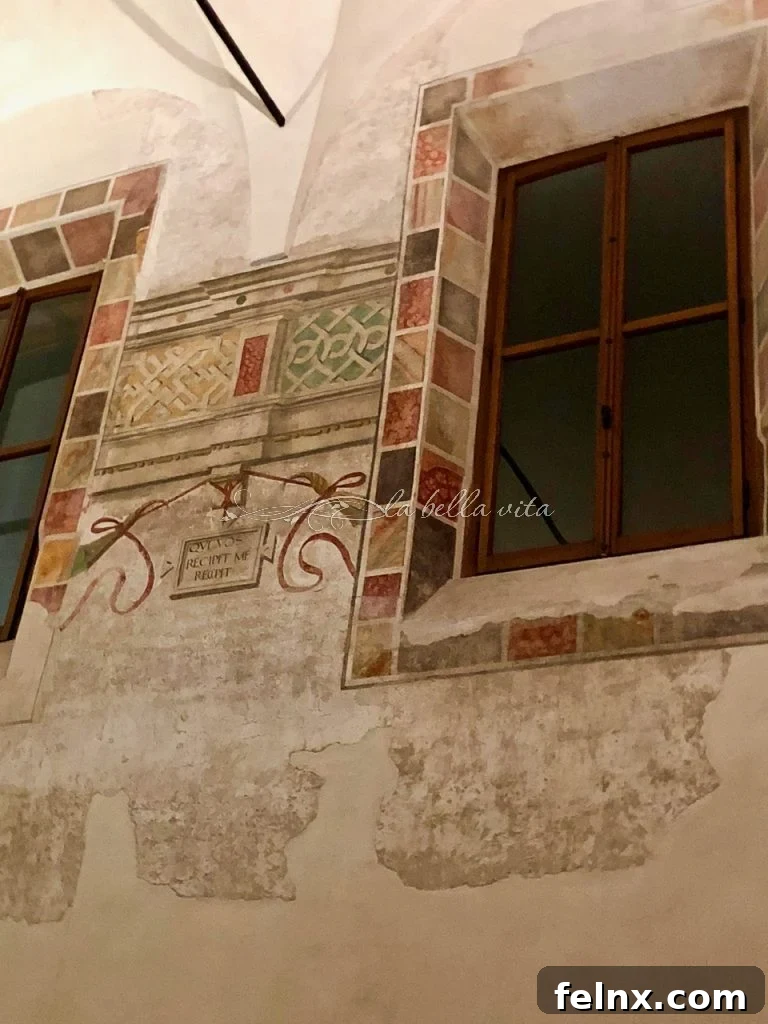
Remnants of original architectural details that survived the wartime destruction.
Visiting Milan Today: Practical Tips
If you are planning a trip to Italy, do not make the mistake of skipping Milan. Beyond the art of Da Vinci, the city offers the stunning Milan Duomo, the historic Sforza Castle, and the world-renowned Galleria Vittorio Emanuele II. The city is a hub of Italian culture that feels both sophisticated and welcoming.
- Book Tickets Early: Tickets for The Last Supper sell out months in advance. Use the official website or book a guided tour.
- Consider After-Hours Tours: As mentioned, the evening tours offer more time and a quieter atmosphere.
- Respect the Rules: No flash photography is allowed. The environment is climate-controlled to prevent further deterioration of the paint.
- Explore the Neighborhood: The area around Santa Maria delle Grazie is beautiful and less crowded than the Duomo area, perfect for a post-tour walk.
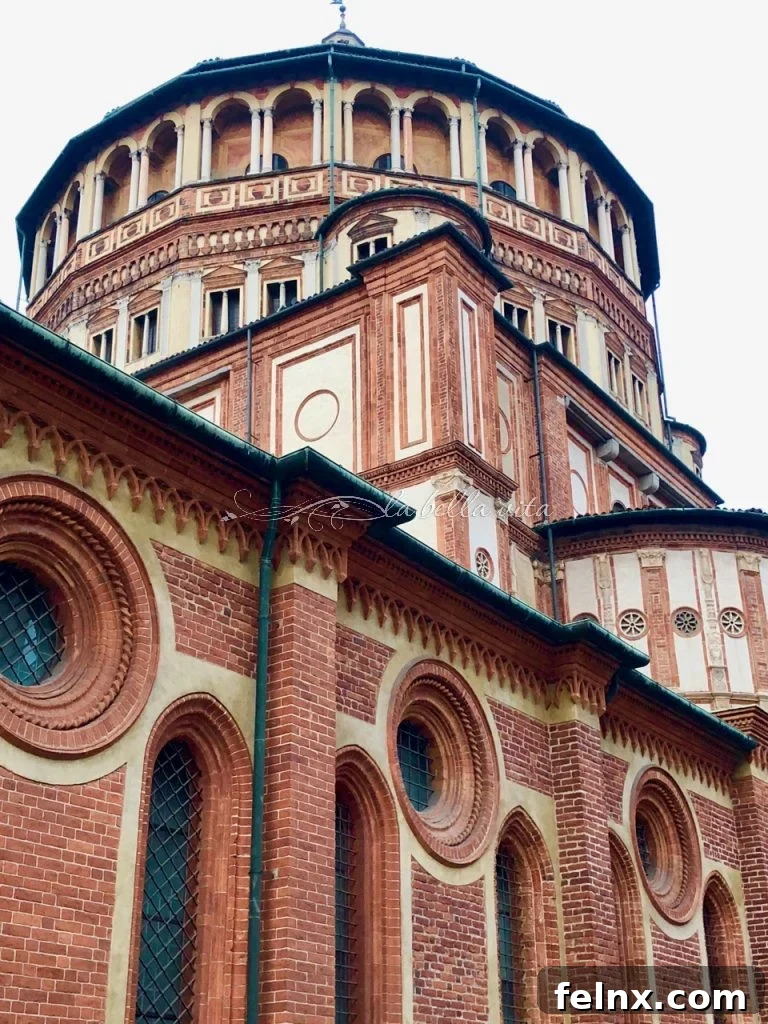
The beautiful brick exterior of Santa Maria delle Grazie, an architectural gem of the Renaissance.
Milan is a city that requires you to slow down. While the fashion and the pace of the financial district might seem fast, the true soul of the city lies in its resilience and its treasures. Seeing the Last Supper in person is a bucket-list experience that clarifies why Leonardo da Vinci remains a household name over 500 years later. His ability to capture the “motions of the mind”—the internal thoughts and feelings of his subjects—changed art forever.
Whether you are an art historian or a casual traveler, the “Northern Jewel” of Italy has something to offer. From the scars of WWII to the heights of Renaissance genius, Milan tells a story of survival, beauty, and innovation that everyone should witness at least once.
Experience the Refectory
Below is a visual glimpse of the dining hall. The modern white walls seen in contemporary footage are those rebuilt after the war, highlighting the miraculous survival of the two original frescoed walls.
For those interested in diving deeper into the life of the master, visit the official resources dedicated to Leonardo da Vinci.
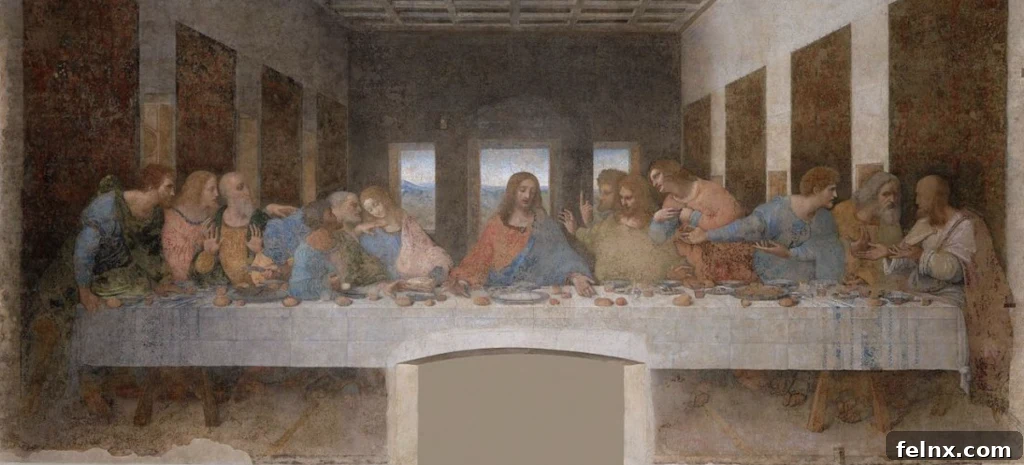
The Last Supper remains one of the world’s most recognized and appreciated artistic masterpieces.