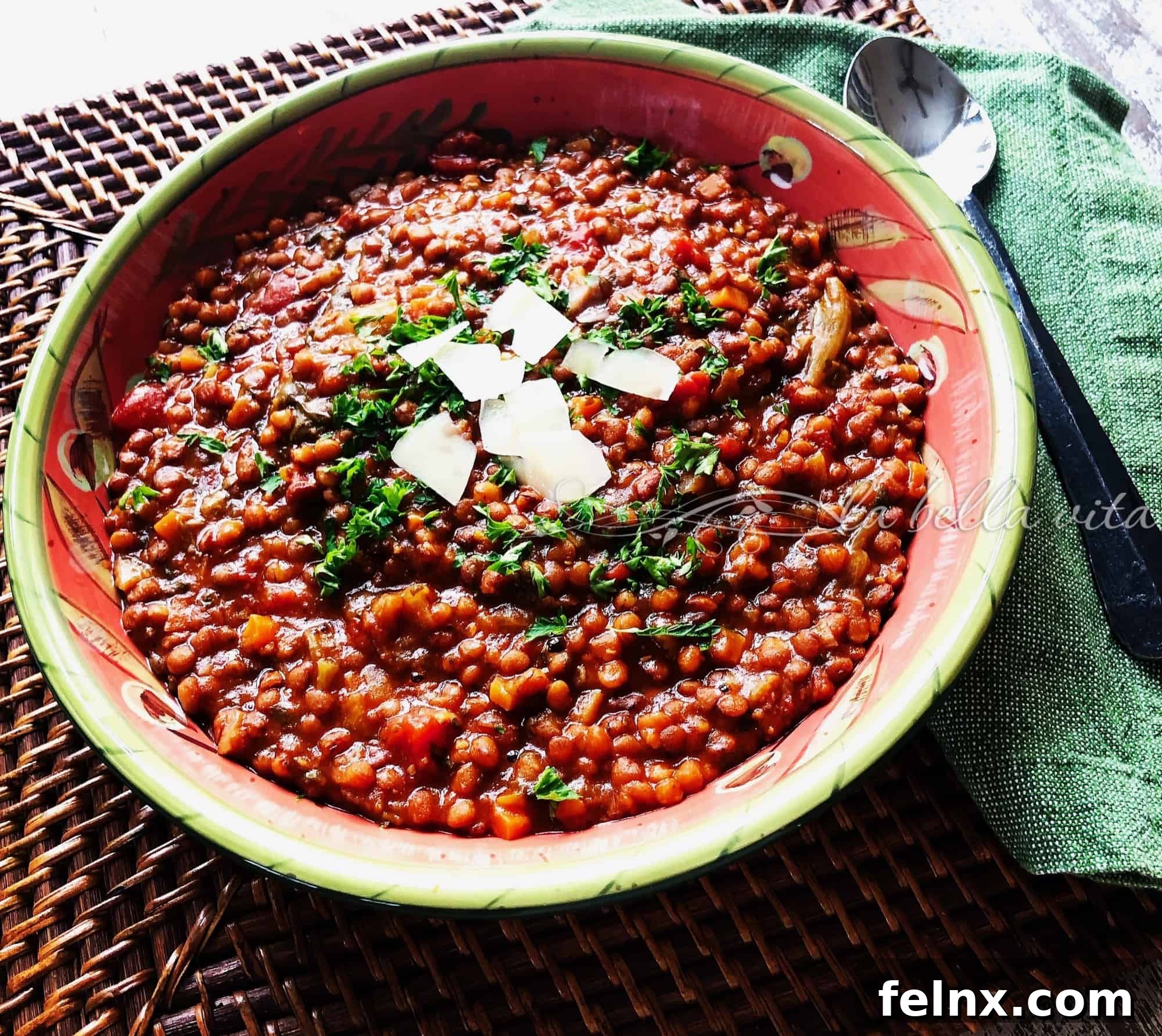
Authentic Italian Lentil Soup: A New Year Tradition for Prosperity and Good Fortune
As the clock strikes midnight on New Year’s Eve in Italy, households across the peninsula share a common ritual: enjoying a steaming, hearty bowl of Italian Lentil Soup. This is not just a meal; it is a symbolic gesture aimed at welcoming the coming year with hope, health, and financial abundance. If you have ever wondered why this simple legume holds such a prestigious place at the Italian table, the answer lies in a blend of history, superstition, and undeniable flavor.
Once you experience the rich, earthy taste of a perfectly prepared bowl of lenticchie, you will understand why this tradition has endured for centuries. This soup is more than the sum of its parts. It is a soul-warming dish that represents the transition from the old to the new. By following the authentic methods of Italian home cooking, you can bring this beautiful tradition into your own home and start your year with a touch of Mediterranean magic.
The Cultural Significance of La Festa di San Silvestro
In Italy, New Year’s Eve is known as “La Festa di San Silvestro” or “Sera di Capo di Anno.” Like almost every major Italian celebration, food is the absolute focal point. Families and friends gather around large tables for a cenone—a massive feast that can last for hours. During this long dinner, guests reflect on the blessings of the past twelve months while looking forward to the opportunities of the future.
The star of this feast is undoubtedly the lentils. While other courses may vary by region, the presence of these small, round legumes is non-negotiable. To an Italian, eating lentils at the start of the year is a practical way to ensure a prosperous future. The tradition is so deeply rooted that it is common to see people eating large quantities of the soup right as the countdown ends, believing that the more lentils you consume, the greater your wealth will be in the coming year.
Superstitions and Midnight Rituals
Italians are famously fond of traditions that court good luck. Beyond the bowl of soup, there are several other fascinating customs observed on New Year’s Eve:
- The Twelve Grapes: To be truly lucky, one must eat one grape (chicco) for each of the twelve strokes of the clock at midnight. This represents a sweet month for every month of the new year.
- Red Underwear: It is a widely held belief that wearing red underwear on New Year’s Eve will bring luck in love and passion in the year ahead.
- Scaring Off Spirits: The modern practice of setting off fireworks has its roots in an old tradition of making as much noise as possible to frighten away evil spirits before the new year begins.
Why Lentils? The Symbolism of Wealth
You might ask, “Why lentils specifically?” The reason is purely visual. In Italian, lentils are called “lenticchie.” Their small, flat, round shape remarkably resembles the Roman coins used in ancient times. Because of this resemblance, they have become a universal symbol for money. When they are cooked, lentils swell in size, further reinforcing the idea of growing wealth and expanding prosperity.
This symbolism is taken quite seriously. In many parts of Italy, a gift of a small bag of dried lentils is common, serving as a wish for the recipient to become “rich” in the upcoming year. Whether you believe in the superstition or not, there is no denying that lentils are “rich” in another way: they are a nutritional powerhouse, packed with protein and fiber, making them the perfect “wealthy” food for the body.
The Perfect Pairing: Pork and Prosecco
While the lentils are the center stage, they are rarely served alone. To further enhance the theme of abundance, Italians often pair lentils with pork. Pork is considered a “lucky” meat because of its fat content. In traditional agrarian societies, a fat pig meant a family was well-off and would not go hungry. Therefore, serving fatty pork with lentils is like doubling down on your luck for the new year.
Cotechino and Zampone
In Northern Italy, particularly in the region of Emilia-Romagna, lentils are traditionally served with cotechino. This is a large, slow-cooked sausage made from pork rind, lean meat, and fat, seasoned with aromatic spices like cloves, nutmeg, and cinnamon. Another variation is zampone, which is the same meat mixture stuffed into a hollowed-out pig’s trotter.
For those who find cotechino a bit too rich or heavy, a high-quality Italian pork sausage or even a simple pork loin serves as an excellent substitute. The goal is to provide a savory, fatty contrast to the earthy, mild flavor of the lentils. To complete the experience, a glass of Prosecco or Spumante is essential. The crisp bubbles of the sparkling wine cut through the richness of the pork and lentils, making every bite feel like a celebration.
Sourcing the Best Ingredients: The Umbrian Gold
Not all lentils are created equal. If you want to make an authentic Italian Lentil Soup, the variety you choose matters. The most prized lentils in the world come from the small village of Castelluccio di Norcia, nestled in the Sibillini Mountains of Umbria. These lentils are tiny, thin-skinned, and hold their shape perfectly even after long simmering.
The Bartolini family has been cultivating these legumes since the mid-19th century. Due to the specific soil and climate of the Umbrian hills, these lentils have been awarded IGP status (Indicazione Geografica Protetta). This is a legal guarantee that the food is produced according to strict standards in a specific region. Much like Champagne must come from France, true Castelluccio lentils must come from this specific part of Italy. They are prized for their nutty flavor and delicate texture, making them the gold standard for this soup.
Building the Foundation: The Soffrito
The secret to any great Italian soup lies in the soffrito. This is the “holy trinity” of Italian cooking: a finely diced mixture of onions, carrots, and celery. These vegetables are sautéed slowly in high-quality extra virgin olive oil until they are soft and fragrant. This process builds a deep base of flavor that carries the entire dish.
In this recipe, we also add diced pancetta to the soffrito. The cured pork fat renders out, adding a smoky, salty complexity that plain oil cannot provide. Another “secret” ingredient used by Italian grandmothers is the Parmigiano-Reggiano rind. Never throw these away! When dropped into a simmering soup, the rind softens and releases an incredible umami depth that transforms the broth into something extraordinary.
Step-by-Step Instructions for the Perfect Lentil Soup
Using an Instant Pot or pressure cooker makes this traditional dish accessible for modern life without sacrificing flavor. Here is how to prepare it:
Step 1: Prep the Lentils
Rinse your lentils thoroughly under cold running water using a fine-mesh colander. Because high-quality lentils like the Umbrian variety are so small, ensure they don’t slip through the holes. Rinsing twice removes any dust or debris and ensures a clean flavor.
Step 2: Sauté the Aromatics
Set your Instant Pot to the “SAUTE” function. Drizzle in a generous amount of extra virgin olive oil. Once warm, add the diced pancetta. Sauté until the fat begins to render and the edges are slightly crisp. Then, add your diced onions, carrots, and celery. Don’t forget to include the celery leaves—they contain a concentrated amount of flavor that adds brightness to the soup.
Step 3: Add Liquids and Base Flavors
Once the vegetables are translucent and soft, add your garlic, tomato paste, and crushed San Marzano tomatoes. Stir these together for a minute to toast the paste. Pour in high-quality chicken broth and add a bouillon cube for extra depth. Bring the mixture to a simmer.
Step 4: The Heart of the Soup
Stir in the rinsed lentils, fresh parsley, and your greens (either spinach or escarole). This is also the time to drop in those Parmigiano rinds, a bay leaf, and a sprig of fresh rosemary. Secure the lid of the Instant Pot and ensure the valve is set to “Sealing.”
Step 5: Pressure Cooking
Set the Instant Pot to “MANUAL” or “SOUP” mode for 10 minutes. Keep in mind that the machine will take about 10 minutes to reach full pressure before the timer starts. This short time is all it takes to make the lentils tender while keeping them intact.
Step 6: Finishing Touches
When the timer goes off, use the quick-release method to vent the steam. Carefully open the lid away from your face. Remove the bay leaf and rosemary sprig. You will find that the cheese rinds have softened significantly—some people love to eat these, while others prefer to discard them. Ladle the soup into large bowls and finish with a drizzle of fresh olive oil and a sprinkle of grated Parmigiano cheese.
Recipe Details
Ingredients List
- 2 cups Umbrian or brown lentils
- 6 cups chicken broth (low sodium preferred)
- 1 vegetable or chicken bouillon cube
- 3 tablespoons extra virgin olive oil
- 8 oz. pancetta, finely diced
- 1 medium yellow onion, diced
- 2 celery stalks (with leaves), diced
- 2 large carrots, peeled and diced
- 4 garlic cloves, minced
- 1 can (12 oz) crushed Italian plum tomatoes
- 1 tablespoon tomato paste
- 2 cups fresh spinach or escarole, chopped
- 2 Parmigiano-Reggiano cheese rinds
- 1 bay leaf and 1 sprig of fresh rosemary
- Salt, black pepper, and red pepper flakes to taste
Preparation Steps Summary
The total cook time is approximately 30 minutes. This recipe yields 6 hearty servings. For the best experience, serve with crusty artisan bread to soak up the delicious broth. This soup is notoriously better the next day, as the flavors have more time to meld, so making a large batch is highly recommended.
Conclusion: A Taste of the Old World
Lentils are among the oldest domesticated plants in human history. They have sustained the people of the Italian peninsula for millennia, providing a reliable source of nutrition during both prosperous and difficult times. Today, they remain a symbol of resilience and the enduring power of simple, honest ingredients.
Whether you are seeking a bit of extra luck for 2025 or simply want a healthy, delicious meal for a cold winter night, this Italian Lentil Soup is the perfect choice. It connects us to a tradition of family, hope, and the joy of sharing a meal. Buon Appetito and Felice Anno Nuovo to all!