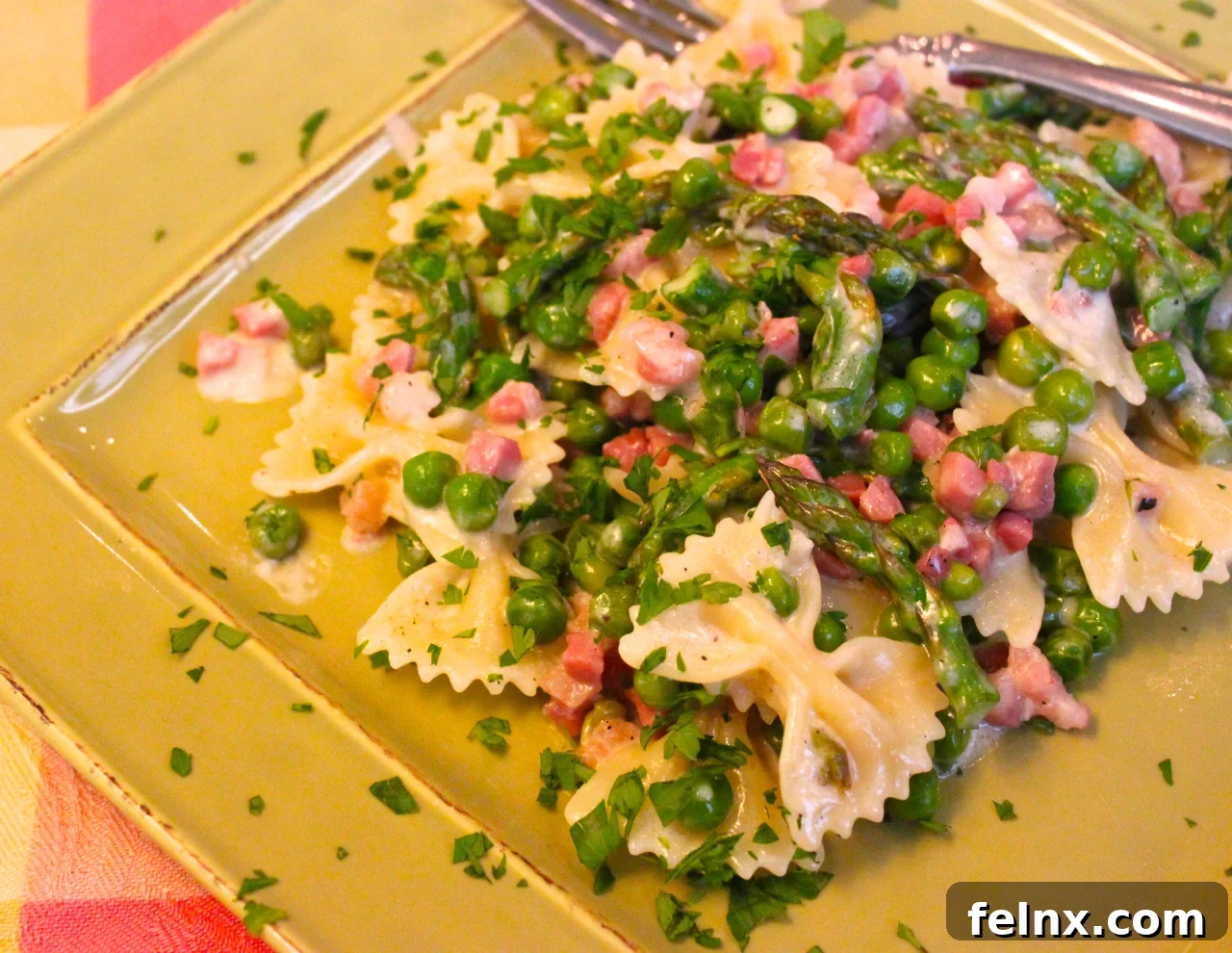
Delicious Spring Pasta: Farfalle with Asparagus, Peas, and Savory Pancetta
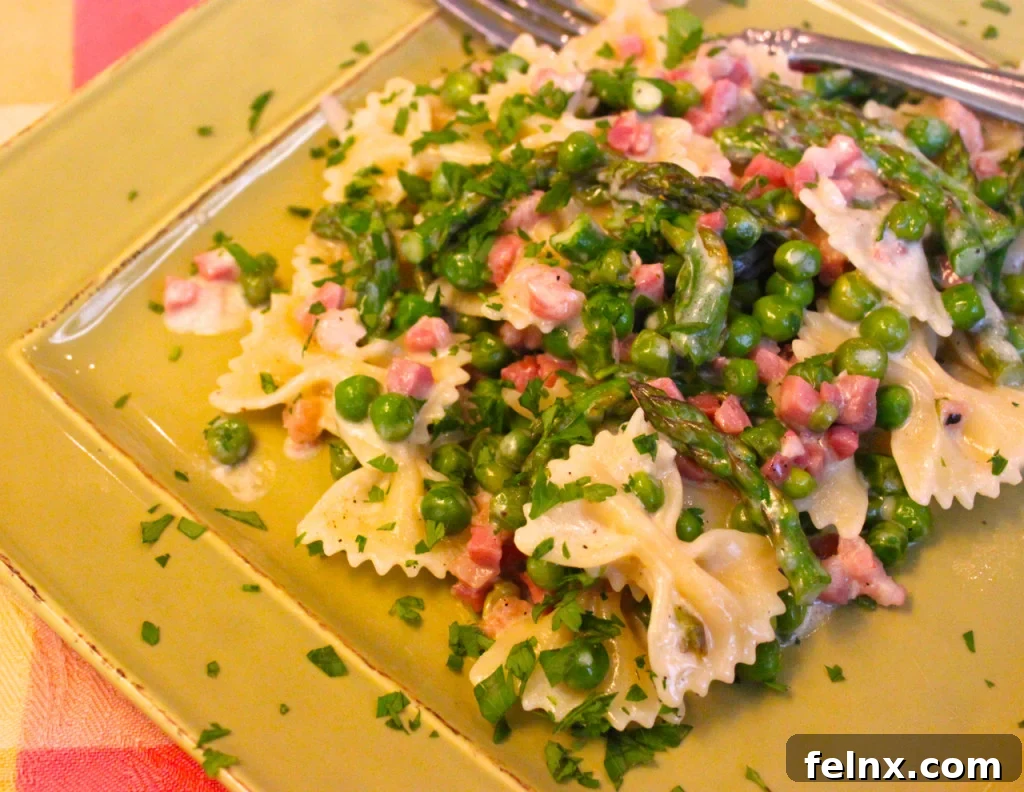
Spring is a season of renewal, bringing a sense of joy and vitality that influences every aspect of our lives, especially the way we cook. After the long, cold months of winter, there is nothing quite like the arrival of warmer weather to inspire a fresh start in the kitchen. This is the perfect time of year to step away from heavy stews and comfort foods and embrace the light, vibrant flavors of garden-fresh produce. Whether you are harvesting vegetables from your own backyard or browsing the colorful stalls of a local farmers’ market, the ingredients available during this season are simply unmatched in quality and taste.
In many regions, winters can be exceptionally harsh and linger far longer than expected. We often find ourselves longing for the first signs of green to poke through the soil. When the sun finally begins to stay out longer and the flowers start to bloom, it does more than just brighten our surroundings; it rejuvenates our minds, bodies, and souls. This transition is naturally reflected in our culinary choices. We begin to crave crisp textures, bright citrus notes, and the natural sweetness of young vegetables like asparagus and sweet peas. These ingredients are the stars of our featured recipe: Farfalle with Asparagus, Peas, and Pancetta in a silky Cream Sauce.
The Magic of Seasonal Spring Ingredients
One of the secrets to great Italian cooking is the commitment to seasonality. Using ingredients when they are at their peak ensures that you get the most flavor with the least amount of effort. In this dish, we focus on two iconic spring vegetables: asparagus and sweet peas. When these vegetables are harvested early in the season, they possess a delicate crunch and a natural sweetness that fades as the weather gets hotter.
Asparagus is a nutritional powerhouse, rich in vitamins K, A, and C, as well as folate and fiber. When choosing asparagus for this pasta dish, look for firm stalks with tightly closed tips. The tips are the most tender part of the vegetable and hold the sauce beautifully. Sweet peas, whether fresh from the pod or high-quality frozen versions, add tiny bursts of sweetness that contrast perfectly with the salty pancetta.
To ground these light vegetables, we use pancetta—Italian cured pork belly. Unlike bacon, pancetta is not typically smoked, allowing its pure, savory pork flavor to shine through. It provides a rich, salty base that balances the creaminess of the sauce and the freshness of the greens. If you cannot find pancetta locally, a thick-cut unsmoked bacon can serve as a substitute, though the traditional Italian choice truly elevates the dish.
The Art of the Perfect Cream Sauce
Many people are intimidated by cream sauces, fearing they might be too heavy or difficult to emulsify. However, this recipe utilizes a simple, foolproof method that results in a light yet luxurious coating for the pasta. The key is using high-quality heavy cream and freshly grated Parmesan cheese. Pre-grated cheese often contains anti-caking agents that can prevent it from melting smoothly, so grating your own cheese at home is always recommended for the best texture.
We also introduce a layer of bright flavor by using lemon-flavor-infused extra virgin olive oil. Citrus and spring vegetables are a match made in heaven. The lemon oil cuts through the richness of the cream and enhances the earthy notes of the asparagus. It’s a subtle touch that makes a significant difference in the final flavor profile.
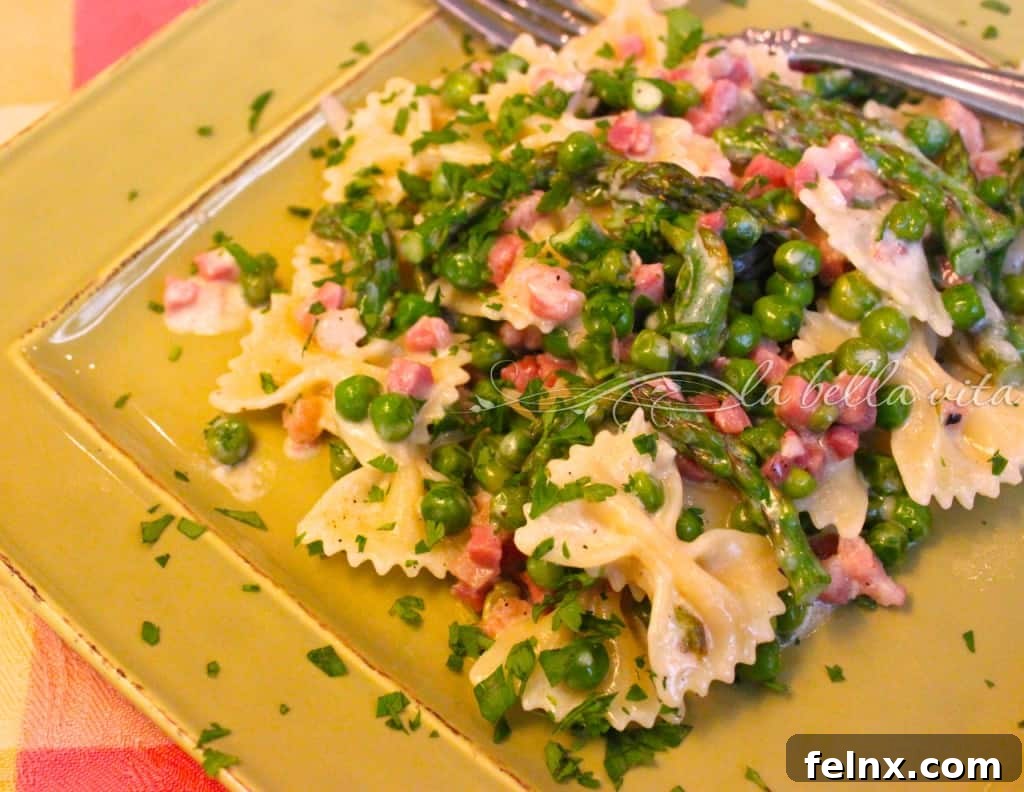
Recipe: Farfalle with Asparagus, Peas, and Pancetta
This dish is as easy to prepare as it is delicious. In less than an hour, you can have a gourmet-quality meal on the table that will have your family and guests asking for seconds. The bow-tie shape of the farfalle pasta is not just aesthetically pleasing; the “wings” of the pasta are perfect for catching the peas and bits of pancetta, ensuring a perfect bite every time.
Ingredients You Will Need
- 1-½ cups pancetta: Diced into small ¼” cubes. This provides the savory foundation of the dish.
- 1 cup asparagus tips: Cut into 1 to 2-inch lengths. Use the most tender parts of the stalk.
- 1 cup spring peas: Fresh are wonderful, but frozen peas work perfectly well if fresh ones aren’t available.
- 2 large garlic cloves: Minced finely to infuse the oil with aromatic flavor.
- ½ box Farfalle pasta: Also known as bow-tie pasta. (Note: If serving a larger group, you can double the ingredients and use the full box).
- 2 Tbsp lemon-infused extra virgin olive oil: For sautéing and adding a bright citrus note.
- 1 cup heavy cream: To create a smooth, velvety sauce.
- ¾ cup Parmesan cheese: Freshly grated for the best melting and flavor.
- ¼ cup fresh Italian parsley: Finely chopped for a fresh garnish.
- Salt: For the pasta water and seasoning.
Step-by-Step Cooking Instructions
1. Prepare the Pasta Water: Fill a large, tall pot with water and add about a tablespoon of salt. Bringing the water to a rolling boil is essential for cooking the pasta evenly. Salted water ensures the pasta is seasoned from the inside out.
2. Sauté the Pancetta: While the water is heating, take a small saucepan and add the lemon-infused olive oil. Heat it over low to medium-low heat. Olive oil has a lower smoke point than vegetable oils, so be careful not to burn it. Add the diced pancetta and sauté for about 5 minutes until it begins to turn golden and crispy.
3. Cook the Pasta: Once the water is boiling, add the farfalle. Cook until it reaches the “al dente” stage—this means the pasta should be tender but still have a slight, pleasant chew. Check the package instructions, but usually, this takes about 10-12 minutes.
4. Combine Aromatics and Vegetables: While the pasta cooks, add the minced garlic, peas, and asparagus tips to the saucepan with the pancetta. Keep the heat on low and sauté for approximately 10 minutes. This allows the vegetables to soften slightly while soaking up the flavors of the garlic and pancetta fat.
5. Create the Cream Base: In a separate large, wide saucepan or skillet, pour in the heavy cream and the freshly grated Parmesan cheese. Heat this over low heat, stirring occasionally until the cheese has melted and the sauce is uniform and warm.
6. The Final Toss: Drain the cooked pasta, but keep a little bit of the pasta water aside just in case you need to thin the sauce later. Add the drained farfalle directly into the wide saucepan with the cream and cheese sauce. Toss gently to coat.
7. Merge the Flavors: Fold in the sautéed mixture of pancetta, garlic, asparagus, and peas. Stir everything together so the vegetables and meat are evenly distributed throughout the bow-tie pasta. The cream sauce should cling to the pasta beautifully.
8. Garnish and Serve: Transfer the pasta to beautiful serving plates. Sprinkle the finely chopped Italian parsley over the top for a pop of color and freshness. For an extra touch of luxury, serve with additional Parmesan cheese on the side so guests can add as much as they like.
Tips for Culinary Success
To make this dish truly stand out, keep these tips in mind. First, don’t overcook the asparagus. It should retain a vibrant green color and a bit of snap. If it becomes mushy, it loses its spring-like quality. Second, always reserve a splash of pasta water. The starchy water is a secret weapon in Italian cooking; if your sauce feels too thick after adding the pasta, a tablespoon or two of this water will help loosen it while maintaining a silky texture.
If you want to experiment with variations, you could add a pinch of red pepper flakes for heat or some lemon zest at the end for even more citrus punch. For a vegetarian version, simply omit the pancetta and add a bit of smoked paprika or sun-dried tomatoes to provide that savory “umami” depth.
Why This Recipe Works for Busy Weeknights
One of the best things about this Farfalle with Asparagus and Peas is that it feels like a restaurant-quality meal but requires very little cleanup. By using a few high-impact ingredients like pancetta and lemon oil, you create complex flavors in a short amount of time. It is a sophisticated choice for entertaining guests, yet simple enough to whip up on a Tuesday evening when you want something special but don’t have hours to spend in the kitchen.
Cooking seasonally is not just about the food; it’s about connecting with the rhythm of nature. As you enjoy this pasta, take a moment to appreciate the fresh ingredients and the warmer days ahead. This dish is a celebration of spring on a plate, bringing the beauty of the garden directly to your dining table.
Conclusion: Share Your Experience
Food is meant to be shared, and we would love to see how your spring pasta turned out! Did you use fresh peas from the market? Or perhaps you added your own unique twist to the cream sauce? Sharing recipes and photos is a wonderful way to inspire others to get back into the kitchen and enjoy the bounty of the season.
Please feel free to leave a comment with your thoughts or any tips you discovered while making this dish. You can also share your culinary creations on social media using hashtags like #SpringPasta and #ItalianHomeCooking. Let’s celebrate the end of winter together with a bowl of delicious, creamy farfalle!