The Ultimate Guide to Making Authentic Homemade Italian Ravioli
Making homemade ravioli is a culinary tradition that brings warmth, flavor, and a sense of accomplishment to any kitchen. If you haven’t prepared fresh pasta in a while, you might be surprised by how simple and rewarding the process truly is. Often, we save these special recipes for major holidays like Thanksgiving or Christmas, but there is no reason why a weekend gathering or even a Super Bowl party can’t be elevated with a batch of “bundles of love.”
Authentic Italian cooking is as much about the ingredients as it is about the person preparing them. In many Italian households, the kitchen—or “cucina”—is the heart of the home. This guide will walk you through the journey of creating perfect ravioli, from kneading the silky dough to crafting a savory Swiss Chard and cheese filling that will delight your family and guests.
The Story Behind the Recipe
Tradition often starts with family. Many of these techniques have been passed down through generations. Whether it’s using greens grown in a family garden or deciding to serve a labor-intensive pasta dish for a casual sports event, the spirit of Italian cooking is about generosity. While many people associate appetizers with the Super Bowl, why not break the mold and serve something substantial like homemade ravioli? It is the ultimate comfort food, and once you master the technique, you will find yourself looking for any excuse to get the pasta roller out.
One of the unique aspects of this particular recipe is the use of Swiss Chard. While spinach is a more common filling in many regions, Swiss Chard offers a robust, earthy flavor that pairs beautifully with sharp Italian cheeses. Using garden-fresh greens makes a world of difference, but high-quality frozen greens work perfectly well for year-round preparation.
Essential Tools for Pasta Making
To achieve the thin, translucent sheets of pasta required for delicate ravioli, having the right equipment is beneficial. There are two primary ways to roll out your dough effectively:
- The Manual Pasta Machine: The Marcato Atlas 150 is widely considered the gold standard for home cooks. It is a hand-cranked machine that allows you to feel the tension of the dough as you work it through various thickness settings.
- The Electric Attachment: For those who already own a KitchenAid stand mixer, the pasta roller attachment is a game-changer. It leaves both of your hands free to guide the long sheets of pasta as they emerge from the rollers.
Regardless of the tool you choose, the goal remains the same: starting with a thick piece of dough and gradually thinning it out until it is supple and ready for filling.
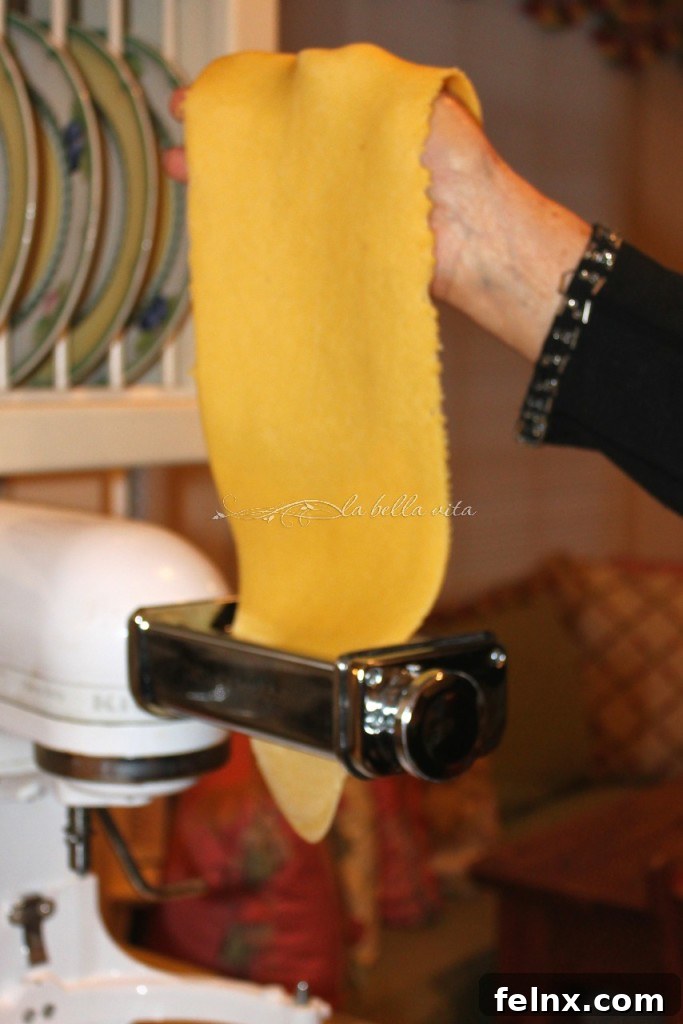
Gradually rolling the pasta from the thickest to the thinnest setting ensures a smooth texture.
Step 1: Preparing the Fresh Pasta Dough
The foundation of great ravioli is the dough. Using “00” flour, which is a finely milled Italian flour, creates a much smoother and more elastic texture than standard all-purpose flour. This elasticity is vital when you are stretching the dough over mounds of filling; you want it to be thin enough to cook quickly but strong enough not to tear.
When mixing your dough, you can use the traditional “well” method on a wooden board or a food processor for speed. The key is the hydration. The dough should feel like a soft earlobe—not sticky enough to cling to your hands, but not so dry that it crumbles. A short rest period of 30 minutes is non-negotiable, as it allows the gluten to relax, making the rolling process much easier.
Recipe: Classic Fresh Pasta Dough
Ingredients
- 2 Jumbo eggs
- 1 tsp. Salt
- 2 Tbsp. Water
- 2.5 to 3 cups “00” Italian flour
- 1 Tbsp. Whole milk (the secret for a perfect seal)
Instructions
- Create a mound of flour and make a well in the center. Add the eggs, salt, water, and milk.
- Gradually incorporate the flour into the wet ingredients with a fork until a shaggy dough forms.
- Knead the dough by hand for about 2-3 minutes until smooth and elastic.
- If the dough is too sticky, add a tablespoon of flour. If too dry, add a teaspoon of water.
- Wrap the dough in plastic or place it in a bag and let it rest for 30 minutes at room temperature.
Step 2: Crafting the Swiss Chard and Cheese Filling
A great ravioli filling must be flavorful but not overly wet. If the filling has too much moisture, it will seep into the dough and cause the ravioli to fall apart during the boiling process. This is why straining your greens—whether using Swiss Chard or spinach—is the most important step.
The blend of cheeses used here provides a complex flavor profile. Parmigiana offers saltiness, while Pecorino adds a sharp tang. A hint of nutmeg and allspice provides that classic Italian “something” that makes people wonder what your secret ingredient is. If you prefer a creamier texture, you can substitute the milk and egg mixture with ricotta cheese.
Recipe: Swiss Chard and Three-Cheese Filling
Ingredients
- 1 cup Whole milk (or 1.25 cups Ricotta)
- 2 Large eggs
- 2 packages Frozen Swiss Chard or Spinach (cooked and squeezed dry)
- 2 cups Freshly grated Parmigiana cheese
- 1 tsp. Freshly grated nutmeg
- 0.5 tsp. Allspice
- Salt and black pepper to taste
- 1 cup Plain breadcrumbs (to adjust consistency)
Instructions
- Gently warm the milk and eggs in a pan over low heat (do not scramble the eggs).
- Add the very well-drained greens to the warm mixture.
- Stir in the cheeses and spices, mixing thoroughly.
- Add breadcrumbs gradually until the mixture is firm enough to roll into small balls.
- Taste and adjust seasoning as needed. Let the mixture cool before filling the pasta.
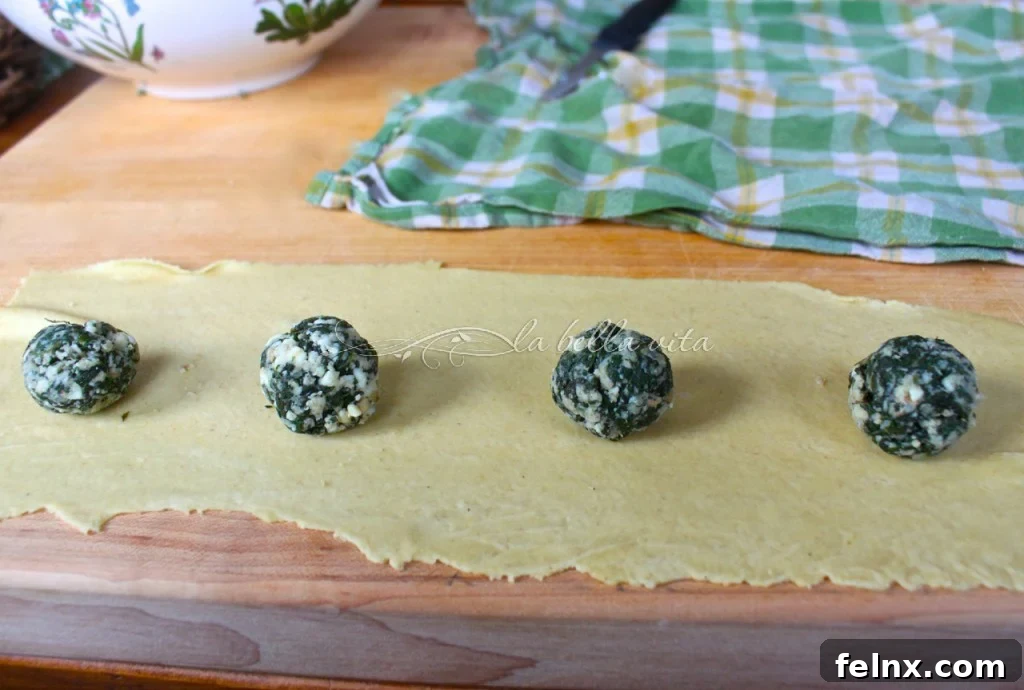
Step 3: Assembly and Sealing
Once your dough is rolled into long, thin sheets and your filling is prepared, it is time to assemble. Work with one sheet of pasta at a time, keeping the others covered with a damp towel to prevent them from drying out. Dry pasta becomes brittle and will not seal properly.
- Place small, uniform balls of filling (about 1 inch) along the center of the pasta sheet, leaving enough space between them for the edges.
- Gently fold the pasta sheet over the filling.
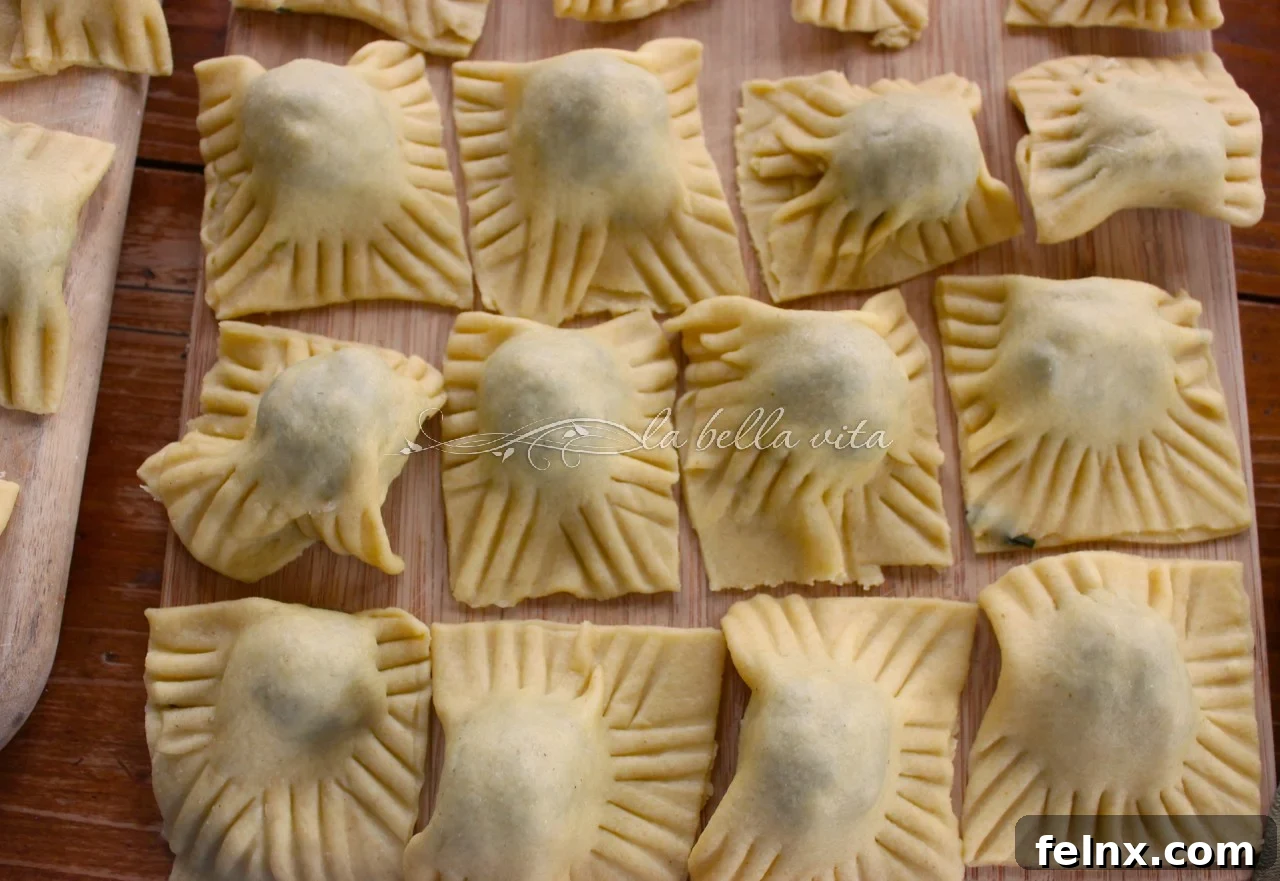
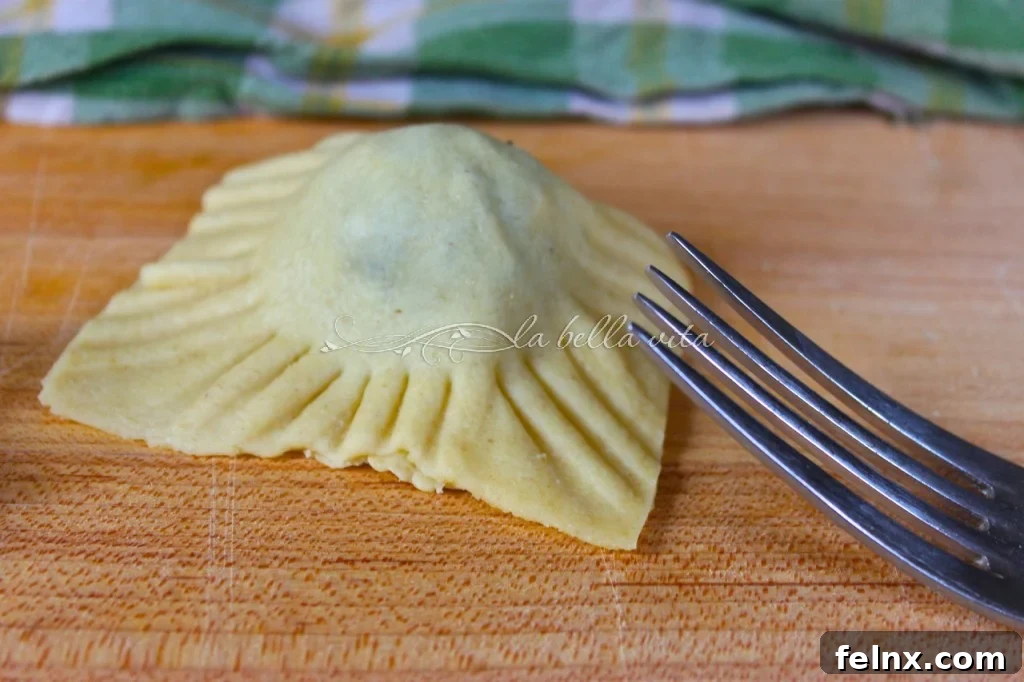
- Use your fingers to press around each mound of filling, pushing out any trapped air. Air bubbles will cause the ravioli to burst in the water.
- Cut the individual ravioli using a pasta wheel or a sharp knife.
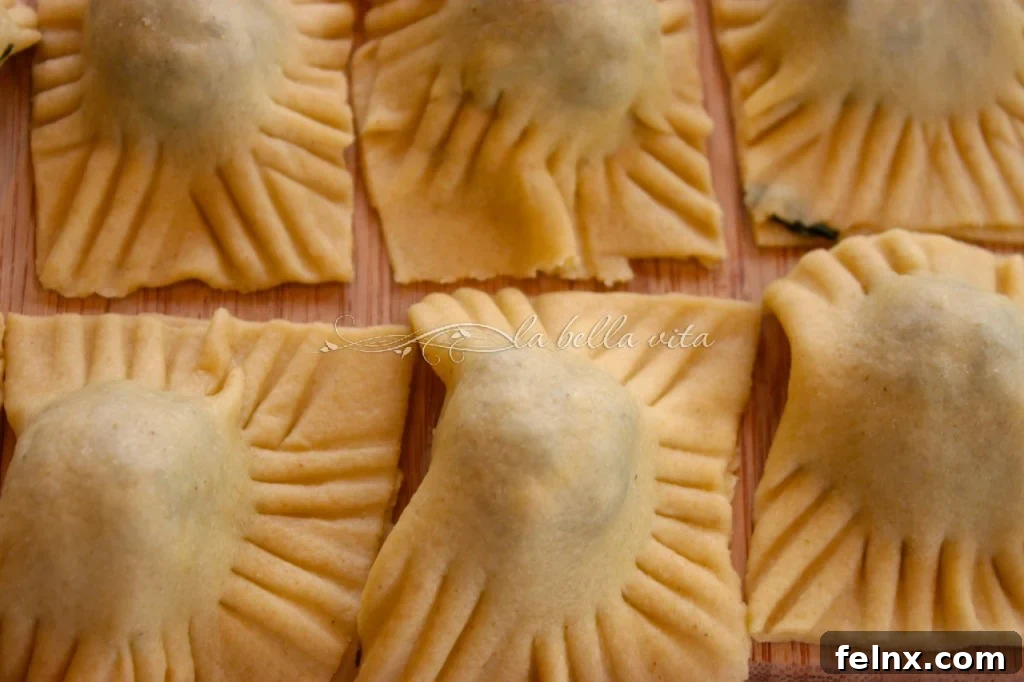
- Use a fork to crimp the edges of each ravioli. This not only looks beautiful but ensures a tight seal.
Step 4: Cooking and Serving
Fresh ravioli cooks very quickly. Bring a large pot of heavily salted water to a gentle boil. Avoid a vigorous rolling boil, as the turbulence can tear the delicate pasta. Drop the ravioli in and cook for about 7 minutes, or until they float to the surface and are “al dente.”
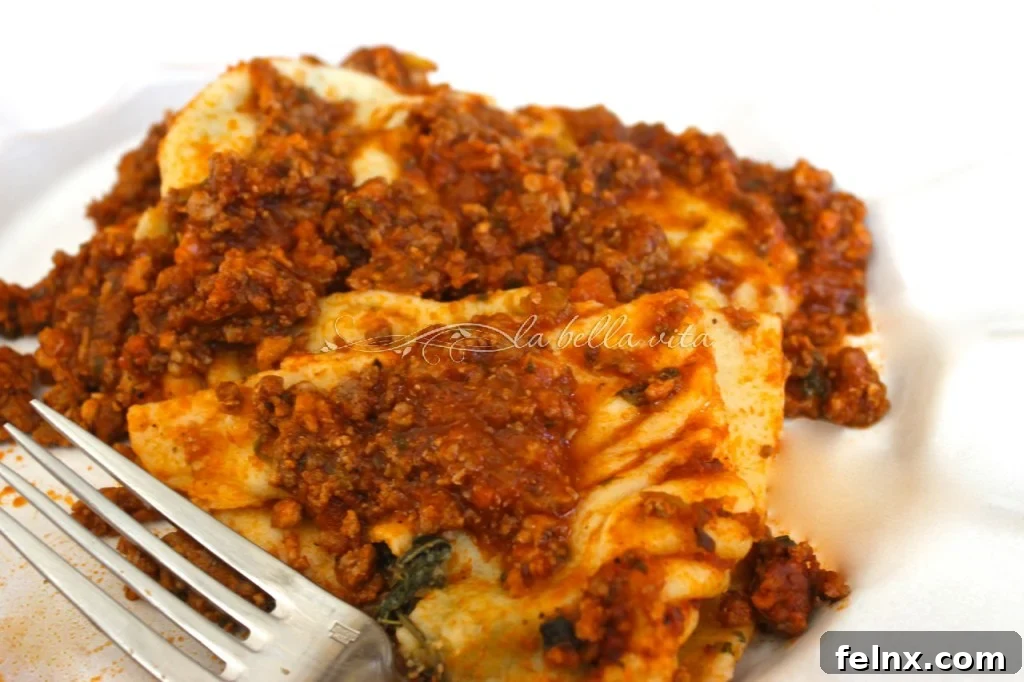
When serving, the presentation is key. Many Italians prefer a rich Bolognese sauce or a simple brown butter and sage sauce for cheese-filled ravioli. To prevent sticking, place a small amount of sauce at the bottom of the serving bowl before adding the cooked pasta. Layer the ravioli with additional sauce and a generous dusting of Parmigiana cheese.
Tips for Success
- Don’t Rush the Rest: Let the dough rest. This allows the flour to fully hydrate and the gluten to relax, making the sheets easier to roll.
- Squeeze the Greens: Use a kitchen towel to squeeze every drop of liquid out of your cooked Swiss Chard or spinach.
- The Air Bubble Test: Always press the air out from the center toward the edges before sealing.
- Freezing: If you aren’t eating them immediately, lay the ravioli on a wooden board or parchment-lined tray and freeze them flat before transferring them to a bag.
Homemade ravioli is more than just a meal; it is an expression of love and a tribute to Italian culinary heritage. Whether you are using a hand-cranked Atlas roller or a modern stand mixer, the result is a dish that far surpasses anything you can buy at the store. Enjoy the process, involve your family, and most importantly, Bon Apetito!