A Magical Journey to Neuschwanstein Castle: The Ultimate Fairytale Experience in Bavaria
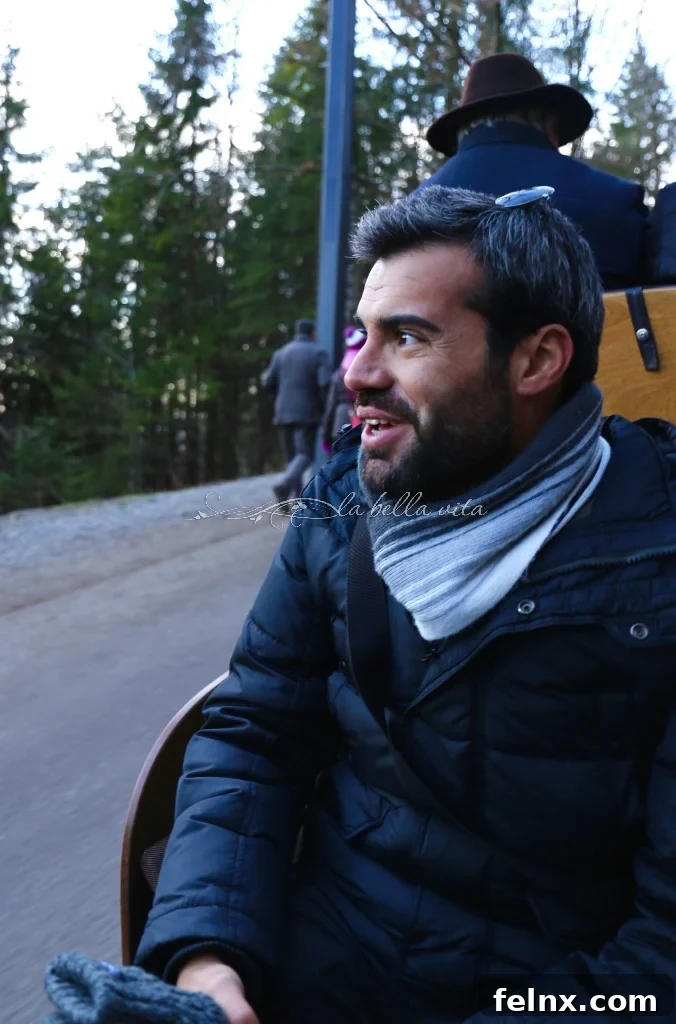
We chose a traditional horse-drawn carriage to reach the mountain peak, offering a stunning first glimpse of the castle.
Bavaria is a region that feels like it was plucked directly from the pages of a storybook. After spending a productive week teaching a marketing seminar in Landshut, Germany, my husband joined me in Munich for a much-anticipated adventure. Our goal was simple yet ambitious: to visit the world-renowned Neuschwanstein Castle, the crown jewel of German architecture and the inspiration for Disney’s Sleeping Beauty castle.
Neuschwanstein is more than just a building; it is a monument to the imagination of King Ludwig II, often referred to as “Mad King Ludwig.” Setting off from Munich, we boarded a train headed toward the Alps, eager to witness the jaw-dropping awe that this destination is famous for. If you are planning a tour of Bavaria and Austria, starting with this iconic landmark is the best way to set a magical tone for your trip.
The Legacy of King Ludwig II and His Fairytale Vision
It is difficult to find the right words to describe the sheer scale and beauty of this castle. King Ludwig II was a monarch with an extraordinary eye for design and an uncompromising taste for the ornate. While history often labels him as “mad” due to his reclusive nature and obsession with grand building projects, his artistic legacy remains one of Germany’s greatest treasures.
Inside the castle, photography is strictly prohibited to preserve the integrity of the artwork and the atmosphere. However, this only adds to the mystery and allure. Every room is a masterpiece of craftsmanship, featuring intricate wood carvings, vibrant frescoes, and revolutionary technology for the 19th century. To fully appreciate the tragic yet fascinating story of the king and his palaces, a visit to the official biography of King Ludwig II is highly recommended.
Our jolly German carriage driver, complete with a traditional Alpine hat.
Why a Private Tour is Worth the Splurge
For our visit, we decided to book an all-day private tour. This was a significant investment, but it proved to be worth every penny. Our guide, Frederico—an incredibly knowledgeable gentleman originally from Milan—made the experience seamless. Having a private guide meant we didn’t have to worry about the logistics of driving, parking, or navigating the crowds.
One of the most important factors in choosing a tour company was the timing of our visit. Winter in Bavaria is breathtaking, but it can be challenging for travelers. Many tour operators stop their services to the castle’s peak after October due to snow and ice. However, we found a company that operates year-round, ensuring we could reach the summit even in December. For those planning a similar trip, I cannot recommend European Castles Tour enough. They offer various packages tailored to different budgets and schedules.
Frederico picked us up directly from our hotel in the charming town of Fussen, where we had stayed the night before. This allowed us to start our day early and beat the large tour buses coming from Munich.
Ascending the Mountain: The Carriage Ride Experience
After picking up our audio-tour tickets at the base, we had a choice: walk the steep path to the castle or take a horse-drawn carriage. Given the chilly winter air and the steepness of the terrain, the carriage was an easy choice. It added a layer of historical authenticity to the journey, as the rhythmic sound of hooves on the pavement echoed through the Alpine forest.
Classic Bavarian architecture provides a beautiful backdrop at the base of the mountain.
As the carriage climbed higher, the views of the surrounding Alps became increasingly dramatic. Even though the sun was shining, the castle sits in the deep shadows of the towering peaks. This creates a unique atmospheric effect in photos—a cool, blue-ish tint that highlights the wintery mood of the landscape. The contrast between the bright sky above and the shaded mountainside below is truly a sight to behold.
The incline is incredibly steep, making the carriage ride a very comfortable alternative to hiking.
The sheer verticality of the terrain illustrates why this location was chosen for a defensive stronghold.
Many brave tourists choose to hike the trail, but it is quite a workout!
Charming Stops Along the Way
The journey up the mountain is peppered with charming details. Halfway up, there is a quaint mountainside tavern where visitors can stop for a warm drink or a snack. Even this small building features the darling exterior designs typical of the region, with decorative shutters and woodwork that look like they belong in a gingerbread village.
A cozy mountain tavern offering a rest stop for weary hikers.
The attention to detail in Bavarian architecture extends even to small taverns.
The Benefits of Visiting in Winter
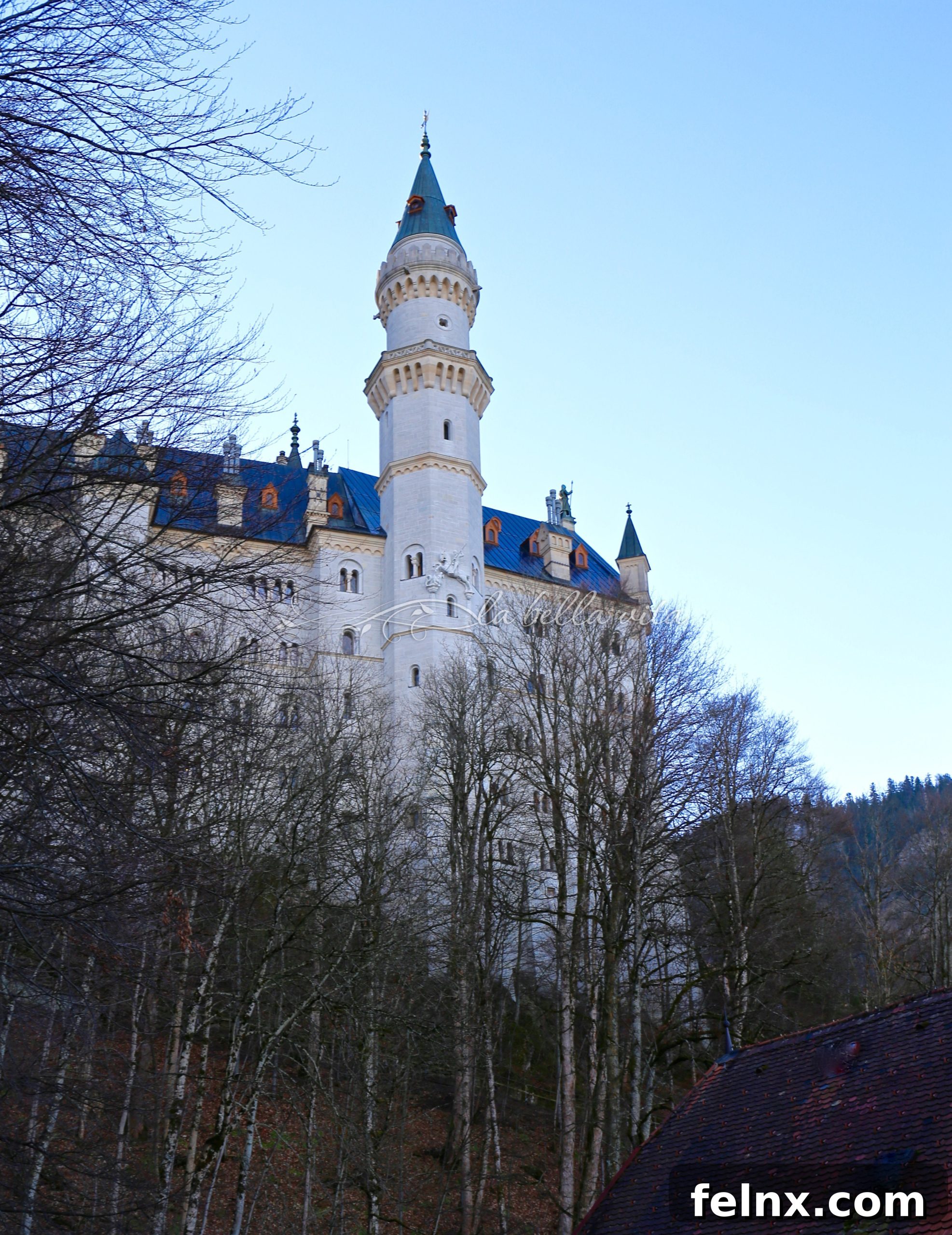
While summer brings lush green forests, visiting Neuschwanstein in the winter offers a unique advantage: the bare trees. Without the thick canopy of leaves, you get much clearer views of the castle’s white limestone walls and blue turrets as you approach. The crisp air and the possibility of snow create a serene atmosphere that is much quieter than the peak tourist season in July and August.
The castle sits high above the valley, providing a commanding view of the Bavarian countryside.
Beautiful daylight begins to break over the ridges, illuminating the path ahead.
As we reached the top of the hill, the view was simply breathtaking. Neuschwanstein stood tall against a pure blue sky, its towers reaching upward like something out of a dream. The architectural detail is staggering, and even from the outside, you can see the effort King Ludwig II put into creating his personal sanctuary.
Looking up from the carriage, the castle appears suddenly, leaving visitors in awe.
Winter’s bare trees provide unobstructed views of the castle’s intricate masonry.
The castle’s beauty becomes even more pronounced against the stark winter landscape.
Entering the Inner Sanctuary
The entrance gate is a marvel in itself, featuring carved coats of arms and defensive structures that look like they could withstand a medieval siege. Once you pass through the gates, you are greeted by an expansive courtyard that leads to the main residence. The castle was never fully completed, but the parts that were finished are incredibly lavish.
Approaching the final stretch before the grand entrance.
A truly picture-perfect fairytale scene against a brilliant blue Alpine sky.
The combination of architectural mastery and the snow-covered Alps is stunning.
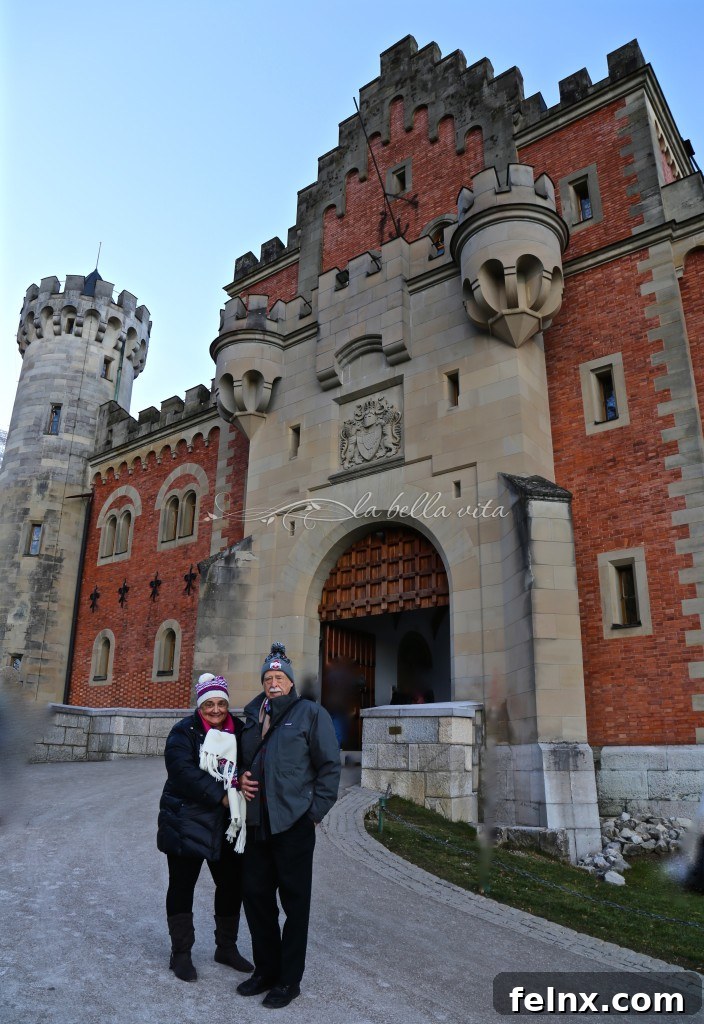
The royal coat of arms, meticulously carved into the stone of the castle.
Stepping through the gate reveals the magnificent scale of the main courtyard.
The Royal Kitchen: A Feast for the Eyes
While the throne room and the singers’ hall are magnificent, the royal kitchen is particularly fascinating. It gives us a glimpse into the daily life—or rather, the solitary life—of King Ludwig II. Despite building such a massive palace, the king famously never received guests. He would dine alone, often on 16-course meals prepared by his royal chef.
The kitchen was incredibly modern for its time, featuring running hot and cold water and an advanced heating system. The sheer amount of copper cookware is staggering; three entire walls are covered with gleaming pots, pans, and intricate molds. Among the most impressive items is a solid copper kitchen sink, a luxury that many modern home chefs would envy!
A look at the extensive copper collection in the royal kitchen.
The king’s 16-course meals required a vast array of specialized copper molds.
The stunning copper sink, a rare piece of 19th-century kitchen technology.
We even got to see the chef’s desk, complete with original cookbooks and notes. Interestingly, King Ludwig had a deep obsession with swans—a symbol of purity and a recurring theme in Richard Wagner’s operas, which the king adored. These swan motifs can be found even within the illustrations of the royal cookbooks.
The royal chef’s desk, where hundreds of elaborate meals were planned.
Swan motifs were a recurring theme throughout the castle and even in the food presentation.
Relaxing After the Tour: Bavarian Delights
Touring Neuschwanstein involves a lot of walking and climbing hundreds of steps. By the end of the tour, we were exhausted but exhilarated. Fortunately, there is a charming little café at the end of the tour where you can rest and refuel. The selection of pastries was incredible—classic Black Forest Torte, warm Apple Strudel with custard sauce, and creamy Apricot Cheesecake.
Sitting in the café, which is uniquely decorated with lit-up tables, we enjoyed a piece of apple strudel that was, without exaggeration, perfect. It was the ideal way to end a day of exploring such a grand monument.
A tempting selection of traditional Bavarian cakes to reward visitors after the tour.
Nothing beats a warm apple strudel in the middle of a Bavarian winter.
The café’s lit-up tables add a modern touch to the historical setting.
Final Thoughts on a Bavarian Adventure
Before leaving the castle grounds, we took one last look down at the village below. From this height, you can see Hohenschwangau Castle, the childhood home of King Ludwig. It is a striking sight, seeing the two castles so close yet so different in style.
A final look down at Hohenschwangau, the king’s boyhood home, nestled in the valley.
Visiting Neuschwanstein Castle in the winter was a dream come true. Despite the cold and the shadows of the Alps, the experience was filled with warmth, history, and beauty. If you ever have the chance to visit Bavaria, make sure this fairytale destination is at the top of your list. Whether you go for the history, the architecture, or simply the views, you will not be disappointed.