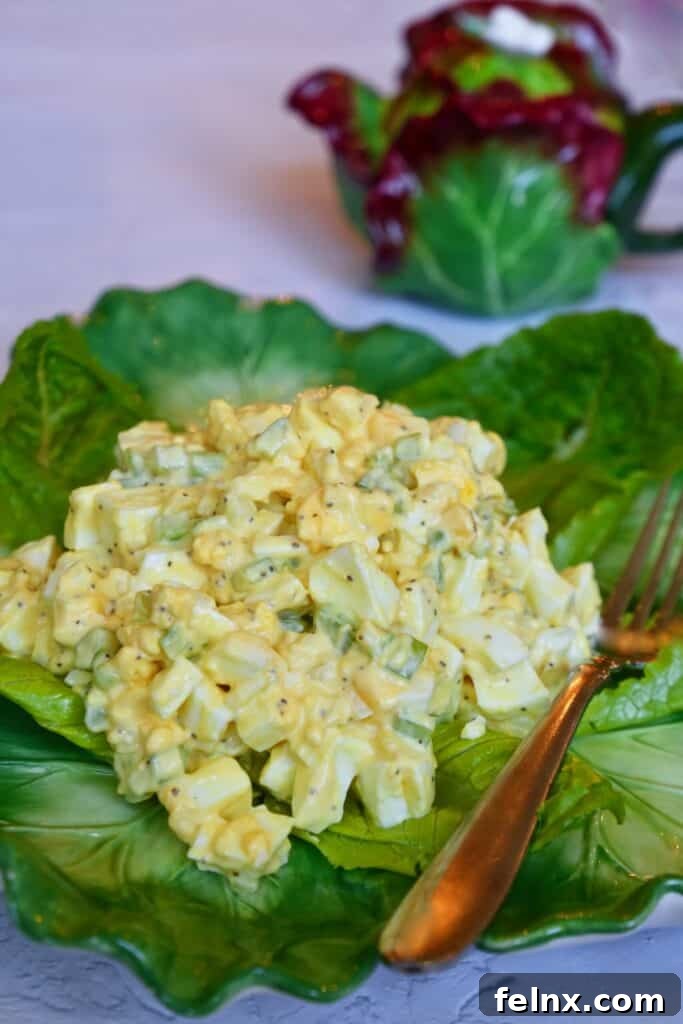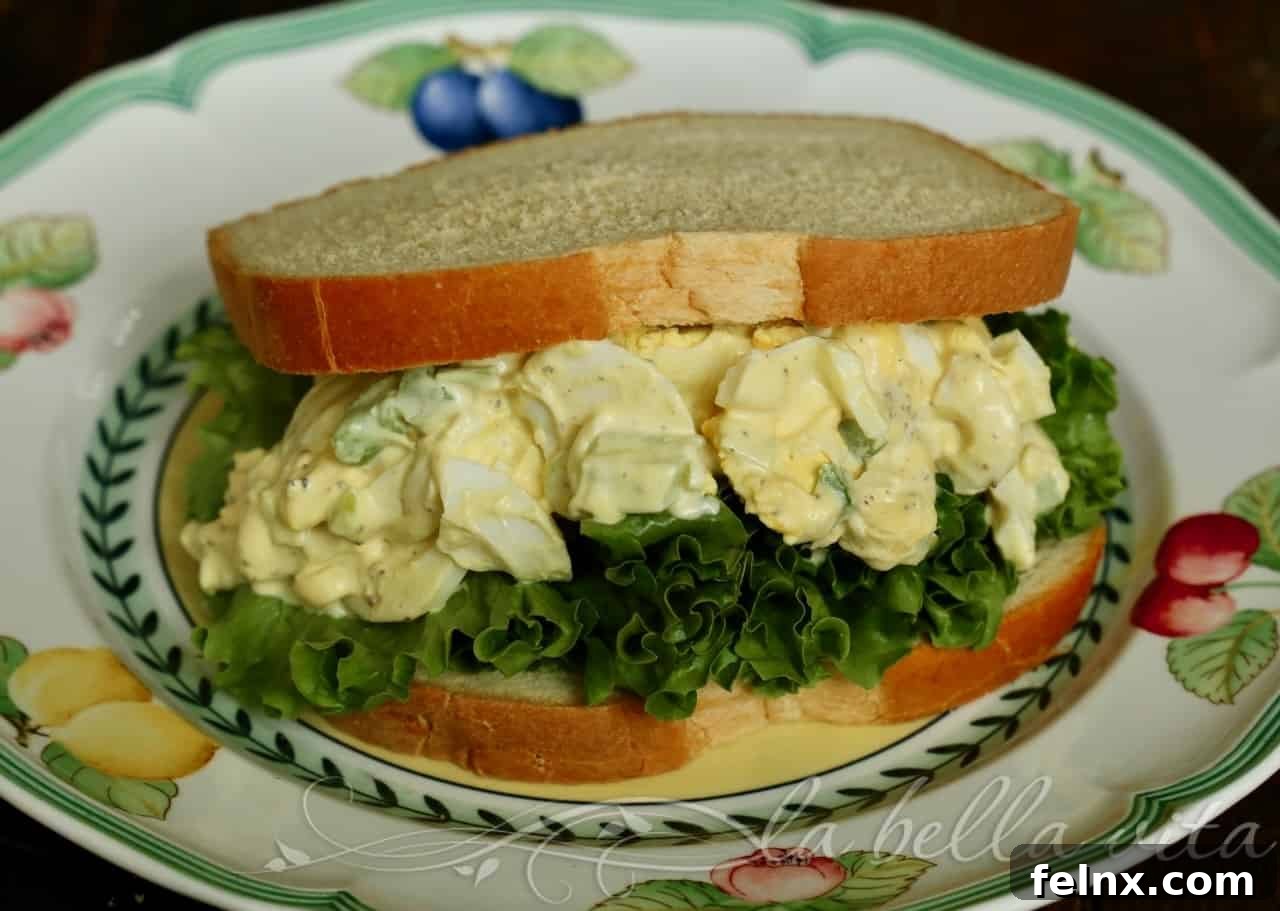
The Ultimate Guide to Making the Best Classic Egg Salad
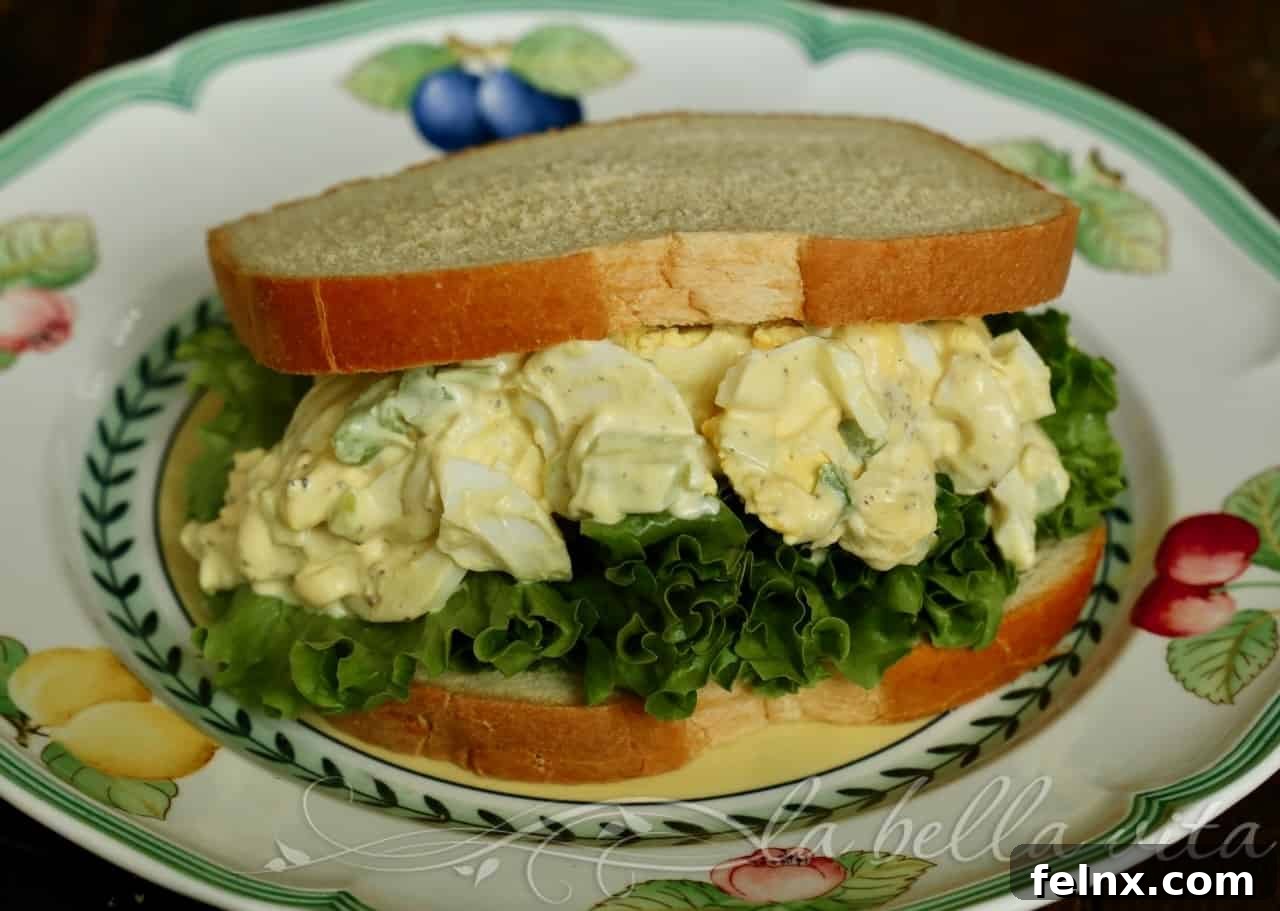
Spring and summer are the seasons for refreshing, cold dishes that celebrate fresh ingredients. From backyard barbecues to quiet afternoon picnics, nothing defines these warmer months quite like a variety of chilled salads. While potato salad, cucumber salad, and pasta salad are staples, the crown jewel of seasonal comfort food is often a Perfect Classic Egg Salad. This recipe is a celebration of simplicity, focusing on essential ingredients that shine without being overshadowed by unnecessary extras.
Finding the balance between a creamy texture and a satisfying crunch is the secret to a memorable egg salad. This isn’t just a basic lunch option; it’s a nostalgic dish that brings back memories of blue skies, lazy afternoons under shady trees, and the gentle lapping of lake water against a boat. To make those moments perfect, you need a recipe that is reliable, thick, and bursting with traditional flavor. In this guide, we will explore the techniques and secrets that transform ordinary hard-boiled eggs into the ultimate creamy delight.
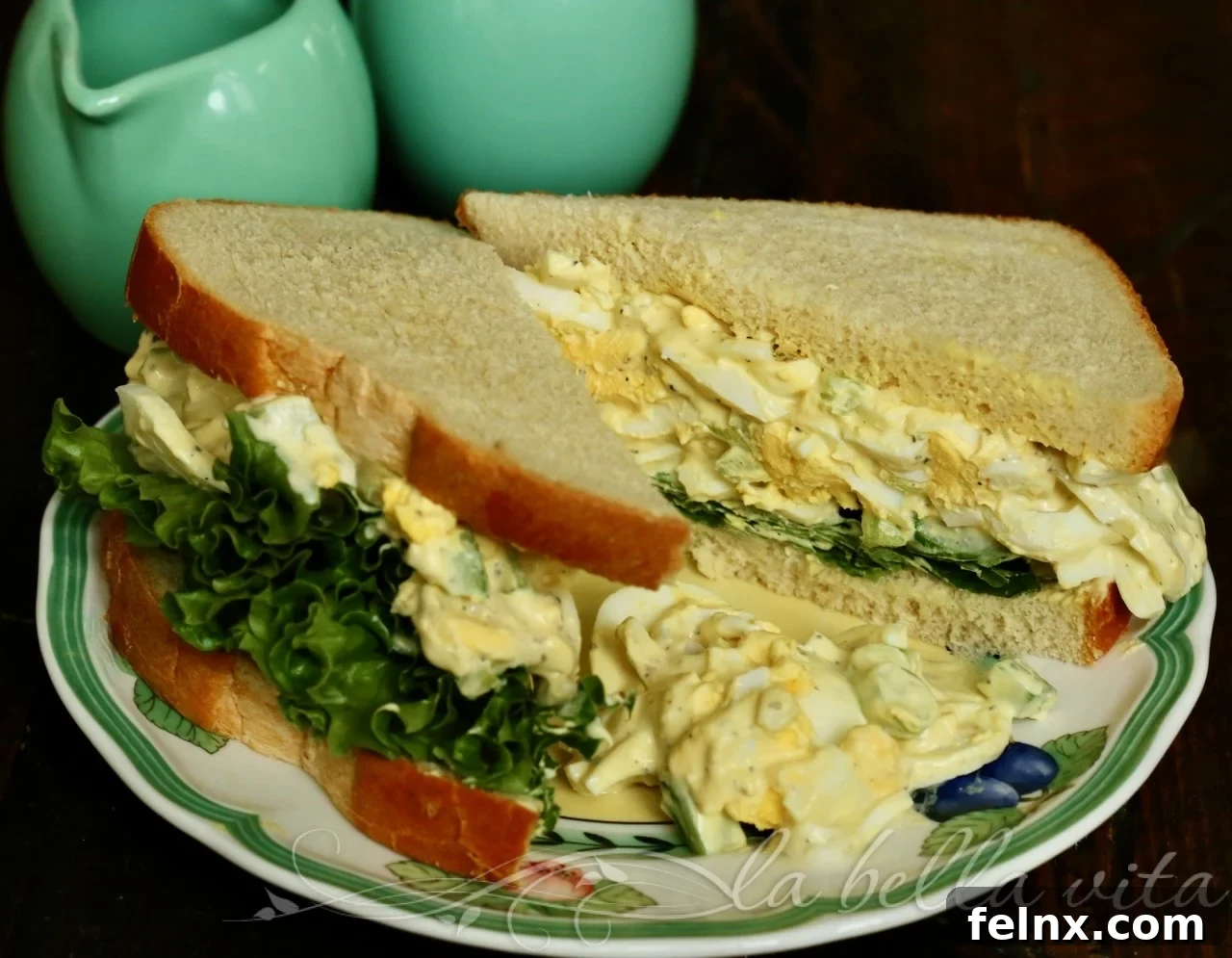
The Secrets to a Thick, Never-Runny Egg Salad
One of the most common complaints when making egg salad at home is that it can become watery or “soupy” after sitting for a while. A runny egg salad makes for a soggy sandwich and an unappealing presentation. After years of perfecting this classic, here are the professional secrets to ensuring your salad stays thick and creamy:
- Use Extra Yolks: If you want a richer, thicker consistency, use more eggs than the recipe suggests. The yolks are natural emulsifiers and acting as a thickening agent for the dressing.
- Dry the Eggs Thoroughly: Moisture is the enemy of a thick salad. After peeling your hard-boiled eggs, use clean paper towels to gently pat them completely dry before chopping. Even a small amount of water on the surface can thin out your mayonnaise.
- The Cream Cheese Hack: This is a game-changer. Adding a few tablespoons of softened cream cheese to your dressing ingredients (mayonnaise, mustard, etc.) provides a structural base that keeps the salad firm and adds a subtle richness.
- Add Dressing Gradually: Never dump all your dressing into the bowl at once. Start by mixing in about half of the dressing, then check the consistency. You can always add more, but you can’t take it back once the salad is too thin.
- The Cooling Period: Refrigerating the egg salad for at least an hour before serving allows the fats in the mayo and cream cheese to firm up, resulting in a better “set.”
Tips for the Perfect Texture and Flavor
Achieving the best classic egg salad isn’t just about the dressing; it’s about the preparation of the components. Texture plays a massive role in how we perceive flavor.
We highly recommend keeping the eggs in relatively large chunks. When you bite into a sandwich, you want to feel the texture of the eggs rather than eating a smooth paste. The same rule applies to your aromatic additions. Finely chopped celery and green onions should provide a crisp contrast to the soft eggs.
When it comes to the base, high-quality mayonnaise like Hellmann’s is the gold standard for traditional flavor. However, if you prefer a bit more sweetness and “tang,” Miracle Whip is an excellent alternative. For the best flavor infusion, mix the dressing into the eggs while they are still slightly warm. This allows the yolks to absorb some of the seasonings before the salad is chilled.
How to Avoid the Unpleasant Green Ring
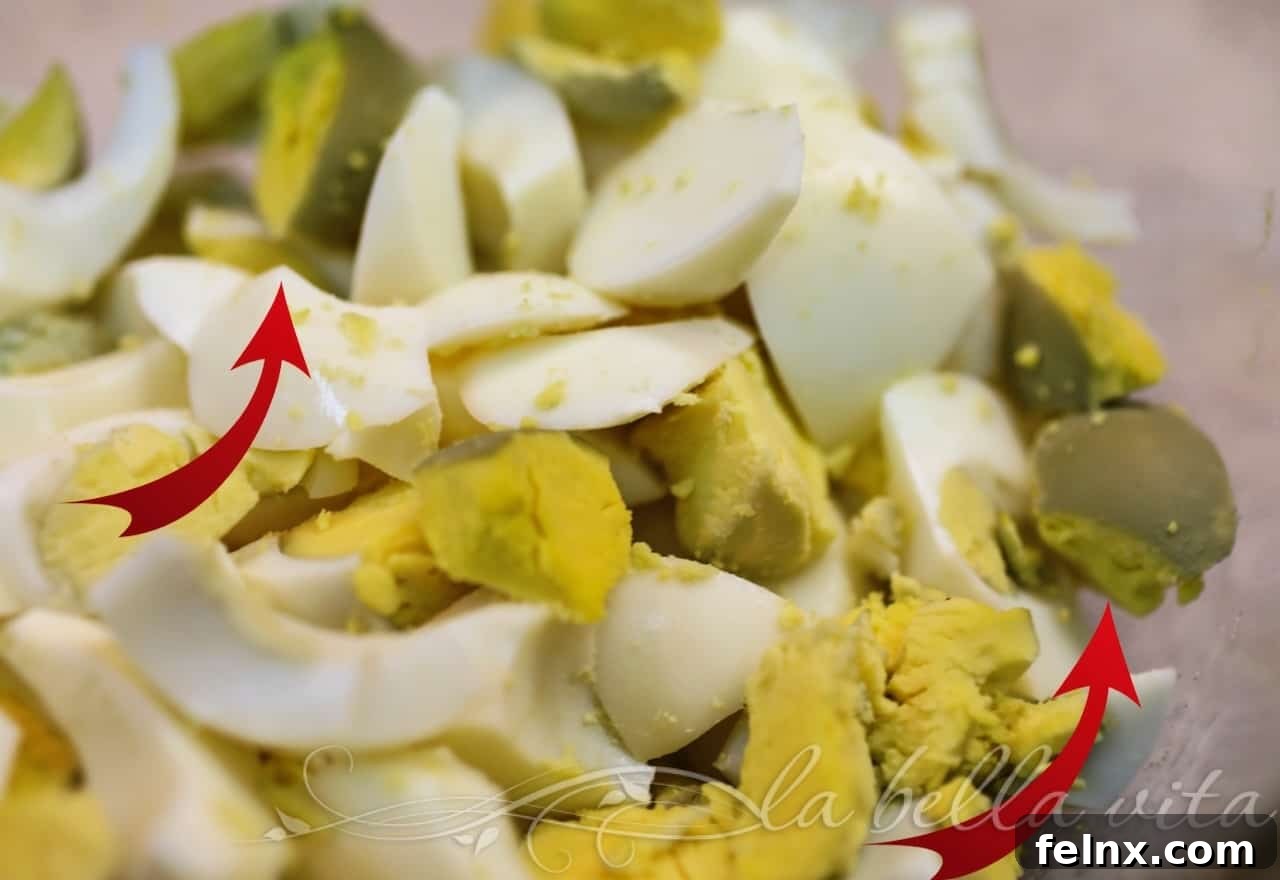
Nothing ruins the look of an egg salad like a gray or green ring around the yolk. This discoloration is caused by a chemical reaction between the sulfur in the whites and the iron in the yolks when eggs are overcooked or cooked at too high a temperature.
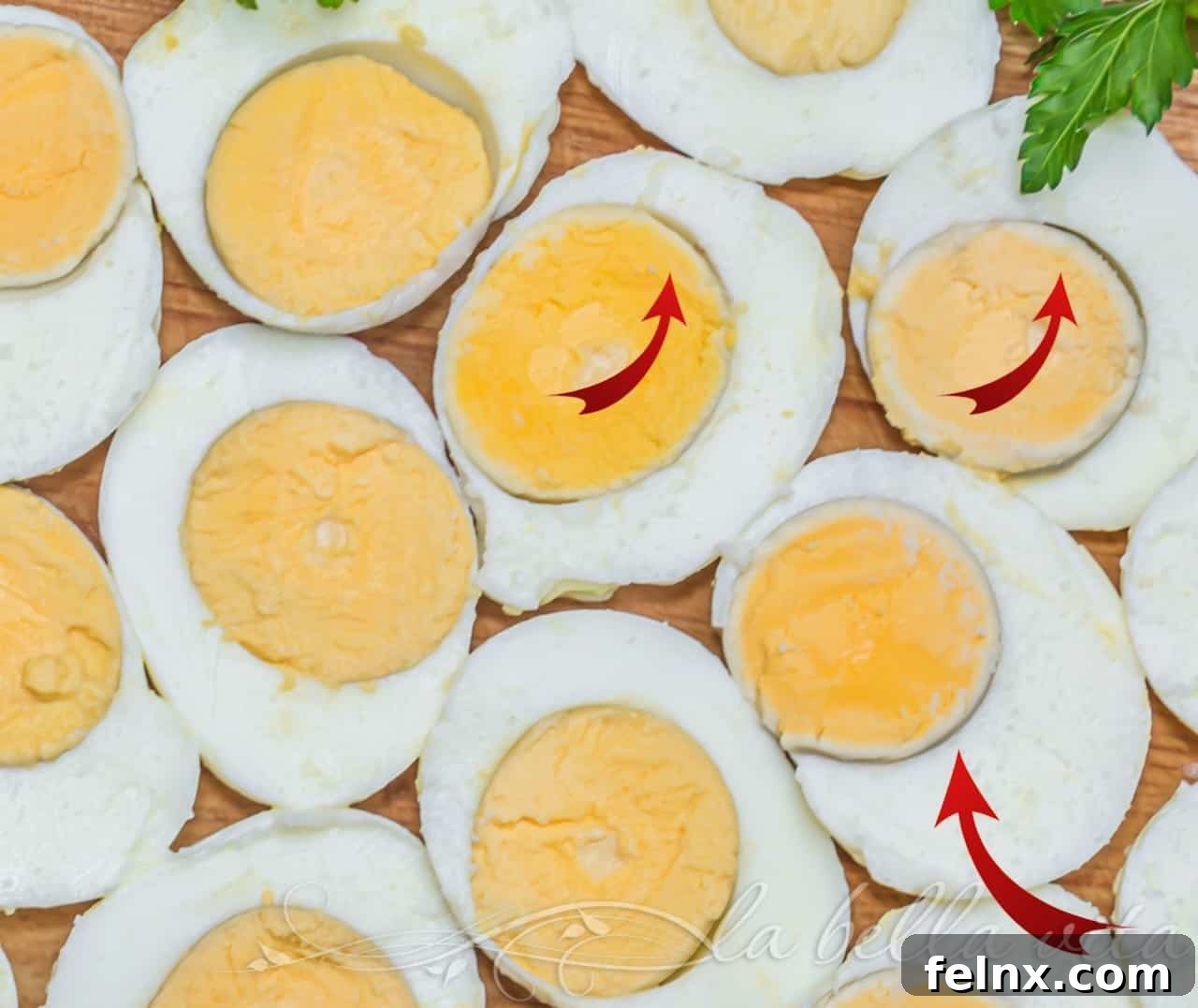
When you chop eggs with these rings, the gray color spreads through the salad, making it look dull and unappetizing. To ensure bright, beautiful yellow yolks, follow our preferred boiling method.
The Best Way to Boil Eggs for Salad
- Fill a large pot with enough water to cover the eggs by at least an inch.
- Bring the water to a rolling boil before adding the eggs.
- Using a slotted spoon, gently lower the eggs into the boiling water to prevent them from cracking.
- Lower the heat slightly to maintain a steady boil but not so violent that the eggs bounce and break.
- Boil for exactly 10 minutes.
- Immediately transfer the eggs to an ice bath or run them under very cold water until they are completely cool to the touch. This stops the cooking process instantly.
This “hot start” method makes the eggs much easier to peel because the sudden heat shock separates the membrane from the shell.
Creative Variations to Try
Once you have mastered the classic base, you can use it as a canvas for your own culinary creativity. Here are several ways to customize your egg salad:
- The Crunch Factor: Add sweet pickle relish or finely diced dill pickles for a vinegary bite.
- Fresh Veggies: Stir in chopped cherry tomatoes, cucumbers, or bell peppers (red, yellow, or green) for extra nutrition and color.
- Savory Additions: Crumbled bacon or chopped pimento-stuffed green olives add a salty, umami depth.
- Creamy & Healthy: Substitute some of the mayonnaise with mashed avocado or plain full-fat Greek yogurt.
- The Spice Cabinet: Experiment with seasonings like smoked paprika, curry powder, cumin, or fresh herbs like tarragon, chives, and cilantro. For a peppery kick, try a teaspoon of horseradish.
Serving and Storage Recommendations
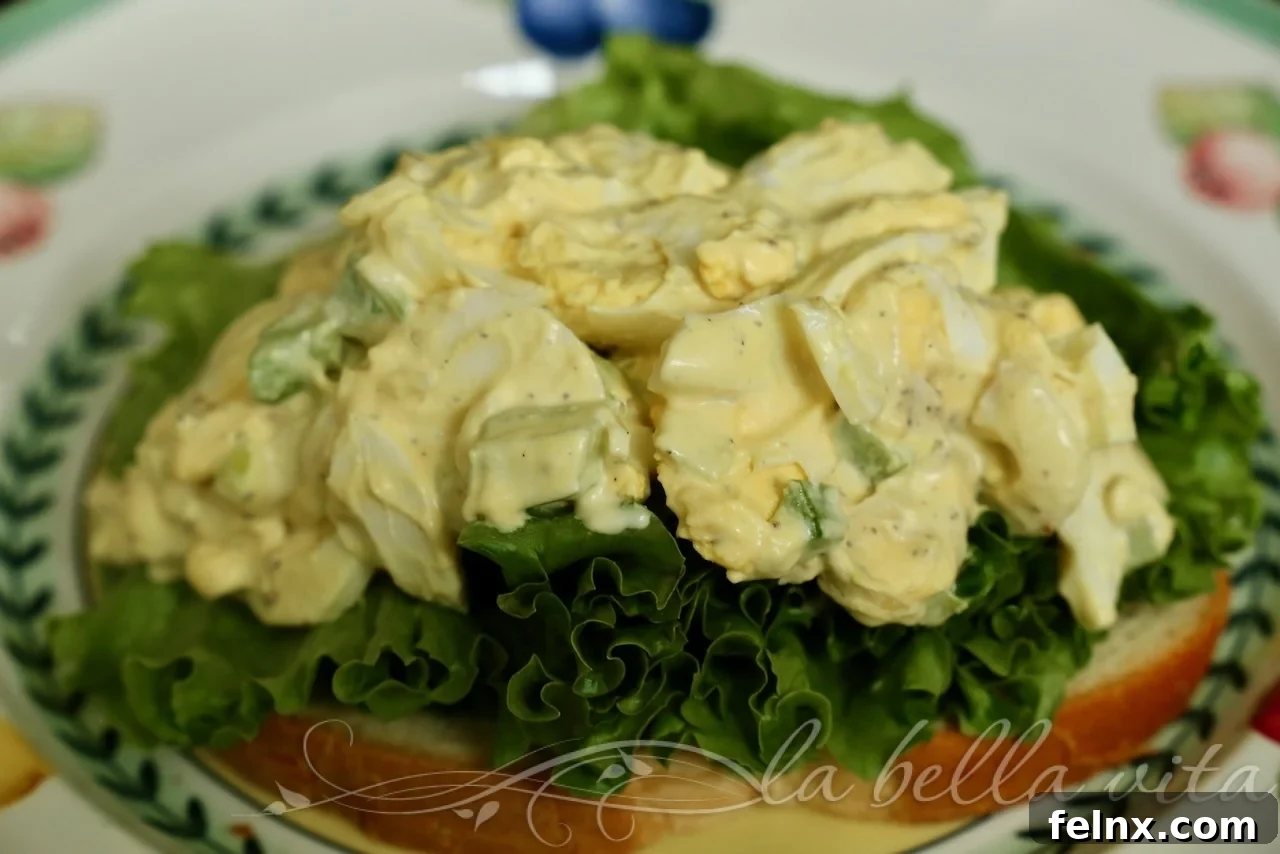
How you serve your egg salad can elevate the entire experience. While a standard bread sandwich is classic, consider these options:
- On Croissants: The buttery, flaky layers of a croissant are the perfect match for creamy egg salad.
- Tea Sandwiches: Remove the crusts and cut the sandwiches into small triangles for an elegant brunch offering.
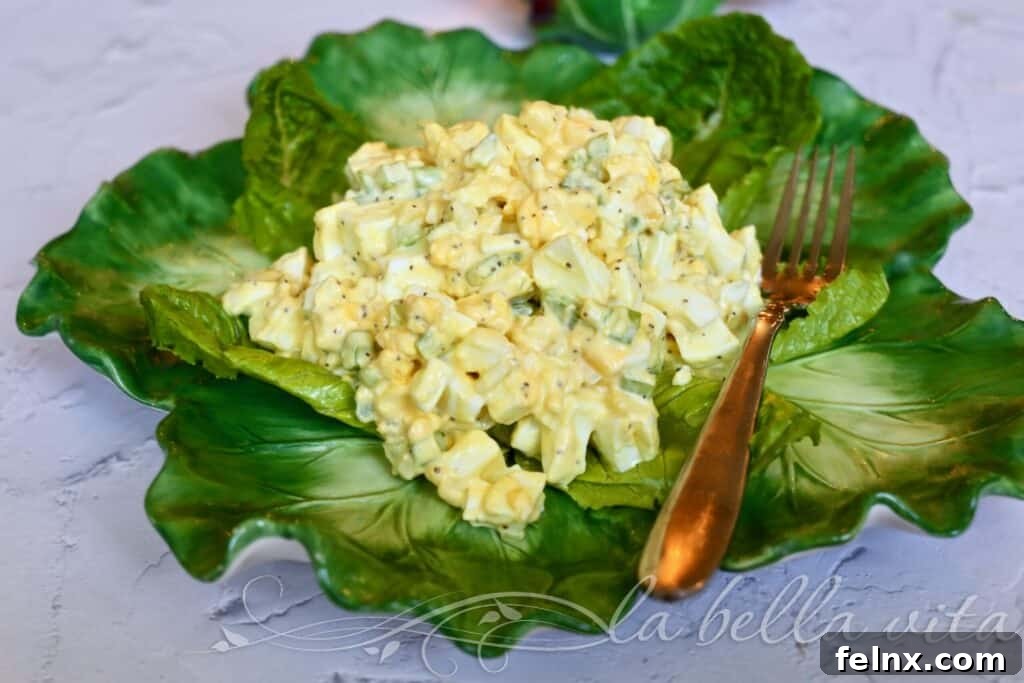
- Low-Carb Options: Serve a generous scoop on a bed of butter lettuce or stuff it inside hollowed-out mini peppers or cherry tomatoes.
- As an Appetizer: Dollop a small spoonful onto round crackers or cucumber slices.
How Long Does It Last?
Egg salad should always be stored in an airtight container in the refrigerator. For the best quality and food safety, consume it within 2 days. Because mayonnaise and eggs are highly perishable, never leave the salad out at room temperature for more than two hours (or one hour if you are outdoors on a hot day).
Recipe: The Best Classic Egg Salad
This recipe yields approximately 4 servings and takes about 25 minutes from start to finish.
Ingredients
- 8-12 large eggs (use more for a thicker consistency)
- 4 stalks of celery, finely diced
- 1 cup green onions, thinly sliced (include the greens)
- 1 cup high-quality mayonnaise
- 3 Tbsp softened cream cheese
- 2 tsp Dijon mustard
- 2 tsp regular yellow mustard
- 1 Tbsp celery seed
- 1/3 tsp garlic powder
- 1/4 tsp onion powder
- 1/2 tsp salt (adjust to taste)
- Optional: A squeeze of fresh lemon juice and a pinch of white pepper
Step-by-Step Instructions
- Boil the Eggs: Bring a pot of water to a boil. Gently lower the eggs in and boil for 10 minutes.
- Chill and Peel: Place the eggs in cold running water or an ice bath. Once cool, peel them under the water to help the shell slip off easily.
- Prepare the Dressing: In a separate bowl, whisk together the mayonnaise, cream cheese, mustards, celery seed, garlic powder, onion powder, and salt until smooth.
- Chop and Combine: Dice the cooled eggs into 1/4-inch chunks. In a large bowl, combine the eggs, celery, and green onions.
- Final Mix: Gently fold in the dressing. Start with half and add more until you reach your desired creaminess.
- Garnish and Serve: Sprinkle with paprika or fresh parsley. Serve immediately or chill for one hour for a firmer texture.
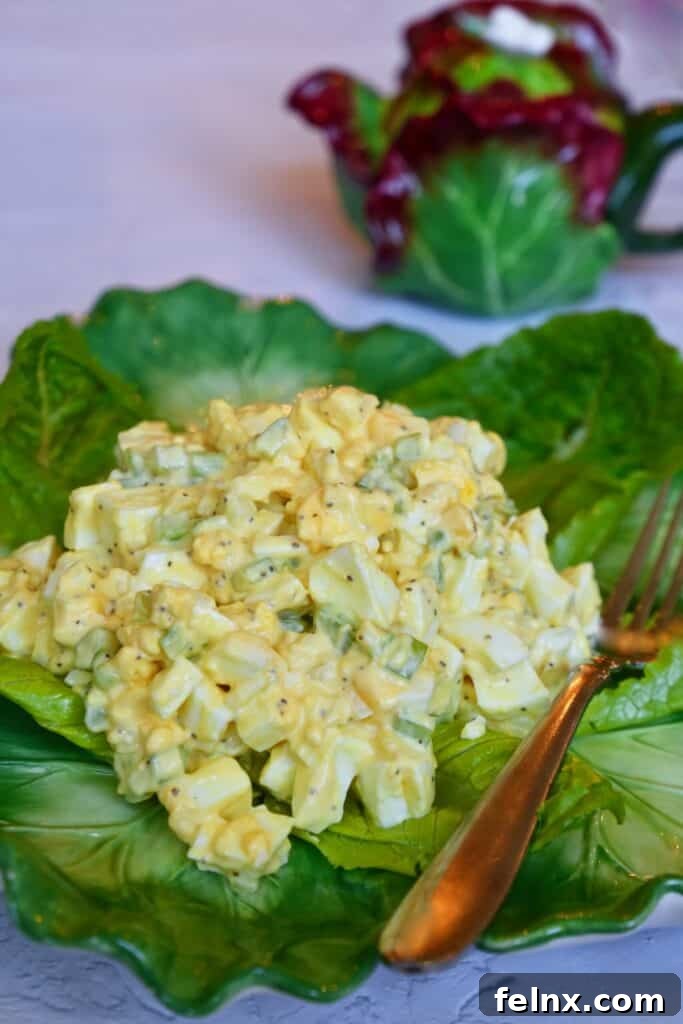
Conclusion
Classic egg salad is a timeless dish that reminds us of the simple joys of home cooking. By following these tips—like drying your eggs, using a bit of cream cheese for stability, and avoiding overcooked yolks—you can create a version that is far superior to any store-bought alternative. Whether you are preparing a quick lunch for the kids or hosting a summer picnic, this thick and creamy egg salad is sure to be a crowd-pleaser.
This classic recipe has been a household favorite for years, originally shared in 2009 and updated with even more tips for modern kitchens.