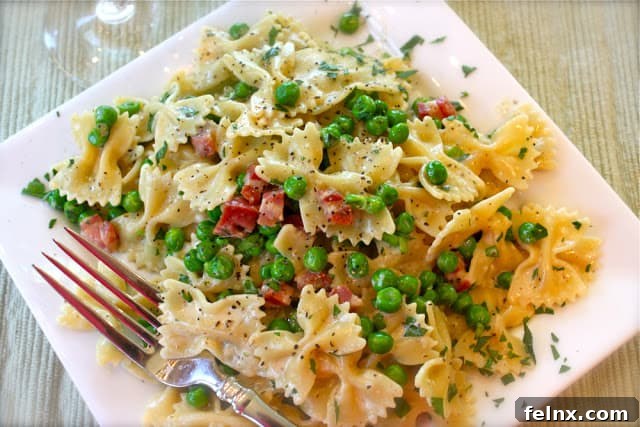
Delicious Farfalle Carbonara with Pancetta and Fresh Spring Peas
As the old saying goes, “April showers bring May flowers.” This transition from the rainy days of early spring to the vibrant bloom of late spring is one of the most inspiring times of the year, especially for home cooks. In the Southeastern region of the United States, the gentle rain showers we receive before the heat of summer sets in are a welcome relief. These cooling rains don’t just nourish the earth; they provide a wonderful backdrop for culinary creativity.
There is something about a quiet, rainy afternoon that makes you want to spend time in the kitchen, experimenting with flavors that bridge the gap between winter’s comfort and summer’s freshness. On one such afternoon, the idea of spring peas kept coming to mind. Peas are the quintessential symbol of a new season—bright, sweet, and incredibly versatile. I decided to put on my culinary thinking cap and see what I could create using what I already had in my pantry and refrigerator.
The Inspiration Behind the Recipe
Often, the best recipes are born from a combination of seasonal inspiration and a well-stocked pantry. Looking through my supplies, I realized I had plenty of pasta that needed to be used. I also had cream and fresh peas in the fridge. The missing piece of the puzzle was a savory protein to balance the sweetness of the peas and the richness of the cream. A quick stop on the way home from the office for some freshly sliced pancetta was all it took to set the stage for a spectacular meal.
This recipe is a twist on the classic Carbonara. While traditionalists might argue that a true Carbonara only contains guanciale, eggs, Pecorino Romano, and black pepper, home cooking is about making a dish your own. By adding peas and a touch of heavy cream, we create a “Primavera” style Carbonara that feels lighter and more aligned with the spirit of spring. To make the dish even more satisfying—especially for those who prefer meat-forward meals—I decided to be quite generous with the amount of pancetta used.
Why This Farfalle Carbonara Works
The choice of pasta is crucial in any Italian dish. While spaghetti is the traditional choice for Carbonara, Farfalle (often called bow-tie pasta) is excellent for this variation. The “wings” of the bow tie catch the peas, while the center pinch provides a delightful “al dente” texture. When combined with a silky egg and cream sauce, every bite becomes a perfect harmony of textures.
Pancetta brings a salty, cured depth to the dish that bacon simply cannot replicate. Because it is cured but not smoked, it allows the flavor of the peas and the delicate cream sauce to shine through without overpowering them with smokiness. When rendered properly, the pancetta provides a necessary crunch that contrasts beautifully with the soft pasta and tender peas.
A Note on Ingredients and Techniques
One of the key elements I introduced to this recipe is fresh Italian parsley. While some versions of spring pasta use mint, I find that the earthy, clean flavor of parsley is more traditional for a Carbonara-inspired profile. It cuts through the richness of the egg yolks and cream, providing a necessary brightness.
In terms of technique, the most important part of making any Carbonara is the “tempering” of the eggs. You aren’t scrambling the eggs over direct heat; instead, you are using the residual heat of the freshly cooked pasta to transform the egg and cream mixture into a velvety sauce. If the pan is too hot, you get scrambled eggs. If it’s just right, you get a sauce that coats every strand—or in this case, every bow tie—perfectly.
In future iterations, I would also consider sautéing a few cloves of garlic in the rendered pancetta fat. Garlic adds a foundational aromatic layer that complements the sweetness of the peas. Additionally, experimenting with the cheese blend can change the character of the dish. While Parmesan is a crowd-pleaser, a 50/50 mix of Parmigiano-Reggiano and Pecorino-Romano provides a sharper, saltier kick that balances the heavy cream beautifully.
Recipe: Farfalle Carbonara with Pancetta & Peas
Ingredients
- 1 lb. Farfalle Pasta: High-quality semolina pasta works best.
- 1 Jumbo Egg: Room temperature eggs mix more easily into the sauce.
- 4 oz. Heavy Cream: Provides a luxurious, foolproof texture.
- 1/2 lb. Pancetta: Roughly sliced or chopped into thick chunks for a meaty bite.
- 3 Handfuls of Peas: Use fresh spring peas or high-quality frozen ones.
- 2 Handfuls Parmesan Cheese: Freshly grated is essential for melting.
- 2 Tbsp. Fresh Italian Parsley: Finely chopped.
- Sea Salt and Black Pepper: Freshly cracked for the best flavor profile.
Instructions
- Boil the Pasta: Bring a large pot of heavily salted water to a boil. Add the farfalle. Cook for approximately 10 minutes. Note that farfalle often takes slightly longer than spaghetti to reach a perfect al dente state because of the thick center pinch.
- Prepare the Sauce Base: While the pasta is boiling, whisk the jumbo egg in a medium bowl. Incorporate the heavy cream and a generous pinch of salt and pepper. Whisk until the mixture is uniform.
- Crisp the Pancetta: In a large frying pan or skillet, cook the pancetta over medium heat. You want it to become crispy and develop a beautiful caramel-brown color. Once cooked, you may choose to drain some of the fat, though leaving a tablespoon adds incredible flavor.
- Add the Peas: When the pasta is about 90 seconds away from being done, toss the peas directly into the boiling pasta water. This blanches them perfectly without requiring an extra pot.
- Drain and Reserve: Drain the pasta and peas in a colander, but be sure to reserve about half a cup of the starchy cooking water. This water is “liquid gold” for adjusting sauce consistency.
- Combine: While the pasta is still steaming hot, add it and the peas to the skillet with the pancetta. Turn off the heat.
- Emulsify: Pour the egg and cream mixture over the pasta. Toss quickly and continuously. The residual heat from the pasta will cook the egg gently, creating a smooth, thick sauce. If it seems too thick, add a splash of the reserved pasta water.
- Finish: Stir in the freshly grated Parmesan cheese and the chopped Italian parsley. The cheese will melt into the sauce, adding further body and saltiness.
- Season and Serve: Taste the dish. Carbonara relies heavily on pepper, so don’t be afraid to add more. Serve immediately in warmed bowls to keep the sauce silky.
Tips for the Perfect Spring Pasta
To ensure your Farfalle Carbonara is a success every time, consider these professional tips. First, always grate your cheese fresh from a block. Pre-shredded cheeses are often coated in potato starch or cellulose to prevent clumping, which can lead to a grainy or “clumpy” sauce. A microplane or a fine grater will give you the airy texture needed for the cheese to melt instantly upon contact with the hot pasta.
Second, don’t be afraid of the salt. Since we are using cream and peas, which are both naturally sweet, the dish requires a good amount of seasoning to bring out the savory notes of the pancetta. Salt your pasta water until it “tastes like the sea”—this is your only chance to season the pasta itself from the inside out.
Third, if you want to elevate the dish for a dinner party, consider adding a zest of lemon at the very end. The citrus oils provide a floral aroma that perfectly complements the spring theme. It makes the dish feel even lighter and more vibrant.
The Joy of Seasonal Cooking
Cooking with the seasons allows us to connect with the rhythm of nature. In the spring, our bodies naturally crave colors and fresh flavors after a long winter of stews and roasts. This Farfalle Carbonara with Pancetta and Peas is the perfect transition meal. It provides the comfort of a warm pasta dish while celebrating the arrival of fresh produce.
Whether you are enjoying this on a rainy April evening or a sunny May afternoon, it is a dish meant for sharing. The combination of the salty pancetta, the sweet peas, and the rich, peppery sauce creates a flavor profile that is both sophisticated and deeply satisfying. It’s a testament to the fact that with a few high-quality ingredients and a bit of culinary intuition, you can create a restaurant-quality meal in the comfort of your own kitchen.
Did you make this recipe?
I would love to see how your spring pasta turned out! Please leave a comment below or share a photo on Instagram. Tag your creations with #italianbellavita so I can see your beautiful work!