The Ultimate Guide to Cranberry and Orange Shortbread Cookies
When the festive holiday season arrives, few treats evoke as much warmth and tradition as Scottish shortbread. While many families enjoy these buttery delights year-round, there is something truly magical about baking and gifting shortbread during Christmas. If you have never experienced the melt-in-your-mouth texture of a traditional shortbread, you are in for a treat. These cookies are the perfect balance of sweet, buttery, and crumbly, making them an irresistible addition to any holiday dessert platter.
Shortbread is versatile, allowing for numerous flavor variations. While the classic recipe is a masterpiece of simplicity, adding modern twists like dried fruit and citrus can elevate it to a new level. This recipe for Cranberry Orange Shortbread Cookies is a perfect example of how traditional techniques meet vibrant, seasonal flavors. The tartness of the cranberries combined with the aromatic orange zest creates a sophisticated cookie that is as beautiful as it is delicious.
The Rich History of Scottish Shortbread
Shortbread has deep roots in Scottish culinary history, dating back to at least the 12th century, though the refined version we know today became popular in the 1700s. Legend has it that Mary, Queen of Scots, was a great fan of “Petticoat Tails,” a form of shortbread flavored with caraway seeds. Historically, shortbread was an expensive luxury reserved for special occasions like weddings, Christmas, and Hogmanay (the Scottish New Year).
In Scotland, shortbread is often classified as a “specialty sweet confectionery food” rather than a simple biscuit. The term “short” in the name refers to the high fat content, which inhibits the formation of long gluten strands. This results in a texture that is “short” or crumbly, rather than chewy or crunchy. Understanding this culinary science is the key to mastering the perfect batch of shortbread at home.
Mastering the 3-Ingredient Classic Base
At its heart, classic Scottish shortbread requires only three basic ingredients: butter, sugar, and flour. Because there are so few components, the quality of each ingredient is paramount. For the best results, use the highest quality butter available, as its flavor will be the most prominent note in the finished cookie. European-style butter, which has a higher fat content, is often preferred by professional bakers for its rich aroma and texture.
To create the base, the butter must be softened to room temperature—never melted. It is creamed with sugar until the mixture is pale and light. Then, the flour is folded in gently. While the basic version is divine, our Cranberry Orange variation adds layers of complexity. The orange zest provides essential oils that permeate the dough, while the chopped cranberries offer a chewy, tart contrast to the buttery crumb.
The Importance of a Gentle Touch
One of the most common mistakes in baking shortbread is overworking the dough. When you mix flour with moisture and fat, gluten begins to develop. In bread, we want lots of gluten for structure and chew. In shortbread, we want the opposite. You must handle the dough as little as possible. Mix just until the ingredients come together. If the dough is handled too much, the heat from your hands will melt the butter, and the finished cookies will be tough rather than delicate and crumbly.
For this recipe, we recommend forming the dough into logs. This makes it easy to wrap in plastic and chill, ensuring that when you slice them, you get clean, uniform rounds that hold their shape beautifully in the oven.
Why Chilling the Dough is Mandatory
Chilling is not a step you should skip. There is a scientific reason for this: shortbread relies on solid fat to maintain its structure. If you put warm or room-temperature dough into a hot oven, the butter will melt instantly before the flour has a chance to set. This causes the cookies to spread into flat, greasy puddles. By chilling the dough for at least 20 to 30 minutes, you ensure the butter remains cold, allowing the cookies to maintain their height and sharp edges during the baking process.
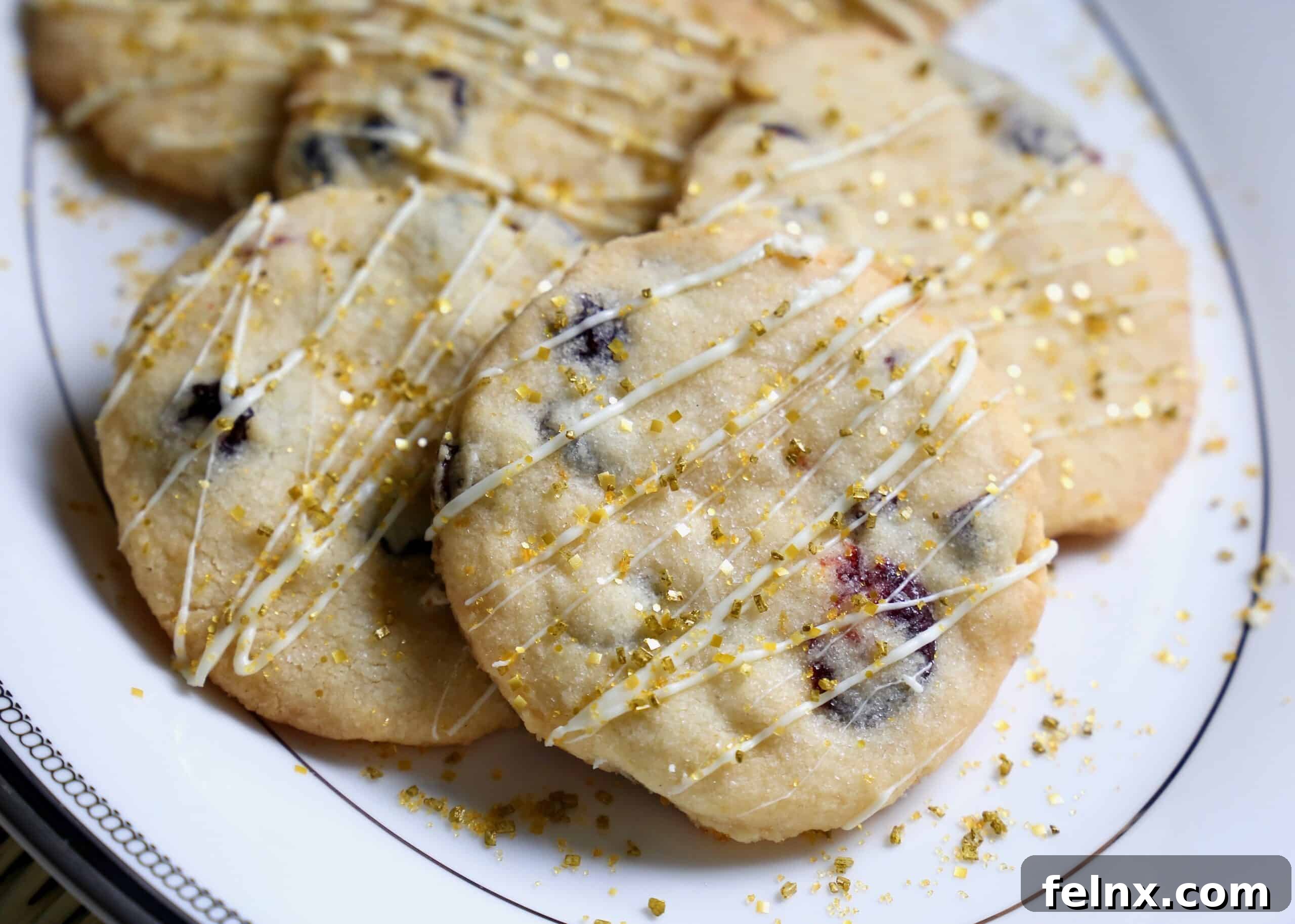
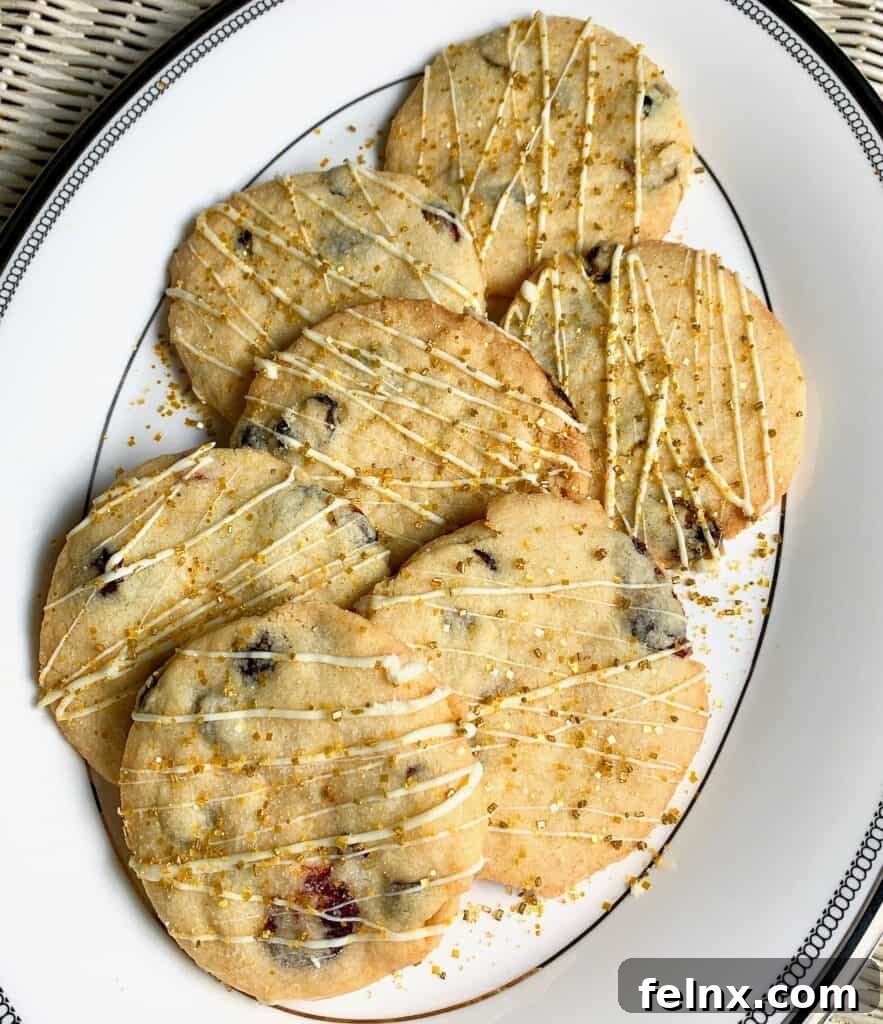
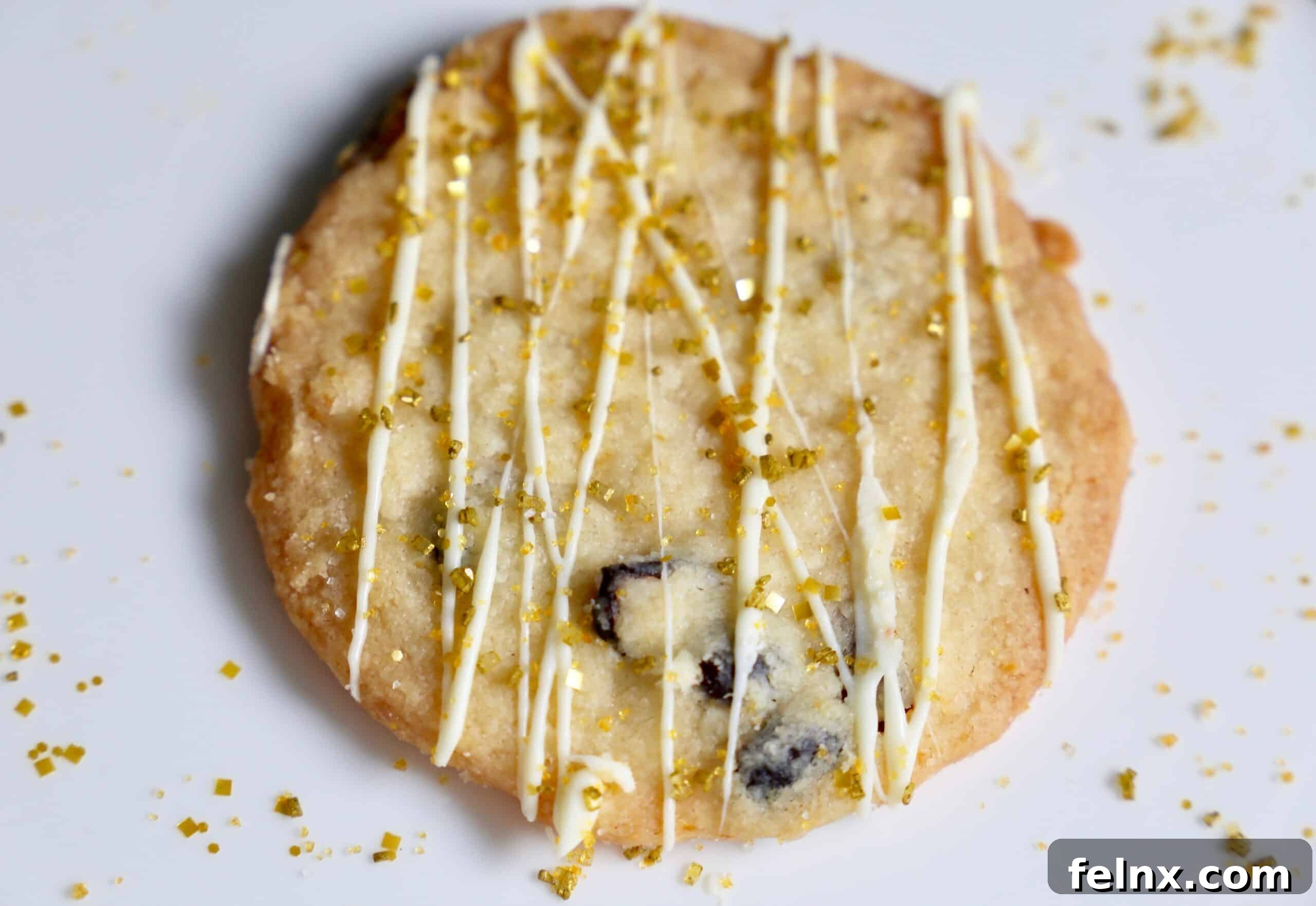
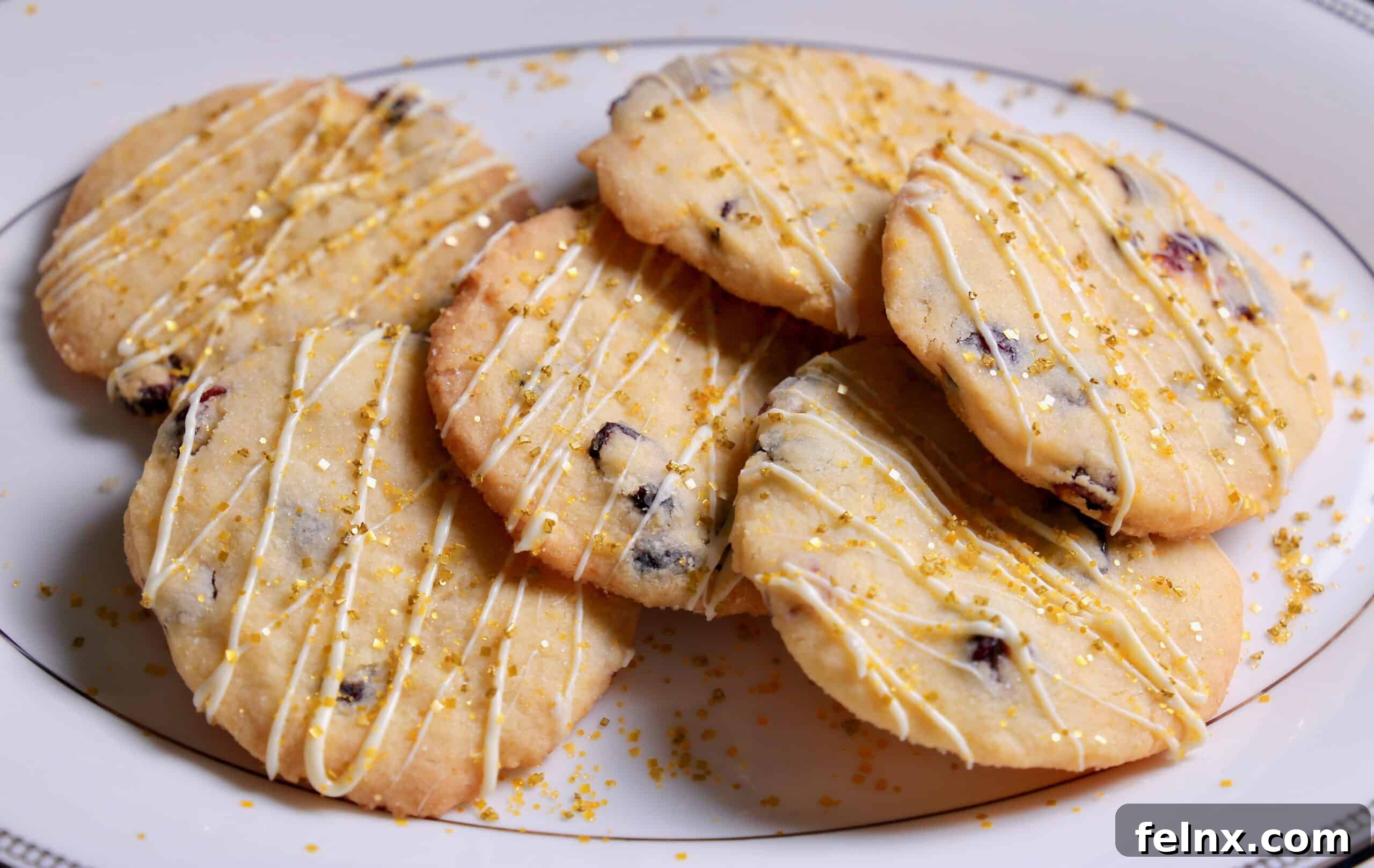
Once chilled, you can choose how to shape your cookies. Some traditionalists prefer “fingers” (long rectangles), while others like “petticoat tails” (large rounds cut into wedges). For these Cranberry Orange Shortbread Cookies, round slices or “medallions” are ideal, as they showcase the beautiful red flecks of cranberry and the white chocolate drizzle perfectly.
Baking for Texture and Color
Shortbread is unique in the baking world because it is not meant to be browned. While most cookies are done when they are golden-brown, shortbread should remain a pale, creamy yellow. If your shortbread turns brown, it has likely been overbaked and will lose that signature melt-in-your-mouth quality.
The baking process is relatively quick—usually around 15 minutes at a moderate temperature. If you are baking your shortbread in a traditional patterned pan, it is crucial to cut the pieces while the shortbread is still warm and soft. Once it cools completely, it becomes firm and brittle; attempting to cut it then will result in it shattering into many pieces.
Recipe: Cranberry Orange Shortbread Cookies with White Chocolate
Recipe Details
Prep Time: 1 Hour (including chilling) | Cook Time: 15 Minutes | Yield: 12 Cookies
These cookies are the epitome of holiday cheer. The citrusy brightness of orange and the tart pop of cranberry are balanced by a decadent white chocolate drizzle and festive gold sprinkles.
Ingredients for the Cookies
- 2/3 cup granulated sugar
- 1 Tbsp fresh orange zest (approx. 1 large orange)
- 3/4 cup unsalted butter, softened to room temperature
- 1/8 tsp fine sea salt
- 1 3/4 cups all-purpose flour
- 1/2 cup dried cranberries, finely chopped
- 1 Tbsp granulated sugar (for sprinkling before baking)
Ingredients for the Topping
- 4 ounces high-quality white chocolate, chopped
- Gold sprinkles or sanding sugar for decoration
Step-by-Step Instructions
- Infuse the Sugar: Place the granulated sugar and fresh orange zest in a food processor. Pulse for about a minute. This releases the oils from the zest, ensuring the orange flavor is distributed throughout every bite.
- Cream the Butter: In a large mixing bowl, beat the softened butter, orange-sugar mixture, and salt until light and creamy.
- Add Dry Ingredients: Turn the mixer to low speed and gradually add the flour. Mix only until the dough starts to clump together in small nuggets. Fold in the chopped dried cranberries by hand or on very low speed.
- Shape and Chill: Turn the dough out onto plastic wrap and form it into a log (about 2-2.5 inches in diameter). Wrap tightly and refrigerate for at least 30 minutes until firm.
- Preheat and Prep: Preheat your oven to 350°F (175°C). Line two large baking sheets with parchment paper to prevent sticking.
- Slice and Bake: Use a sharp knife to slice the log into rounds about 1/4-inch thick. If you prefer using a cookie cutter, roll the dough out on a floured surface and cut into rounds. Place the cookies on the prepared sheets.
- Second Chill: For the best shape, place the trays of cut cookies back in the fridge for 10-15 minutes before baking.
- Baking: Sprinkle the tops with a little extra sugar. Bake for 15 minutes. Remember: they should stay pale yellow, not brown.
- Cooling: Let the cookies rest on the baking sheet for 5 minutes before moving them to a wire rack to cool completely.
- Decoration: Melt the white chocolate using a double boiler or in short bursts in the microwave. Once smooth, drizzle over the cooled cookies. Immediately add gold sprinkles while the chocolate is still wet.
- Setting: Allow the chocolate to set completely before storing in an airtight container at room temperature.
Tips for the Perfect Cookie
To ensure your Cranberry Orange Shortbread Cookies turn out perfectly every time, keep these professional tips in mind:
- Room Temperature Butter: Your butter should be soft enough that a finger leaves an indentation, but it should not be greasy or starting to melt.
- Measure Flour Correctly: Use the “spoon and level” method for flour. Scooping directly with a measuring cup packs the flour down, leading to dry, crumbly cookies.
- Chopping Cranberries: Chop your cranberries into small pieces. Large chunks can make the cookies difficult to slice and may cause them to break.
- Quality Chocolate: Use a white chocolate baking bar rather than chocolate chips for the drizzle. Baking bars melt more smoothly and have a better flavor profile.
Variations to Try
Once you have mastered this recipe, you can experiment with other flavors. Swap the cranberries for dried cherries or apricots. Replace the orange zest with lemon or lime for a different citrus profile. You can even add a pinch of cardamom or cinnamon to the sugar for a warm, spiced version. For a nuttier texture, fold in some finely chopped pistachios or pecans.
Storage and Freezing
Shortbread is famous for its long shelf life. Because of the high fat and sugar content, these cookies stay fresh in an airtight container for up to two weeks. They also freeze exceptionally well. You can freeze the raw dough log for up to three months—just thaw it slightly in the fridge before slicing and baking. Alternatively, you can freeze the baked, undecorated cookies and add the white chocolate drizzle once they are thawed.

Recommended Tools for Success
While you can make shortbread with basic kitchen tools, a few specialized items can make the process easier and the results more professional:
- Shortbread Pans: These ceramic or metal pans have intricate designs like snowflakes or thistles that emboss the dough.
- Parchment Paper: Pre-cut sheets ensure your cookies never stick and help with even heat distribution.
- Piping Bags: Using a small piping bag for the white chocolate drizzle gives you much more control than using a spoon.
Baking these Cranberry Orange Shortbread Cookies is a wonderful way to bring a taste of tradition into your modern holiday celebrations. Whether you enjoy them with a cup of tea on a cold afternoon or package them in beautiful tins to give as gifts, they are sure to be a highlight of your festive season. Happy baking!
This post contains affiliate links to help support our kitchen adventures.