The Ultimate Guide to Making Authentic Handmade Tortellini
Creating handmade tortellini is more than just a culinary task; it is a celebration of tradition, patience, and the joy of family cooking. This delicate Italian pasta, often referred to as “Venus’s navel” due to its unique shape, requires a specific set of techniques to master. Whether you are a seasoned chef or a home cook looking to explore the world of fresh pasta, this guide will walk you through the intricate process of rolling, filling, and shaping perfect tortellini every time.
Step 1: Preparing and Rolling the Pasta Dough
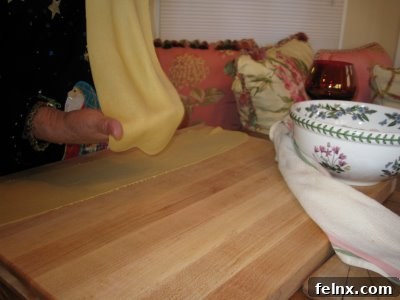
The foundation of any great tortellini is the dough. Using high-quality “00” flour and fresh eggs, you want to achieve a consistency that is elastic yet firm. Once your dough has rested, it is time to use a hand-cranked pasta machine. Many enthusiasts prefer the Atlas brand for its durability and precision. The goal is to roll the pasta through the machine several times, gradually decreasing the thickness setting.
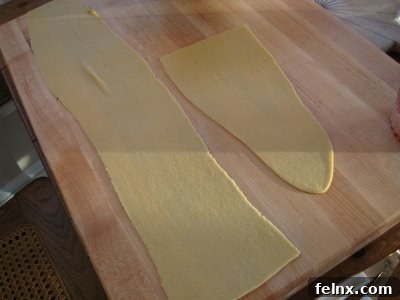
For tortellini, the thickness of the dough is crucial. You should roll it until it reaches a delicate thinness—at a minimum, setting #4 on most machines. If the dough is too thick, the “navel” or “knot” of the tortellini will be too doughy and won’t cook evenly. If it is too thin, it may tear when you add the filling. Once you achieve the perfect thickness, lay the pasta strip down on a wooden surface. Wooden cutting boards are highly recommended because they provide a slight texture that helps the pasta “grip” without sticking, especially if you apply a very light dusting of flour.
Step 2: Managing Your Workspace and Keeping Dough Fresh
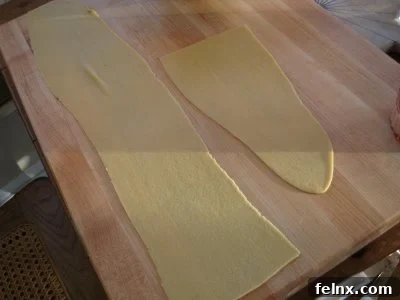
When you roll out a long strip of pasta, it can be difficult to manage on a standard workspace. It is best to cut the long strip into two manageable pieces that fit comfortably on your wooden boards. One of the biggest challenges in pasta making is preventing the dough from drying out. Fresh pasta dough loses its moisture quickly, and once it becomes brittle, it is impossible to seal the tortellini.
The secret to keeping the dough pliable is a simple damp towel. While you are working on one section of the pasta, lay a lightly dampened towel over the remaining dough. This creates a humid micro-environment that preserves the elasticity of the pasta, allowing you enough time to fill and shape each piece without rushing.
Step 3: Placing the Tortellini Filling
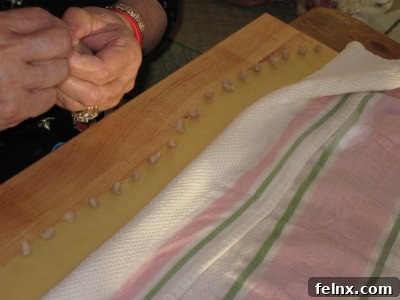
Precision is key when it comes to the filling. Whether you are using a traditional mix of pork, prosciutto, and Parmigiano-Reggiano or a modern vegetarian alternative, the size of the filling balls should be consistent. Aim for a size roughly equivalent to a large pea or a small bean.
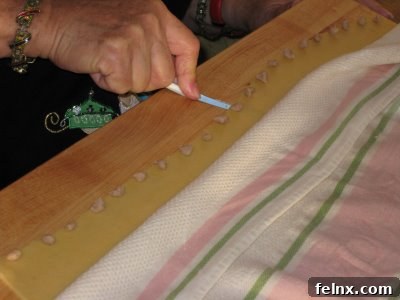
Begin laying out these small balls of filling along the edge of the exposed pasta dough. Do not worry if your dough strip isn’t perfectly straight; the folding process is quite forgiving. Space them evenly to ensure that you have enough room to cut and seal the dough around each portion. This repetitive motion is where many find the “Zen” of pasta making.
Step 4: The Initial Fold and Loosening
After you have completed a full line of filling balls, it is important to ensure the pasta isn’t stuck to the board. Take a sharp, small knife and run it gently under the edge of the dough. This quick motion loosens the pasta from the wooden surface, making the subsequent fold much smoother.
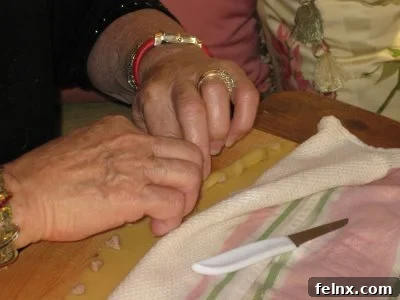
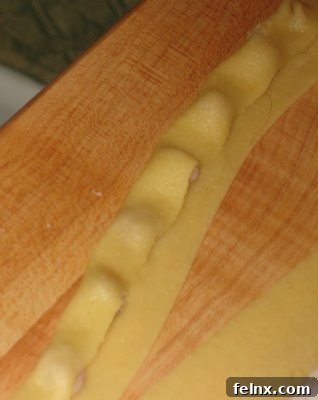
Carefully roll the edge of the dough over the filling balls. You want the dough to completely cover the filling, creating a long “tube” of sorts where the filling is encased. Ensure there is enough overlap so the edges can be sealed tightly later on.
Step 5: Cutting and Sizing Individual Tortellini
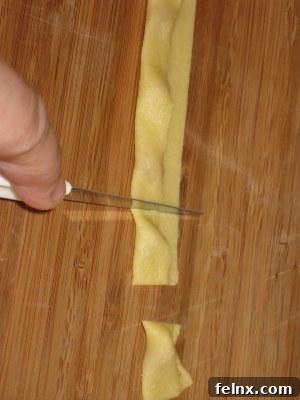
Once the filling is covered, use your finger to press down lightly between each ball of filling. This defines the individual tortellini and pushes out any trapped air, which is vital to prevent the pasta from bursting during boiling. Using a small sharp knife, cut the entire strip away from the rest of the uncut dough, leaving about a 1/4-inch border.
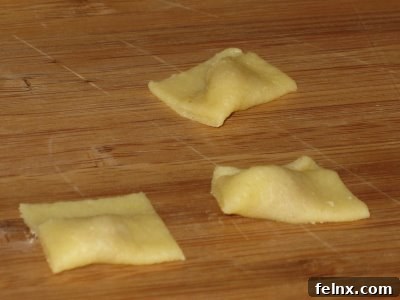
After separating the strip, make vertical cuts between each filling ball to create individual squares or rectangles of dough containing a center of filling. At this stage, you have “unfolded” tortellini, and you are ready for the final shaping.
Step 6: Shaping the Famous “Hat” Shape
The final shaping is where the magic happens. Pick up an individual piece and flip the 1/4-inch flap of extra dough over to seal the filling, much like closing the flap of an envelope. This ensures the filling remains securely inside.
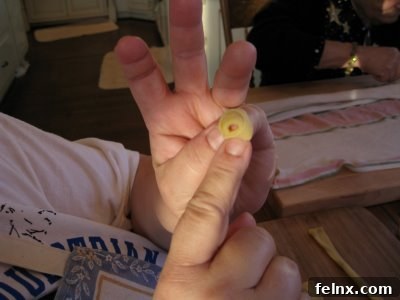
To create the iconic “cap” or “hat” shape, wrap the piece around your finger—many prefer using the pinky finger for a smaller, more delicate result. Press the two ends together firmly to seal. Remember, tortellini expand when cooked, so starting small ensures they remain bite-sized and elegant in your soup.
Step 7: Organization, Counting, and Drying
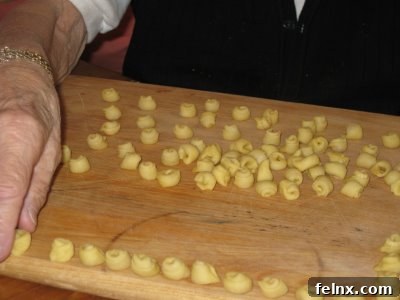
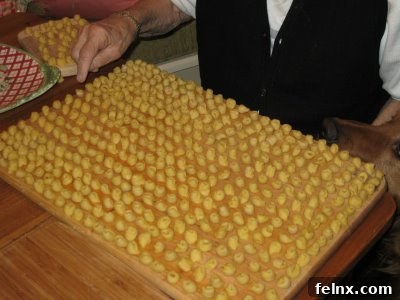
As you finish each piece, lay them out on another wooden board in organized, straight lines. This serves two purposes: it prevents the pasta from sticking together and makes it very easy to count your progress. If you arrange them in a grid, you can simply multiply the rows and columns to find your total count.
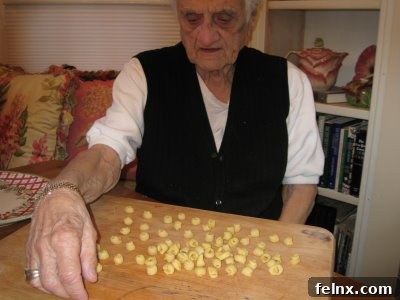
In many Italian households, counting is a tradition often assigned to the head of the family. It’s a moment of pride to see the fruits of several hours of labor. Once laid out, you can choose to cook them immediately, or let them dry overnight. If you have pets, be sure to keep the boards in a safe place and cover them with a clean towel!

The Family Process and a Tribute
Pasta making is truly a family affair. From rolling to folding to counting, everyone can get involved. Even our animal companions love to watch the process, often hoping for a stray piece of dough to fall! Our dear Buckeye was always there, a faithful observer of our kitchen traditions. These memories become as much a part of the recipe as the ingredients themselves.
Step 8: Cooking Tortellini in Brodo
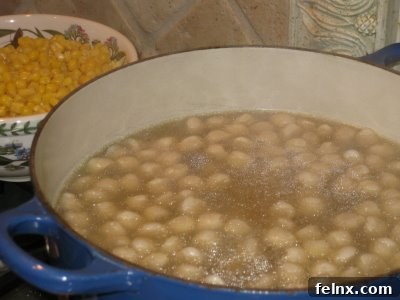
The traditional way to serve tortellini is “in brodo”—meaning in a rich, flavorful broth. While they can be served with a cream sauce or ragu, a high-quality chicken or beef broth allows the flavor of the fresh pasta and filling to shine. Gently place the tortellini into the boiling broth. They are done when they rise to the surface.
Always test one to ensure the pasta is cooked “al dente”—it should be firm to the bite, not soft or mushy. Adding a touch of salt to the broth can significantly enhance the overall flavor profile. Serve your tortellini hot with a generous dusting of freshly grated Parmigiano-Reggiano cheese. This simple yet profound dish is the ultimate comfort food.
Buon Appetito! Whether you are making these for a special holiday or a Sunday family dinner, the effort of making tortellini by hand is always rewarded with an unforgettable meal.