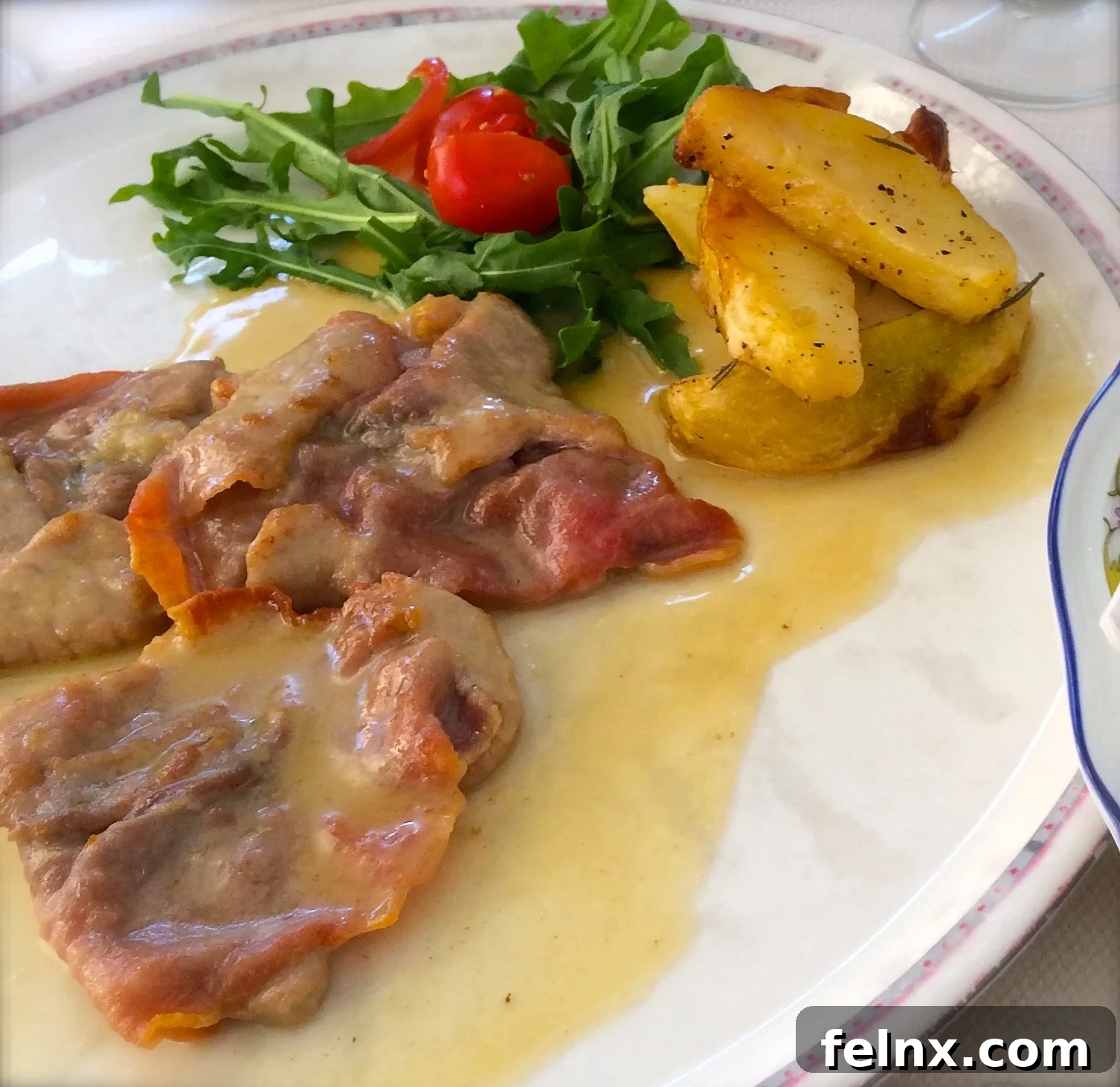
Authentic Veal Saltimbocca alla Romana: A Masterpiece of Roman Cuisine
There are certain dishes that define a culture, and for the city of Rome, few things are as iconic as Veal Saltimbocca alla Romana. My first encounter with this dish dates back to the 1980s while living in Los Angeles. From that very first bite, I was hooked. It wasn’t just the flavor; it was the perfect harmony of textures and the elegance of its simplicity. Since then, I have never missed an opportunity to order it at a high-quality Italian restaurant. It remains one of the most brilliant culinary creations in Italian history.
In the world of Italian dining, specifically within the Roman tradition, Saltimbocca holds a legendary status. It is often hailed as the “king of Roman secondi” (main courses). If you are looking to experience the heart of Italy through your palate, this dish is your gateway. The name itself, “Saltimbocca,” literally translates to “jump in the mouth.” This playful description is remarkably accurate—the combination of tender veal, salty prosciutto, and aromatic sage creates a flavor profile that truly dances on your taste buds.
The Essence of the “Jump in the Mouth” Flavor
The secret to a perfect Veal Saltimbocca lies in the delicate balance of its three primary components. You have the lean, mild flavor of the veal cutlets, the rich and savory depth of thinly sliced prosciutto, and the earthy, pine-like aroma of fresh sage. These ingredients are pinned together and seared in a pan with butter and olive oil, then finished with a white wine reduction that brings everything together into a luscious sauce.
When you sit down to a plate of these superb “scallopini” (thin veal cutlets), the aroma alone is enough to send your senses soaring. While the traditional recipe is quite strict, some modern Roman chefs might add a few capers to the final sauce for an extra burst of acidity, though the classic version relies purely on the quality of the meat and the herbs. It is a symphony of flavors that manages to be both light and incredibly satisfying.
This dish is a cornerstone of “Cucina Romana”—the authentic cuisine of Rome. It stands alongside other famous staples like Cacio e Pepe, Bucatini all’Amatriciana, and Spaghetti alla Carbonara. Each of these dishes shares a common thread: they use a handful of high-quality ingredients to create something far greater than the sum of their parts.
A Memorable Afternoon at Piazza Navona
One cannot talk about Roman food without mentioning the atmosphere in which it is enjoyed. I fondly remember a lunch at Tre Scalini, located right in the heart of the breathtaking Piazza Navona. Under the warm Italian sun, we sat at white linen-covered tables decorated with fresh flowers, sipping chilled wine and watching the vibrant life of the piazza unfold around us.
Tre Scalini on the Piazza Navona
Seated at white linen-covered tablecloths, ready to experience Roman perfection.
The Veal Saltimbocca served there was the definition of heavenly. Each cutlet was perfectly thin, the prosciutto was crisp yet tender, and the sage was just visible, peeking out from under the layers of meat. It was served with a delicate wine sauce and, occasionally, a lone gnocchi or a side of seasonal vegetables. This is what Roman dining is all about—leisurely meals that celebrate the best the region has to offer.
A classic serving of Veal Saltimbocca alla Romana.
The Historical Roots of Roman Cuisine
Understanding the history of Saltimbocca adds another layer of appreciation to the meal. The local flavors of the Rome region can be traced back to the shepherds who first settled on the seven hills of Rome. These early settlers relied on what they could produce from their flocks, which explains the strong connection to sheep’s cheese like Pecorino Romano and the preference for certain cuts of meat.
Interestingly, some culinary historians suggest that the recipe for Saltimbocca may have actually originated in Brescia, Northern Italy. Because Brescia is a major producer of prosciutto, it is possible the dish migrated to Rome through the movement of trade and shepherds. Regardless of its exact origin, Rome is where the dish was perfected and claimed as its own.
Roman food history is a story of contrast. On one hand, you have the legendary, decadent banquets of Ancient Roman aristocrats, which could feature hundreds of courses. On the other hand, you have “Cucina Romanesca”—the simpler, more honest food of the common people. Saltimbocca falls firmly into the latter category. It is an “entree of the people,” emphasizing freshness and technique over excess.
Prosciutto ready for slicing at the Campo di Fiori market in Rome.
Essential Ingredients for Success
If you want to recreate this dish at home, the quality of your ingredients is non-negotiable. Because the recipe has so few components, there is nowhere for low-quality meat or herbs to hide. Fresh sage is a must; dried sage will not provide the same aromatic lift. The prosciutto should be sliced paper-thin so that it adheres to the veal and crisps up quickly in the pan.
Fresh sage from the garden—the essential herb for this Roman classic.
Recipe: Traditional Veal Saltimbocca alla Romana
Ingredients
- 8 veal cutlets (scallopini), pounded thin
- 16 – 24 slices of high-quality Prosciutto, thinly sliced
- 16 large, fresh sage leaves
- ½ cup all-purpose flour (for dredging)
- 4 Tbsp. extra virgin olive oil
- 8 Tbsp. unsalted butter
- ½ cup dry white wine (Pinot Grigio or a similar Italian dry white)
- Freshly cracked black pepper (to taste)
- Note: Salt is usually not needed as the prosciutto provides plenty of saltiness.
Instructions
- Prepare the Veal: Place the veal cutlets between two sheets of parchment paper. Use a meat mallet to pound them until they are about ½” (or even ¼”) thick. This ensures they cook quickly and remain tender.
- Season: Lightly sprinkle each cutlet with freshly cracked black pepper. Skip the salt for now, as the prosciutto will season the meat during cooking.
- Layer: Place 2 to 3 thin slices of prosciutto on top of each veal cutlet. Lay one or two fresh sage leaves on top of the prosciutto.
- Secure: Use a toothpick to “stitch” the sage, prosciutto, and veal together. This keeps the layers in place while searing.
- Dredge: Lightly coat only the bottom side (the veal side) of the cutlet in flour. Shake off any excess. This helps create a beautiful brown crust and thickens the sauce later.
- Sear: In a large skillet, melt half the butter with the olive oil over medium-high heat. Add the cutlets, prosciutto-side down first. Cook for about 2-3 minutes until the prosciutto is crisp.
- Flip: Turn the cutlets over and cook the veal side for another 2 minutes until lightly golden. Move the cooked veal to a warm plate and cover with foil.
- Make the Sauce: Discard the excess fat from the pan but keep the browned bits. Increase the heat to high and pour in the white wine to deglaze the pan. Scrape up the flavorful bits with a wooden spoon.
- Reduce: Add the remaining butter to the pan. Let the sauce simmer and reduce by about a third until it starts to thicken slightly.
- Finish: Return the veal bundles to the skillet for a final minute to coat them in the silky sauce. Remove the toothpicks before serving.
- Serve: Plate two cutlets per person and pour the warm wine and butter sauce over them immediately.
The Perfection of the Pantheon and Roman Beauty
After a satisfying meal of Saltimbocca, there is nothing quite like a walk through the historic center of Rome. Just a short stroll from Piazza Navona lies the Pantheon. Originally built as a temple to all gods, it is now a breathtaking Catholic Church. Looking up at the oculus—the circular opening in the dome—while the sun shines through is an experience that stays with you forever. It reminds us that Rome is a city of layers, much like its food, where history and modern life coexist in perfect harmony.
The majestic interior of the Pantheon, a short walk from where the best Saltimbocca is served.
Why You Should Try This at Home
Veal Saltimbocca is more than just a recipe; it is a testament to the Italian philosophy of cooking. It teaches us that you don’t need a pantry full of spices to create a world-class meal. You only need a few things: quality, freshness, and passion. Whether you are cooking for a special occasion or simply want to bring a taste of Italy to your Tuesday night dinner, this dish will never disappoint.
The combination of the crispy prosciutto and the tender veal, bathed in a bright wine sauce, is a culinary experience everyone should have at least once. I invite you to try this recipe and share your results. Did you use a specific type of wine? Did you add a side of roasted potatoes or perhaps some fresh asparagus? Whatever your preference, Veal Saltimbocca alla Romana is a dish that truly “jumps in the mouth” and stays in the heart.
Enjoy your journey into the heart of Roman cuisine! Buon Appetito!