The Secret to the Perfect Slice: Mastering the Art of Layered Lasagna
There is perhaps no dish in the world of Italian cuisine as comforting and visually appealing as a tall, multi-layered lasagna. However, many home cooks struggle with a common problem: the “falling lasagna syndrome.” You spend hours preparing the sauce, boiling the pasta, and carefully assembling the layers, only to have the entire structure collapse into a puddle of cheese and sauce the moment you cut into it. The secret to achieving that picture-perfect, structural integrity shown in the photo above is a combination of patience and technique.
Why Patience is the Most Important Ingredient
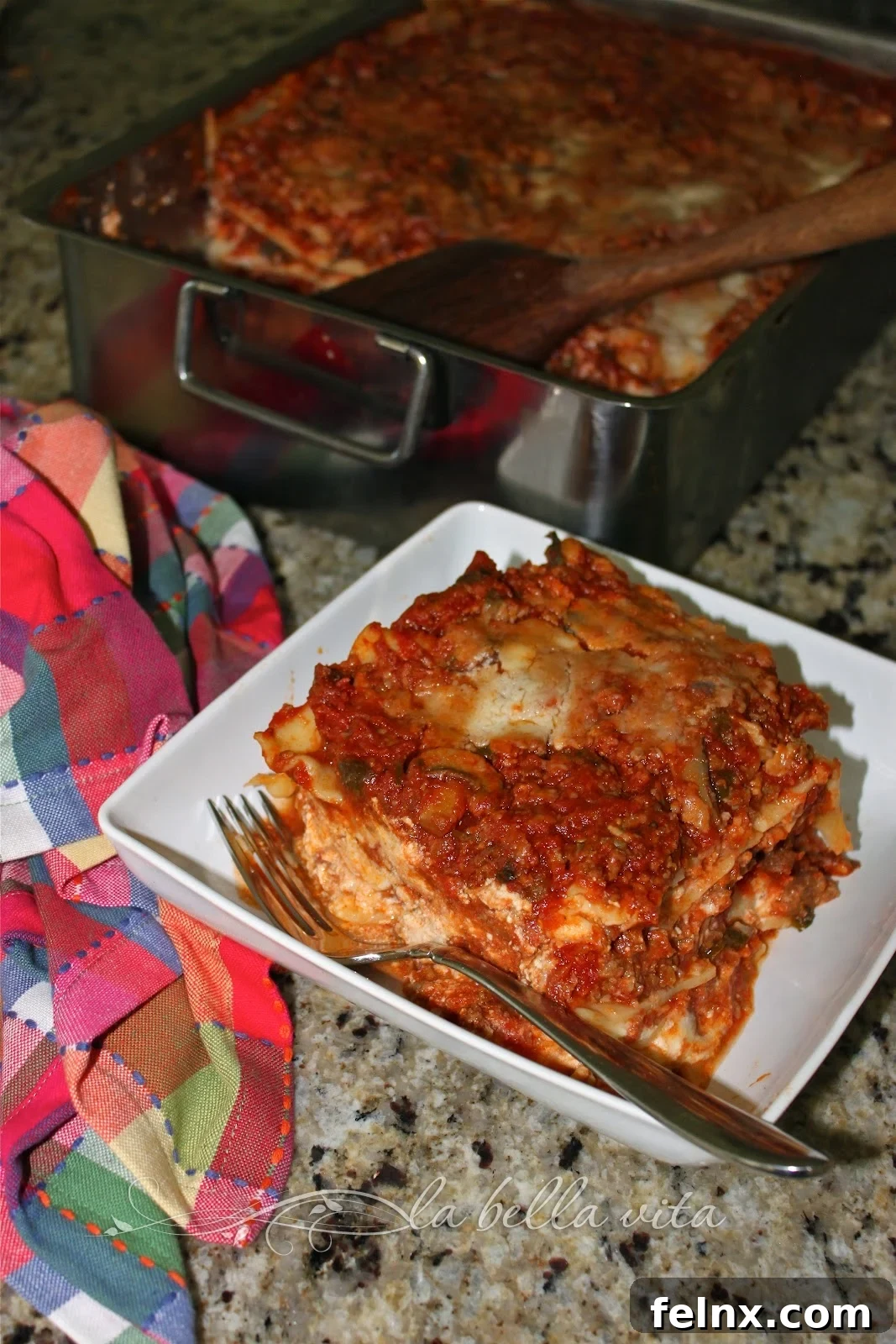
If you look at the slice of lasagna featured today, you will notice how beautifully it holds its shape. This wasn’t a lucky accident. The truth is, this lasagna was sliced a full day after it was baked. While it is incredibly tempting to pull a bubbling tray of pasta out of the oven and serve it immediately, doing so often results in a messy plate. When lasagna is piping hot, the cheeses are liquefied, and the sauce is thin. As the dish cools and rests, the proteins in the cheese firm up, and the pasta absorbs the excess moisture from the sauce.
Waiting a day to slice your lasagna doesn’t just improve the presentation; it also drastically enhances the flavor. Italian cooking often relies on “melded flavors.” Over twenty-four hours, the acidity of the tomatoes, the richness of the meat, and the creamy texture of the cheese harmonize in a way that is simply impossible to achieve during the initial bake. This is why many professional chefs and Italian grandmothers insist that lasagna is always better as a leftover.
The Foundation: Choosing the Right Pan
The success of a great lasagna begins with the vessel it is cooked in. In the image above, you can see a specialized lasagna pan that allows for significant depth. Standard 9×13 baking dishes are often too shallow for a truly impressive lasagna. When you use a deep-dish pan, you have the vertical space needed to stack multiple layers without the sauce bubbling over the edges and creating a mess in your oven.
The pan used here was sourced from specialized culinary suppliers, designed specifically to handle the weight and height of a four or five-layer masterpiece. A heavy-duty pan also ensures even heat distribution, which is crucial for making sure the middle layers are cooked through without burning the bottom. If you are serious about your Italian cooking, investing in a high-quality, deep lasagna pan is one of the best upgrades you can make for your kitchen.
Mastering the Layers: Four Levels of Deliciousness
A classic lasagna is more than just meat and cheese; it is a carefully constructed architectural feat. Look closely at the layers in this version. You can see four distinct layers of pasta, each separated by a rich filling. While some recipes suggest only three layers, a four-layer approach provides the perfect ratio of pasta to sauce, ensuring every bite is substantial and satisfying.
To achieve this level of stacking, each layer must be applied with intention. A common mistake is using too much sauce between the sheets of pasta. This makes the layers slide against each other. Instead, aim for a thin, even coat of sauce and a generous but controlled sprinkle of cheese. Whether you are using a ricotta-based filling or a traditional Bolognese Béchamel, consistency is key. The filling should be thick enough to act as a “glue” for the pasta sheets.
The Secrets to Authentic Italian Flavor
To reach the heights of flavor suggested by these photos, you must start with high-quality ingredients. For an authentic experience, consider the following tips:
- The Sauce: A slow-simmered ragù is the soul of the dish. Use a blend of ground beef and pork for a more complex flavor profile. Let it simmer for at least three hours until it is thick and rich.
- The Cheese: While pre-shredded mozzarella is convenient, it is often coated in starch to prevent clumping, which affects how it melts. For the best results, grate your own low-moisture mozzarella and incorporate fresh Parmigiano-Reggiano for a salty, nutty kick.
- The Pasta: If you have the time, fresh egg pasta sheets are far superior to dried ones. They are more delicate and absorb the sauce much better. If using dried noodles, be sure to cook them just under al dente, as they will finish cooking in the oven.
How to Reheat Lasagna Without Drying It Out
Since we’ve established that lasagna is best eaten the next day, knowing how to reheat it is vital. To maintain the moisture of the pasta and the creaminess of the cheese, avoid the microwave if possible. Instead, place a slice in an oven-safe dish, add a tiny splash of water or extra marinara sauce to the side, and cover it tightly with foil. Heat it at a low temperature (around 325°F or 160°C) until it is warmed through. This “low and slow” method preserves the texture that you worked so hard to create.
Serving Suggestions for a Complete Meal
Because lasagna is such a rich and heavy dish, it is best served with light, acidic sides that can cut through the fat. A simple arugula salad with a lemon vinaigrette is a classic pairing. The bitterness of the greens and the acidity of the lemon help cleanse the palate between bites of cheesy pasta. For wine, a medium-bodied red like a Chianti or a Barbera works beautifully, as the acidity in the wine complements the tomato sauce.
Final Thoughts on Culinary Patience
As you can see from the photos, the results of waiting a day to slice your lasagna are undeniable. The layers stay perfectly stacked, the flavors are concentrated, and each bite is a testament to the beauty of Italian home cooking. Whether you are using a special deep-dish pan or a standard family heirloom, remember that the secret ingredient isn’t always in the pantry—sometimes, it’s just the clock.
Mangia!
By following these steps—choosing the right equipment, focusing on layer construction, and allowing the dish time to rest—you can transform a standard dinner into an extraordinary culinary experience. The next time you plan to make lasagna, try making it on a Saturday to serve for Sunday lunch. You will be amazed at the difference in both the presentation and the taste.
The pursuit of the perfect lasagna is a journey of love and tradition. Each layer represents a commitment to quality, and each slice is a reward for your hard work. Don’t be afraid to experiment with your fillings, but always respect the structure of the dish. Happy cooking!