Heartwarming Italian Beef Stew on Fontina Polenta: A Holiday Tradition
Embracing the Spirit of the 12 Days of Christmas
Technically, today marks the second day of the 12 Days of Christmas, a season that carries us through the darkest part of winter with light, family, and tradition. While many cultures focus solely on December 25th, the traditional observation extends all the way through January 6th. This final date is known as the “Feast of the Epiphany,” a sacred day that recognizes the long journey of the Three Wise Men. They followed a distant, shining star to find the baby Jesus, bringing gifts and closing the holiday cycle. During this period, our homes remain filled with the scent of pine, the glow of fairy lights, and, most importantly, the aroma of simmering comfort food.
With the holiday spirit still very much alive and many Christmas trees still standing tall in our living rooms, I wanted to share a few visuals and the story behind my family’s traditional Christmas Eve dinner. In our household, the stars of the show aren’t always the most expensive cuts of meat or the most complex culinary experiments. Instead, we return year after year to a very humble yet incredibly satisfying meal: Italian Beef Stew served on Fontina Polenta. This dish represents the essence of “Cucina Povera”—the traditional Italian philosophy of making simple, honest ingredients taste like a feast fit for royalty.
The Soul of the Meal: Nonna’s Italian Beef Stew
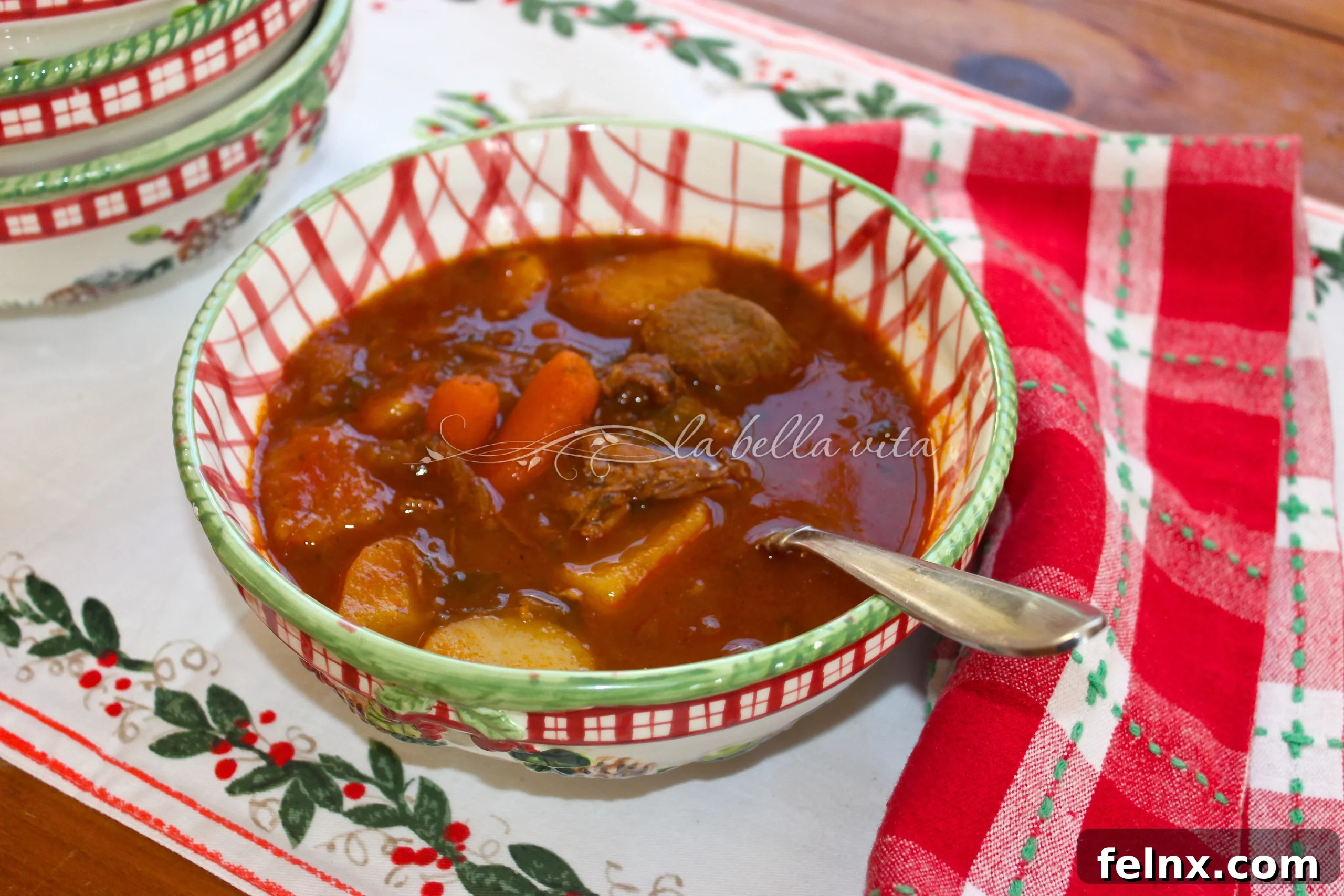
There is something magical about a stew that has been allowed to simmer for hours on the back of the stove. The beef becomes tender enough to break apart with a spoon, and the vegetables melt into a rich, savory gravy that tastes like home. If you are looking for the exact method to recreate this masterpiece, you can find the detailed recipe here: Nonna’s Italian Stew Recipe.
In our family, we ladle this ultimate comfort food over a bed of hot, creamy polenta. To take the flavor to the next level, we smother the polenta with melting cheese. My mother traditionally uses Brick cheese, which provides a wonderful, mild creaminess. However, I have always preferred layering on Fontina cheese. Fontina, with its nutty undertones and superior melting capabilities, creates a luxurious base that perfectly complements the robust flavors of the beef and red wine reduction in the stew.
The perfect pot of Italian Beef Stew, slow-cooked for maximum flavor.
Serving Tradition Family-Style
The beauty of a dish like Italian beef stew is its communal nature. If you have a big soup tureen, now is the time to bring it out of the cupboard! Fill it up to the very top and bring the steaming stew directly to the table. There is a specific kind of joy in seeing everyone dip in for second and third servings. It encourages conversation, sharing, and a sense of abundance that defines the holiday season. The stew is thick, hearty, and aromatic, filled with the scents of rosemary, garlic, and slow-roasted onions.
While the combination with polenta is a family favorite, you can certainly enjoy this beef stew on its own or with a side of crusty Italian bread to soak up every last drop of the sauce!
Mastering the Art of Homemade Polenta
Many home cooks are intimidated by the idea of making polenta from scratch, but there is really no reason to be afraid. Making polenta is not difficult; it just requires a little patience and some “elbow grease” to stir the cornmeal as it thickens up. The key is to add the cornmeal slowly to the boiling water or stock and to keep it moving so that no lumps form. As it cooks, it transforms from a grainy liquid into a smooth, velvety golden porridge.
Consistent stirring is the secret to a smooth and creamy polenta.
Don’t let the process intimidate you! Once you taste the difference between fresh, homemade polenta and the pre-packaged tubes, you will never go back. You can find a guide on How to prepare Polenta here.
Presentation and the Perfect Cheese Layer
For a wonderful festive presentation, find a pretty decorative bowl to pour in the hot, cooked polenta. There is something so inviting about a large bowl of golden polenta placed in the center of the holiday table. It acts as a blank canvas for the rich, dark colors of the beef stew.
The secret to the perfect bite is in the assembly. Before you ladle the stew over the polenta, pass around slices of soft cheese, such as Fontina. When the cheese touches the hot polenta, it begins to soften and weep. Then, when the hot stew is poured on top, the cheese melts completely, creating a gooey, savory layer between the creamy cornmeal and the hearty meat. This combination of textures—tender beef, silky cheese, and smooth polenta—is truly the definition of a culinary hug.
The Gift That Keeps on Giving: Leftover Polenta
One of the best things about this meal is that it provides a second, entirely different dish for the next day. If you have left-over polenta, do not throw it away! Pour the remaining hot polenta into a large bread loaf pan, smooth the top, and let it cool. Once refrigerated, it will firm up into a solid block. The next morning, you can cut it into thick slices and fry them in a pan with a little butter or olive oil until the outside is golden brown and crispy, while the inside remains soft.
Fried polenta is incredibly versatile. You can serve it as a savory breakfast with more melted Fontina cheese and perhaps a fried egg. Or, if you prefer something sweet, try it with a drizzle of maple syrup—the combination of the corn flavor and the syrup is reminiscent of high-end cornmeal pancakes.
Golden fried polenta with Fontina melted all over for a perfect breakfast.
Celebrating Food and Family
Whether you are celebrating the 12 Days of Christmas or simply looking for a way to warm up a cold winter evening, this Italian Beef Stew on Fontina Polenta is a dish that brings people together. It reminds us that the best meals are often those that take time to prepare and are shared with the people we love most. Food is more than just sustenance; it is a way to preserve our history and pass down our traditions to the next generation.
The slow bubbling of the pot, the rhythmic stirring of the polenta, and the final assembly of the dish are all acts of love. I hope that you find as much comfort and joy in this recipe as my family has for many years. May your kitchen be warm, your stomach be full, and your holidays be bright!
Enjoy this Italian classic and have a wonderful holiday season!