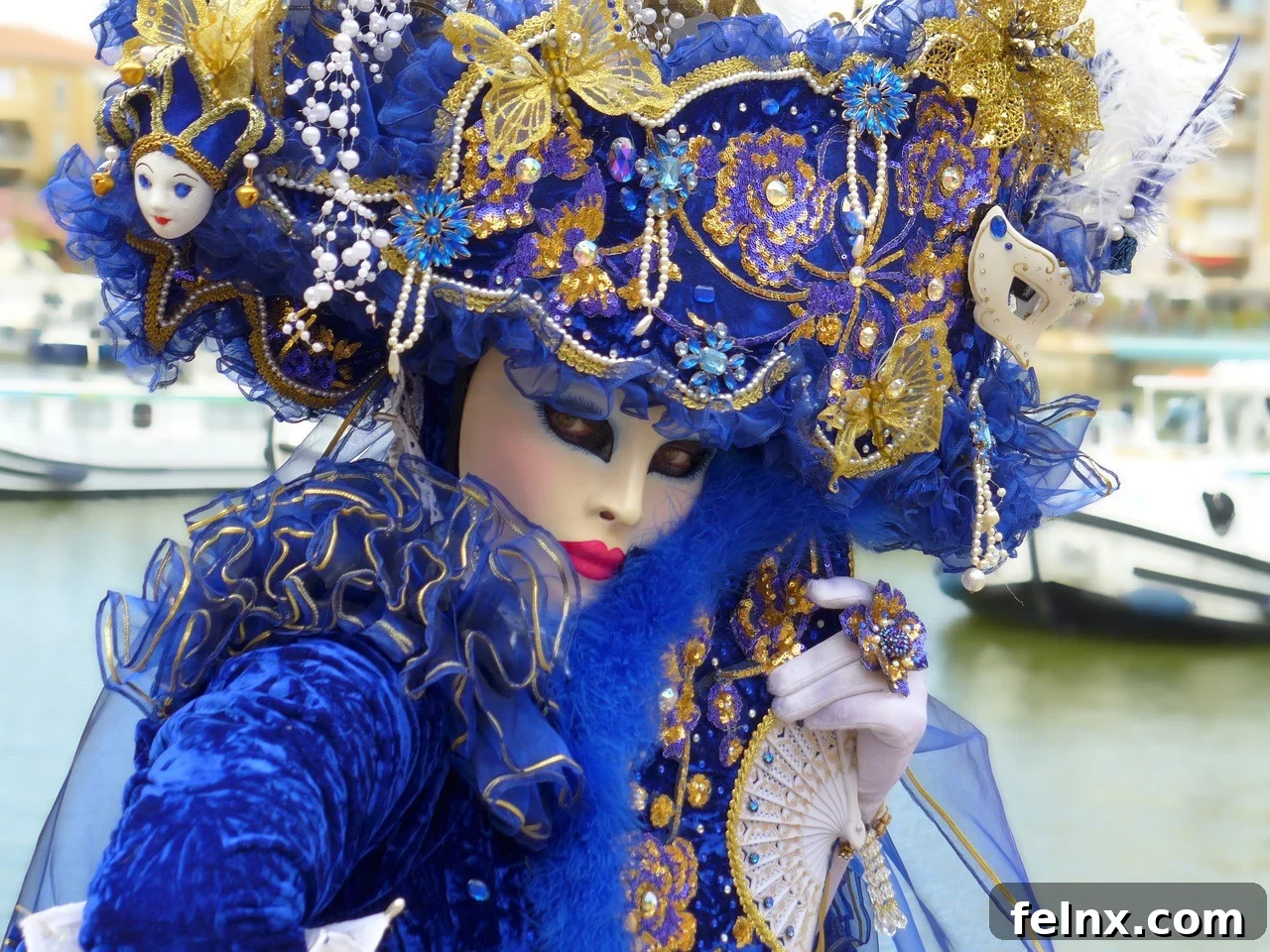
The Grand Spectacle of Venice Carnival: A Guide to Masks, History, and Traditions
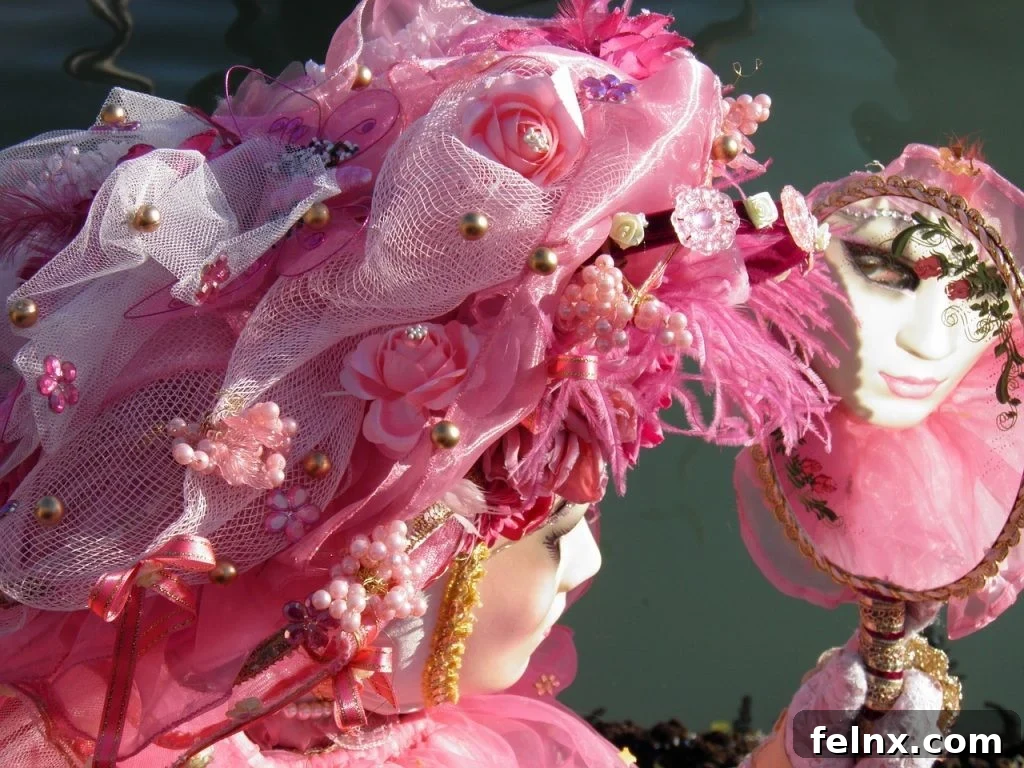
Simply extraordinary craftsmanship in creating Venetian costumery and masks for the annual Carnevale celebration in Italy.
When you think of Venice, Italy, several iconic images likely come to mind. You might envision the winding canals filled with gondolas, the stunning architecture of the Doge’s Palace, or the world-renowned Murano glass. Beyond the scenery, Venice is a city of rich culinary traditions, famous for its risotto, polenta, and the beloved Venetian tapas known as cicchetti. However, during the winter months, another tradition takes center stage: the legendary Venice Carnival, or Carnevale di Venezia.
The Venice Carnival is an annual festival that concludes with the Christian celebration of Lent. It is a period of vibrant festivities, mysterious masks, and elaborate costumes that transform the city into a living theater. While the specific dates vary each year based on the lunar calendar, the spirit of the celebration remains constant, drawing millions of visitors from across the globe to witness one of the world’s most beautiful cultural displays.
The History and Mystery of Venetian Masks
For centuries, it has been a deeply rooted tradition to wear masks during the Venice Carnival. This practice served a very specific purpose in Venetian society: anonymity. By wearing a mask, an individual could hide their identity, age, and, most importantly, their social status. In a city where class distinctions were rigid, the mask acted as a great equalizer.
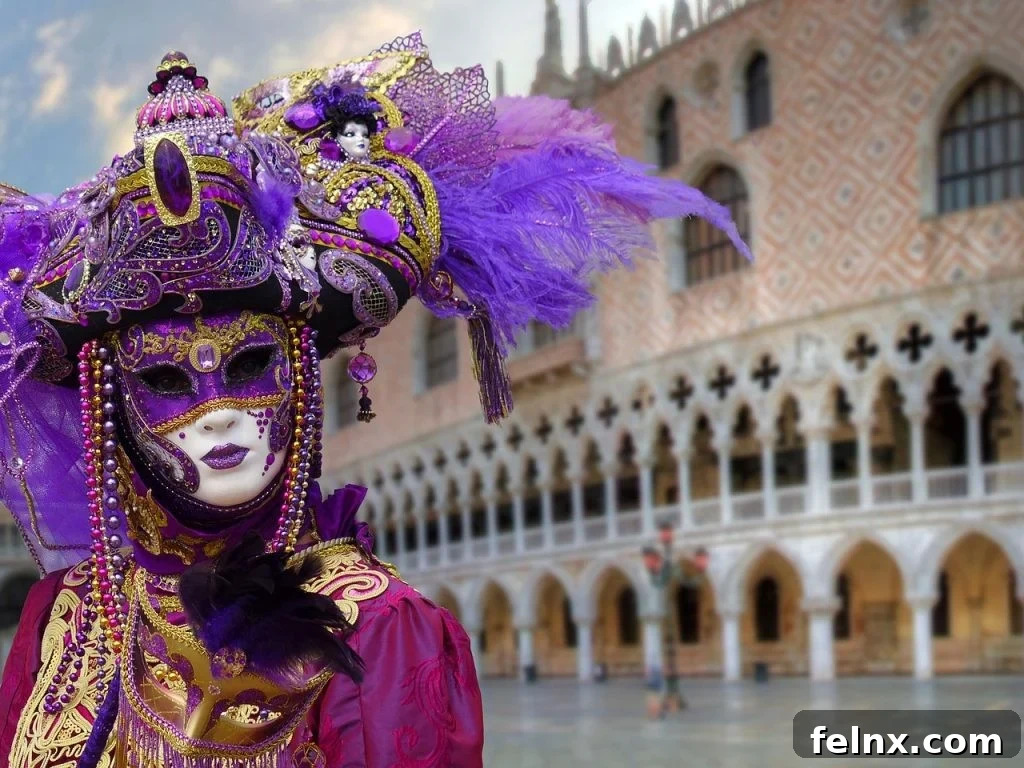
An elaborate costume worn by a Venetian posing in front of the famous Doge’s Palace in St. Mark’s Square
Under the veil of a mask, a servant could be mistaken for a nobleman, and a commoner could engage in conversations with the elite. This anonymity allowed people to act in unconventional ways that their social rank would normally forbid. It fostered an environment of playful romance and intrigue, where individuals could pursue interests and social interactions without the fear of judgment or the constraints of their daily lives.
The masks themselves are masterpieces of design. Artisans, known as mascherari, spend months crafting these pieces. Drawing inspiration from the Baroque style and the Commedia dell’arte (a form of Italian theater), these masks can cover the entire face, such as the Bauta, or just the eyes, like the Colombina. The level of detail is staggering, featuring vibrant colors, gold and silver leafing, delicate lace, feathers, and even crystals.
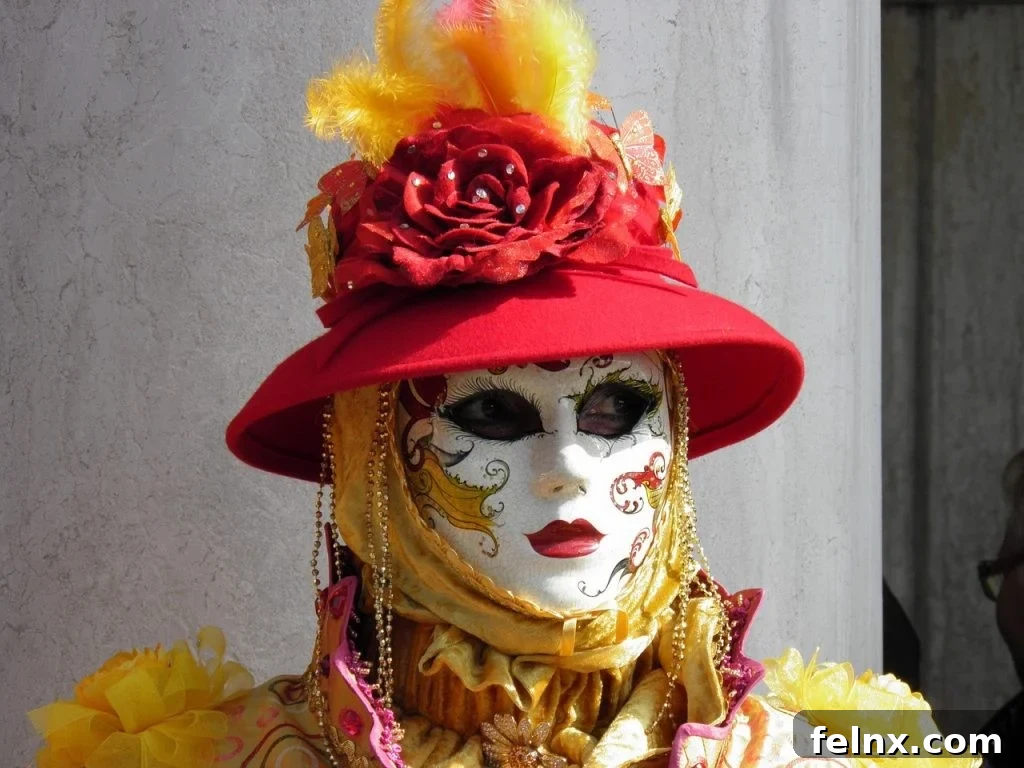
The intricate, fine details of this mask are amazing! What talent exists among these Venetian mask artisans!
A Competition of Elegance in St. Mark’s Square
The heart of the Carnival festivities is St. Mark’s Square (Piazza San Marco). Here, the most exquisite costumes are on full display. Participants often spend an entire year preparing their attire, hoping to catch the eye of photographers and judges. The city hosts a competition for the most beautiful mask, where a panel of international fashion and costume designers evaluates every stitch and embellishment.
The voting process is a public spectacle. Spectators often participate by signaling their approval with green flags for “yes” and red flags for “no.” The creativity is boundless; some costumes are inspired by historical figures, while others take themes from nature, mythology, or even modern art. The play of colors—from deep blues and purples to shimmering blacks and golds—creates a mesmerizing visual experience that is unique to Venice.
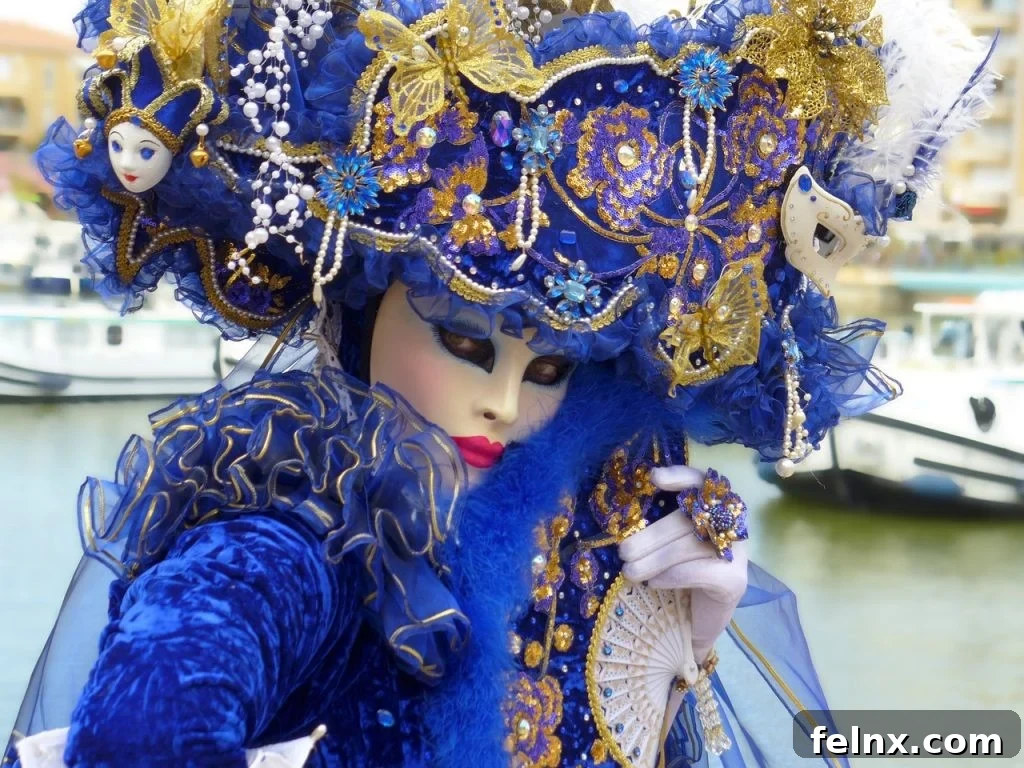
A mesmerizing play of blue hues in this Venetian Carnevale costume. Just stunning in beauty and creativity!
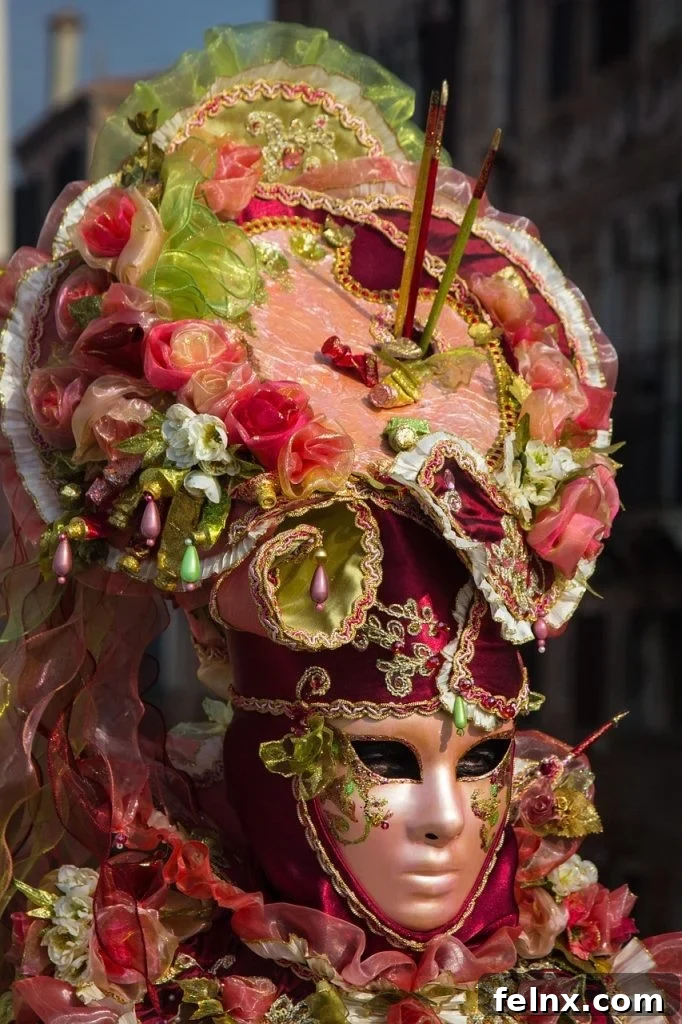
The roses made of fabric on this mask and costume must take hours and hours to create!
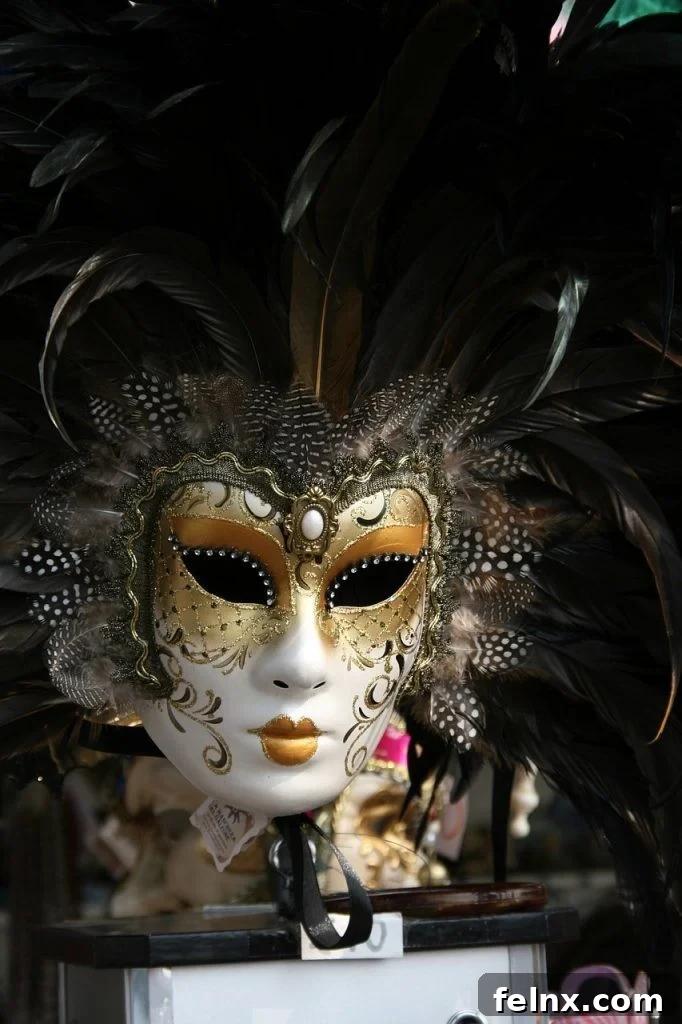
The black and white with gold or silver masks are incredibly striking and elegant.
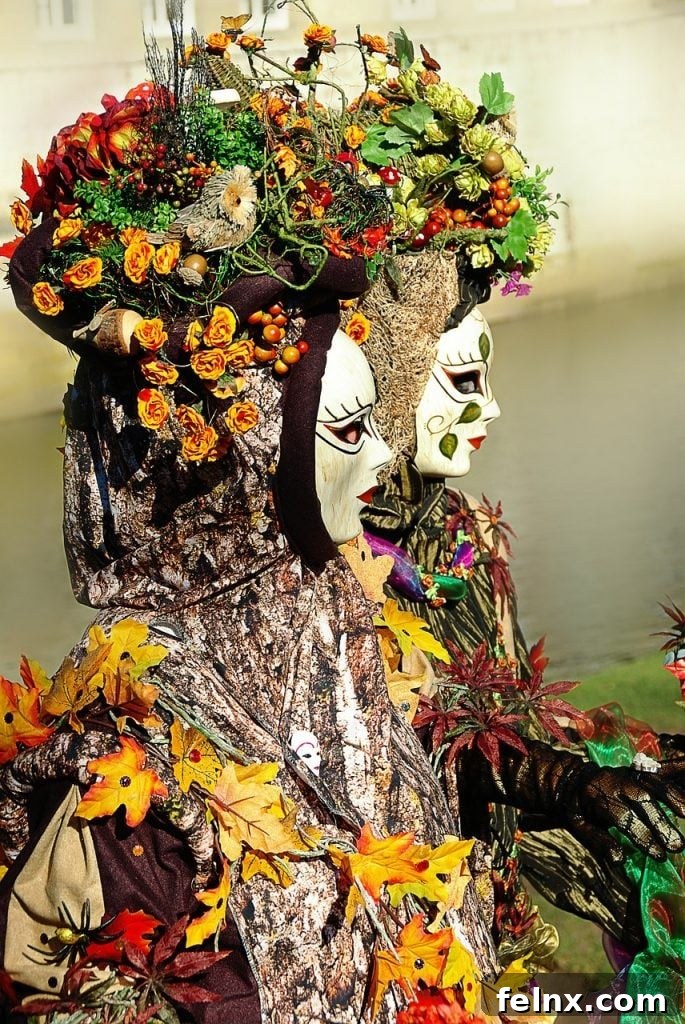
Themes of nature and seasonal elements are frequently incorporated into the mask designs.
The Legend of the “Festa delle Marie”
One of the most traditional and historical events of the Venice Carnival is the Festa delle Marie. This event commemorates a dramatic chapter in Venetian history. The legend dates back to the 9th century and the reign of Doge Pietro Candiano III. It was a custom in Venice to celebrate all marriages on the same day—February 2nd, the Feast of the Purification of the Virgin Mary.
During this ceremony, twelve of the most beautiful but humble young women of Venice were selected to represent the city. They were loaned magnificent jewels by the state and given dowries donated by wealthy patrician families. However, in the year 946, pirates from Dalmatia interrupted the wedding ceremony at the church of San Pietro di Castello. The pirates kidnapped the twelve brides and stole their precious dowry boxes.
The Doge immediately led a pursuit against the kidnappers. The Venetian forces caught up with the pirates near Caorle, successfully rescuing the brides and returning them safely to Venice. To celebrate this victory, the Festa delle Marie was established as an annual tradition.
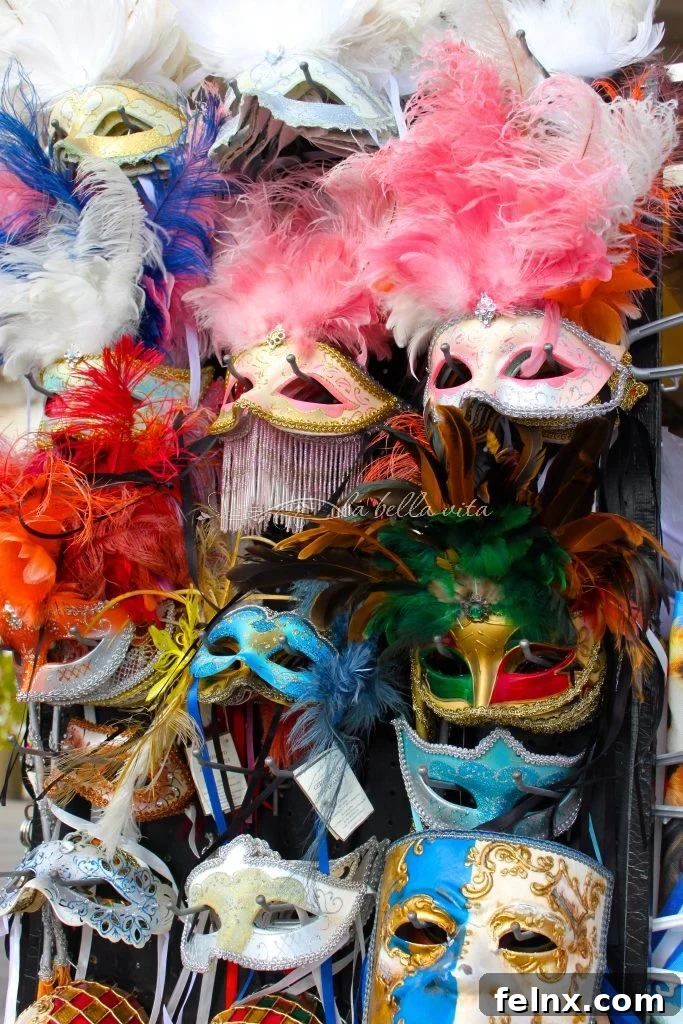
Masks on display in the square for visitors to admire.
Modern Revival of the “Festa delle Marie”
While the festival saw a period of decline, it was revived in recent times by cultural director Bruno Tosi. Today, the Festa delle Marie serves as a grand opening for the Carnival. Twelve young women between the ages of 18 and 28 are selected to participate in a parade that moves from San Pietro di Castello to St. Mark’s Square.
The procession is a breathtaking sight, with the “Maries” carried on sedans and accompanied by over 300 participants in traditional historical costumes. This parade honors the historical rescue and allows visitors to see the diversity of Venetian dress throughout the ages. At the end of the festivities, one of the twelve is crowned “Maria of the Year.” The winner earns a special honor: she becomes the protagonist of the Flight of the Angel during the following year’s Carnival, where she descends from the top of the St. Mark’s bell tower into the center of the square.
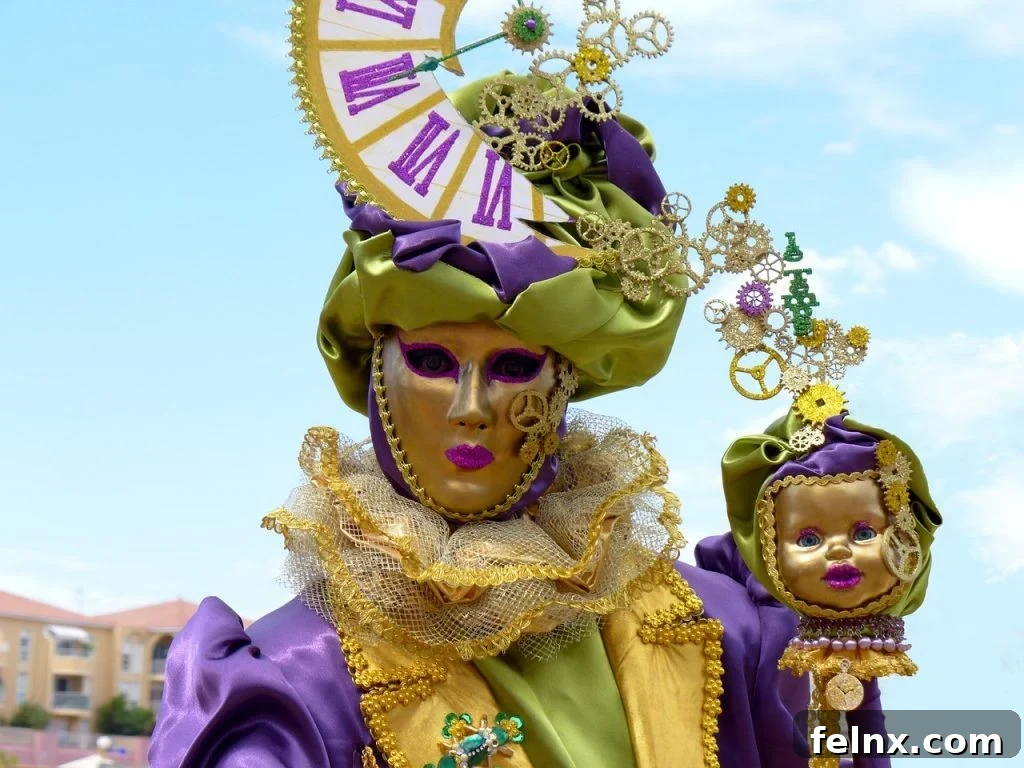
This ensemble features the vibrant colors often associated with celebration: purple, green, and yellow.
The Culinary Side of Venice Carnival
No trip to Venice during the Carnival season would be complete without indulging in the local delicacies. Food plays a vital role in the celebrations. The most famous treat is the frittelle—Venetian doughnuts that are typically filled with cream, chocolate, or raisins and pine nuts. These are only available during the Carnival season, making them a must-try for any visitor.
In addition to sweets, the city’s bacari (wine bars) are buzzing with life. You can enjoy a glass of Prosecco or a classic Venetian Spritz while sampling cicchetti. These small plates range from creamy cod (baccalà mantecato) on polenta to fresh seafood caught daily in the lagoon. The combination of historical atmosphere, artistic expression, and exceptional food makes the Venice Carnival an unforgettable experience.
Planning Your Visit to Venice Carnival
If you are planning to attend, it is essential to prepare in advance. The city becomes very crowded, especially during the final weekend of the Carnival. Booking transportation and accommodation early is highly recommended. For those traveling by train, Venice’s Santa Lucia station provides easy access directly into the heart of the city, allowing you to walk out of the station and straight into a world of magic and mystery.
Essential Links for More Information:
Official Venice Carnival Website
The Festa delle Marie Official Page
Whether you come for the history, the art, or the simple joy of celebration, the Venice Carnival offers something for everyone. It is a time when the past and present merge, and the city reveals its most enchanting self. Put on your mask, join the crowd in St. Mark’s Square, and become a part of a tradition that has captivated the world for centuries.
For more insights into Italian culture and traditions, exploring the different neighborhoods of Venice, like Cannaregio or Dorsoduro, can provide a quieter yet equally beautiful perspective on how the locals celebrate this historic season. Each corner of the city has its own story, its own artisans, and its own unique way of keeping the spirit of Carnevale alive.