Exploring Montecreto: A Journey to My Italian Heritage in the Apennine Mountains
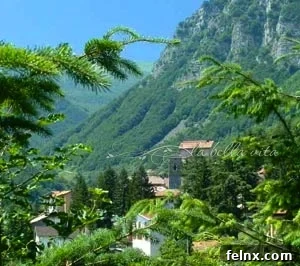
Nestled against the slopes of Monte Cimone, the tallest peak in the northern Apennines, lies a hidden gem called Montecreto. This charming village, with a population of fewer than 1,000 residents, serves as the ancestral home of my family. Located in the heart of the Emilia-Romagna region, Montecreto is a place where time seems to slow down, surrounded by thick forests of fir and beech trees. While nearby areas have become bustling ski destinations, Montecreto has retained its quiet, rustic character, largely because its secluded location makes it a bit more difficult to reach.
A History of Struggle and Migration
At the dawn of the 20th century, life in the Apennine Mountains was far from the idyllic vacation experience it is today. For my maternal and paternal grandparents, Montecreto was a place of extreme hardship. The poverty was so profound that around 1910, both sides of my family made the difficult decision to leave their homeland in search of a better life in the United States. Like many immigrants of that era, they sought opportunity in the industrial heartlands of America, eventually settling in a small coal-mining village known as “High Bridge, Iowa.” Interestingly, that village no longer exists on any modern map, living on only in the memories and records of the families who once called it home.
The journey across the Atlantic was anything but luxurious. My grandparents didn’t travel in the comfort of first-class cabins; they likely spent weeks in the lower decks of steamships, carrying their entire lives in simple wooden trunks. I am incredibly fortunate to possess two of these trunks—one from each side of my family. These artifacts, now over a century old, are more than just furniture; they are vessels of history that I cherish and plan to pass down to future generations.
The Philosophy of Cucina Povera
One cannot discuss the heritage of Montecreto without mentioning cucina povera, or “the food of the poor.” Today, this style of cooking is celebrated by foodies and high-end chefs for its simplicity and use of fresh, local ingredients. However, for my ancestors, it wasn’t a trend—it was a necessity for survival. Life on the mountain meant eating what the land provided.
Chestnuts were a primary staple of the region. They were dried and ground into flour to make bread, pasta, and porridge. My grandfather, however, developed a lifelong distaste for chestnuts because he had been forced to eat them at nearly every meal during his childhood. In addition to chestnuts, the diet consisted of rice and pasta, occasionally supplemented with small amounts of meat. Since Montecreto is far from the coast, fish was virtually non-existent in their diet. This historical reality explains why my family never adopted the famous Italian-American tradition of the Feast of the Seven Fishes on Christmas Eve. In the mountains, fish was a luxury that was neither available nor affordable.
While rich desserts like cannoli or ricotta cakes were out of reach for poor mountain families, they did have their own sweet traditions. They baked contucci, a type of firm biscotti that we still enjoy today. The tradition was to dip these twice-baked cookies into a glass of wine at the end of a meal, a simple but satisfying way to conclude a day of hard labor.
The Modern Contrast: From the Mountains to Modena
While my grandparents chose the path of emigration, many of their siblings remained in Italy. Over the decades, those who stayed eventually moved down from the rugged mountain slopes to the thriving city of Modena. This city is a stark contrast to the quiet life of Montecreto. Modena is a global hub of culture and industry, famous for being the home of the legendary opera singer Luciano Pavarotti and the birthplace of world-renowned automotive brands like Ferrari and Maserati. It is also the only place in the world where true traditional balsamic vinegar is produced.
Today, my Italian cousins and extended family enjoy a high quality of life in Modena. They have access to some of the best food, culture, and economic opportunities in Europe. When I visit them, it’s clear they have no desire to leave. Their lives are a testament to how much Italy has transformed since the days of my grandparents’ departure. It often makes me wonder how my life might have been different if my ancestors had stayed.
A Personal Pilgrimage
Returning to Montecreto feels like completing a circle. On this particular trip, I am joined by my parents, who were 85 and 92 at the time. This journey was deeply significant for them; they had returned to this region about six times over the years and felt a profound connection to their roots. My father, who passed away shortly after this trip, and my mother, who passed away a few years later, were my guides through this ancestral landscape.
One of our primary goals was to visit the local Catholic church. We spent hours leafing through dusty baptismal records, tracing our family tree back through the centuries. Seeing the names of my great-great-grandparents written in elegant, fading ink brought a sense of reality to the stories I had heard as a child. It is a powerful experience to stand in the same sanctuary where your ancestors were baptized and married, feeling the weight of the generations that came before you.
Navigating the High Roads of Emilia-Romagna
Reaching Montecreto is an adventure in itself. The village is perched high on a ridge, and the only way up is via narrow, winding roads characterized by sharp hairpin turns. Driving these roads requires a certain level of bravery—or at least a very steady hand on the steering wheel. As the designated chauffeur for this trip, I had to overcome my fear of heights and mountain driving. Every turn revealed a more breathtaking view than the last, though I often found myself praying for sturdy guardrails!
Despite the harrowing drive, the destination is worth every nervous moment. From the top of the ridge, you can see the very house where my grandmother grew up. Standing on that single road that runs through the town, you realize how small and tight-knit this community truly is. It is a place where everyone knows their neighbor, and the pace of life is dictated by the seasons and the sun.
Conclusion: A Moment in Time
My time in Montecreto is about more than just sightseeing. It is about reconnecting with a part of myself that I didn’t fully understand until I stood on this soil. It’s about the conversations with family, the shared meals of homemade pasta, and the quiet moments of reflection in the local cemetery. Even though I am a U.S. citizen and grew up an ocean away, a piece of my heart will always belong to these mountains.
As I prepare to return to the States, I carry with me a renewed sense of gratitude. I am grateful for the courage of my grandparents who ventured into the unknown, and I am grateful for the family who stayed and preserved our heritage in Italy. Montecreto is a reminder that no matter how far we travel, our roots are always there, waiting for us to return and rediscover them.
Ciao for now! I look forward to sharing more photos and stories from this beautiful corner of the world soon.