A Gourmet Journey Begins: Exploring the Culinary Delights of Bologna Airport
When you think of an airport, you usually imagine sterile corridors, overpriced coffee, and duty-free shops filled with generic perfumes and chocolates. However, landing at the Guglielmo Marconi Airport in Bologna, Italy, is a completely different experience. As soon as you step off the plane in the heart of the Emilia-Romagna region, you are greeted by something truly extraordinary: a high-end specialty store dedicated to the finest local delicacies. Imagine finding premium Prosciutto di Parma, authentic Parmigiano-Reggiano cheese, hand-made tortellini, and aged balsamic vinegar—all freshly packed and ready for travelers to take home. This is the essence of Italy; a place where food culture is so deeply ingrained that even a transit hub becomes a temple of gastronomy.
First Impressions: A Contrast in Travel Experiences
My arrival in Bologna was a study in contrasts. Having just come from a connecting flight in Amsterdam, the difference in the physical environment was striking. The airport in the Netherlands was a model of modern architecture—pristine, sleek, and high-tech. In comparison, the Bologna airport felt aged and somewhat worn down. My mother had warned me that it was an older facility, and she wasn’t exaggerating. At first glance, it wasn’t the “shining” first impression of Italy I had expected. However, as the saying goes, you should never judge a book by its cover. While the walls might have been showing their age and renovation projects were clearly underway, the soul of the place was vibrant and delicious.
My initial skepticism vanished the moment I laid eyes on the airport’s specialty food shop. Any disappointment regarding the airport’s infrastructure was instantly replaced by wonder. In the United States, you would never see a shop of this caliber in an airport terminal. Here, travelers weren’t just grabbing a quick sandwich; they were crowding around counters, eagerly purchasing the gastronomic treasures of Emilia-Romagna. It was a 180-degree turn in my perception. The passion for quality food was palpable, and I found myself wishing I had more time to dive into the crowd and spend my first Euros on these local specialties.
The King of Cured Meats: Prosciutto di Parma
One of the most impressive sights in the shop was the display of Prosciutto di Parma. In Italy, ham is not just meat; it is a craft perfected over centuries. Walking through the store, you see whole legs of Prosciutto, meticulously cured and ready for purchase. These are not the thin, pre-packaged slices you find in a typical grocery store. These are massive, high-quality pieces of art from the Parma region.
For those who may not want to carry an entire leg of ham on their flight, the shop offers “smaller” chunks, vacuum-sealed for freshness. It is a meat lover’s paradise. It is often said that every home in Italy has its own meat slicer, and after seeing the scale of production here, it’s easy to understand why. The quality of this meat is world-renowned, and seeing it sold so casually in an airport speaks volumes about the Italian dedication to culinary excellence. While I respect my vegetarian friends, it is hard to deny the cultural significance and the mouth-watering appeal of these cured meats in their home region.
Parmigiano-Reggiano: The Real Deal
Next to the meats, you find the “King of Cheeses”—Parmigiano-Reggiano. In the States, we often pay a premium for what is sometimes just a pale imitation of this cheese. In the Bologna airport, authentic, aged Parmigiano-Reggiano is sold for what feels like pennies compared to international prices. The aroma alone is enough to draw you in. This cheese is strictly regulated; it can only be produced in specific provinces including Parma, Reggio Emilia, and parts of Bologna. Seeing large wheels and wedges of this cheese being sold to departing tourists is a reminder that in Italy, food is the ultimate souvenir.
The Liquid Gold: Aceto Balsamico
No visit to the Emilia-Romagna region is complete without discussing Balsamic Vinegar (Aceto Balsamico). The airport shop offers a staggering variety, with prices ranging from 2 Euro for basic cooking vinegar to 150 Euro for the highly prized, aged traditional varieties. As the price increases, so does the complexity of the flavor. The older the vinegar, the sweeter and thicker it becomes. It transforms from a simple salad dressing ingredient into a rich, syrupy nectar that can be drizzled over strawberries or aged cheese. The accessibility of such high-quality products in a transit center is a testament to the region’s pride in its liquid gold.
Handmade Pasta: A Taste of Tradition
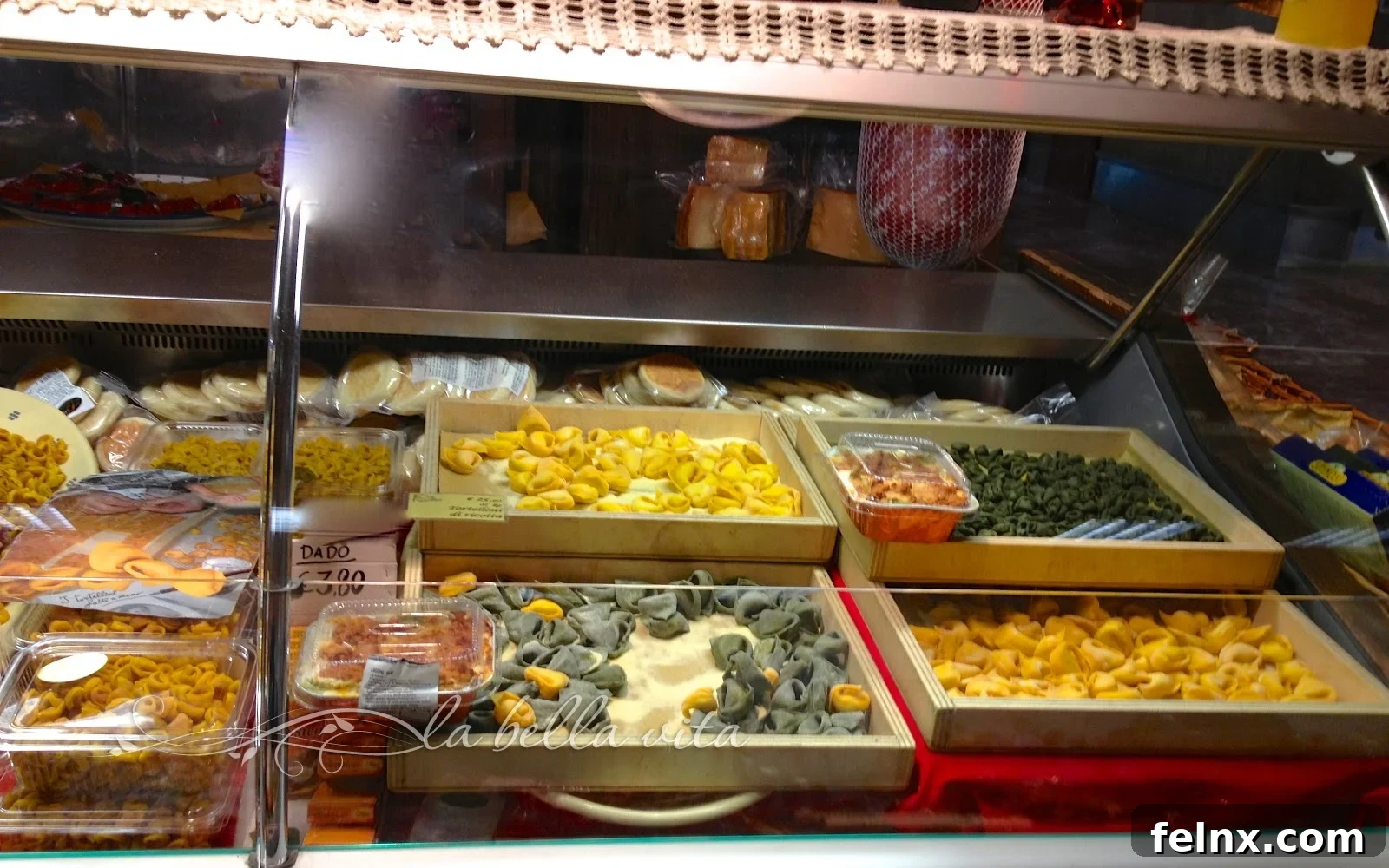
Perhaps the most surprising find in the airport was the fresh, handmade pasta. Bologna is famous for its tortellini, and the shop proudly displays varieties made by hand. In Italian tradition, especially in Bologna, it is said that the smaller the tortellini, the better the quality. These tiny parcels of joy are typically filled with a mix of meats and cheeses and are served in a rich broth.
In addition to the classic tortellini, the shop also features larger tortelloni. These are often filled with ricotta cheese and spinach, offered in either traditional egg pasta or a vibrant green spinach pasta. Seeing these delicate, handmade items for sale in an airport was a revelation. It bridges the gap between fast-paced modern travel and the slow-food movement that Italy is so famous for.
Travel Tips: Making the Most of Your Italian Budget
One of the biggest lessons I learned during this trip was the difference in food costs between restaurants and local markets. While dining at high-end restaurants in tourist-heavy cities like Venice can be incredibly expensive—I once spent 80 Euro just for lunch!—shopping at local markets and specialty stores offers an incredible deal.
If you want to experience Italy without breaking the bank, my recommendation is to stay in a “villa” or a “pensione” that includes a small kitchen. During our week-long stay, our group of three spent only 130 Euro on groceries. By shopping at local markets, we were able to enjoy fresh produce, premium meats, and artisan cheeses for a fraction of the cost of eating out. Furthermore, there is a unique joy in interacting with local proprietors, practicing your Italian, and selecting the freshest ingredients for a home-cooked meal in a beautiful Italian setting.
Conclusion: The Heart of Italian Hospitality
Bologna is often referred to as “La Grassa” (The Fat) because of its rich culinary history, and my experience at the airport proved that this nickname is well-deserved. From the moment you land, the city invites you to taste its heritage. The sight of crowds waiting in line to buy cured meats and cheeses at the airport is a beautiful reminder that in Italy, food is not just sustenance—it is a way of life, a point of pride, and a gesture of hospitality.
Whether you are looking for a whole leg of Prosciutto, a wedge of authentic Parmigiano, or just a small bottle of exquisite Balsamic vinegar, the shops in Bologna ensure that you never leave empty-handed. There is truly no “boloney” about the cured meats and culinary treasures of Bologna, Italy!
There’s no boloney about cured meats in Bologna, Italy!